Saudi Deserts Once Had Rivers, Lakes, and Grasslands: Study
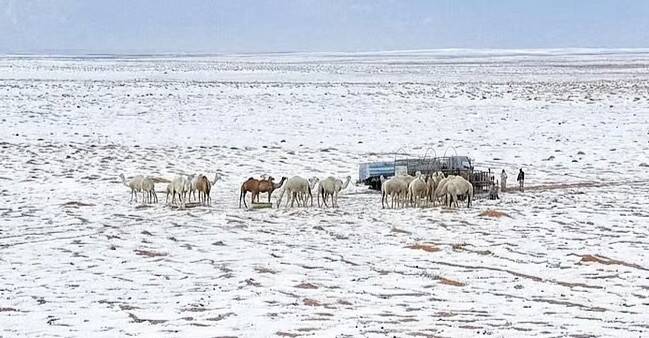
The deserts of Saudi Arabia are known for their vast expanses of sand, extreme heat, and arid conditions. However, a new study has revealed that these deserts were not always the harsh environments we see today. In fact, they were once rich landscapes with rivers, lakes, and vast grasslands that supported a wide range of plants, animals, and even early humans. The findings of this study have significant implications for our understanding of the region’s history and the impact of climate change on the environment.
The study, which was conducted by a team of scientists, used a combination of geological and archaeological evidence to reconstruct the environmental history of Saudi Arabia. The team analyzed sediment cores, fossil records, and other data to build a picture of what the region looked like in the past. What they found was surprising: the deserts of Saudi Arabia were once teeming with life, with rivers, lakes, and wetlands supporting a diverse range of flora and fauna.
One of the most striking discoveries was that the Rub’ al-Khali, a vast desert region in southern Saudi Arabia, was once a huge lake. The lake, which was likely formed during a period of high rainfall, would have been a vital source of water for plants and animals in the region. The team found evidence of ancient shorelines, lake beds, and even fossilized remains of aquatic plants and animals. This discovery challenges the conventional view of the Rub’ al-Khali as a desert that has been inhospitable to life for millions of years.
The study also found that other parts of Saudi Arabia were once covered in vast grasslands, which would have supported a wide range of herbivores and carnivores. The team found evidence of ancient grasses, shrubs, and trees, as well as fossilized remains of animals such as hippos, crocodiles, and gazelles. These findings suggest that the region was once much more hospitable to life, with a climate that was significantly wetter and more temperate than it is today.
But what caused the transformation of Saudi Arabia’s deserts from lush, vibrant landscapes to the harsh environments we see today? The answer lies in climate change. The study found that the region experienced a series of wet and dry phases over the past few million years, with the wet phases corresponding to periods of high rainfall and the dry phases corresponding to periods of low rainfall. During the wet phases, the deserts would have been transformed into lush, verdant landscapes, with rivers, lakes, and wetlands supporting a wide range of plants and animals. However, when the climate shifted and the rainfall decreased, the waters would have vanished, and the sands would have reclaimed the land.
The discovery of Saudi Arabia’s lush past has significant implications for our understanding of the region’s history and the impact of climate change on the environment. It suggests that the deserts of Saudi Arabia are not fixed or permanent features, but rather dynamic ecosystems that have changed over time in response to changes in the climate. This has important implications for conservation efforts, as it suggests that the region’s ecosystems are more resilient and adaptable than previously thought.
The study also highlights the importance of preserving the region’s natural heritage, including its fossil records and archaeological sites. These sites provide a unique window into the past, allowing us to reconstruct the environmental history of the region and understand the impact of climate change on the environment. By preserving these sites and studying the region’s environmental history, we can gain a better understanding of the complex and dynamic relationships between the climate, ecosystems, and human societies.
In conclusion, the discovery of Saudi Arabia’s lush past is a significant one, with important implications for our understanding of the region’s history and the impact of climate change on the environment. The study highlights the dynamic and adaptable nature of the region’s ecosystems, and the need to preserve its natural heritage for future generations. As we continue to face the challenges of climate change, this study serves as a reminder of the importance of understanding and preserving our planet’s natural history.
About the Author