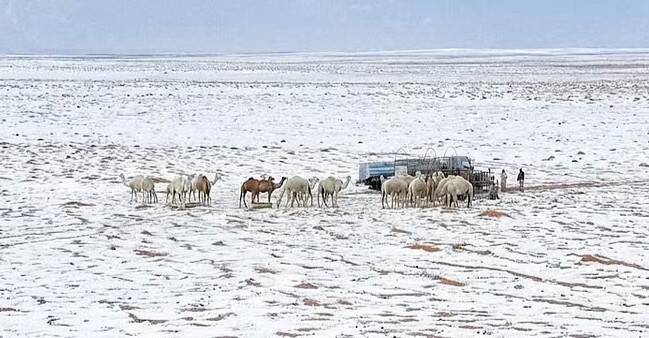
Saudi Deserts Once Had Rivers, Lakes, and Grasslands: Study
The deserts of Saudi Arabia are known for their harsh and unforgiving environment, with endless dunes of sand stretching as far as the eye can see. However, new studies have revealed that this was not always the case. In fact, Saudi Arabia’s deserts were once rich landscapes with rivers, lakes, and vast grasslands that supported a wide variety of plants, animals, and even early humans.
The Rub’ al-Khali, also known as the Empty Quarter, is one of the largest sand deserts in the world, covering an area of over 650,000 square kilometers. Today, it is an ocean of sand, with dunes reaching heights of over 250 meters. However, according to recent research, this vast expanse of sand was once a huge lake, teeming with life. The study, which used a combination of geological and archaeological evidence, found that the lake existed during a period of wetter climate, which lasted from around 10,000 to 6,000 years ago.
During this time, the region experienced a significant increase in rainfall, which led to the formation of rivers, lakes, and wetlands. The lake in the Rub’ al-Khali was likely fed by a number of rivers, which flowed from the surrounding mountains. The presence of these water sources supported a wide variety of plants and animals, including hippos, crocodiles, and other water-dependent species.
The discovery of these ancient water sources is a significant one, as it provides new insights into the region’s climate history. The study found that the wetter climate was caused by changes in the Earth’s orbit, which led to an increase in rainfall in the region. This, in turn, supported the growth of vegetation, which helped to sustain a wide variety of wildlife.
The presence of early humans in the region is also well-documented, with archaeological evidence showing that humans lived in the area during the wetter climate phase. The lakes and rivers provided a source of food, water, and shelter, which allowed early humans to thrive in the region. The discovery of ancient stone tools and other artifacts has provided valuable insights into the lives of these early humans, and how they adapted to their environment.
However, when the climate shifted, the waters vanished, and the sands reclaimed the land. The region began to dry out, and the lakes and rivers disappeared. The plants and animals that had once thrived in the region were forced to adapt to the new, harsher environment, or risk extinction. The hippos and crocodiles, which had once been abundant in the region, were among the species that were forced to migrate to other areas in search of water.
Today, the deserts of Saudi Arabia are once again a harsh and unforgiving environment, with temperatures often reaching over 50 degrees Celsius during the summer months. However, the discovery of the region’s lush past is a reminder that even the most inhospitable of environments can change over time. The study of the region’s climate history provides valuable insights into the complex and dynamic nature of the Earth’s climate system, and the impact that climate change can have on the environment and human societies.
The findings of the study have significant implications for our understanding of the region’s ecology and conservation. The discovery of the ancient water sources and the variety of plants and animals that once thrived in the region highlights the importance of preserving the region’s natural heritage. The study also provides a valuable lesson in the importance of adapting to climate change, and the need to protect the environment from the impacts of human activity.
In conclusion, the deserts of Saudi Arabia were once rich landscapes with rivers, lakes, and vast grasslands that supported a wide variety of plants, animals, and early humans. The discovery of the region’s lush past is a significant one, providing new insights into the region’s climate history and the impact of climate change on the environment and human societies. As we look to the future, it is essential that we learn from the past, and work to protect the environment and preserve the region’s natural heritage.
About the Author