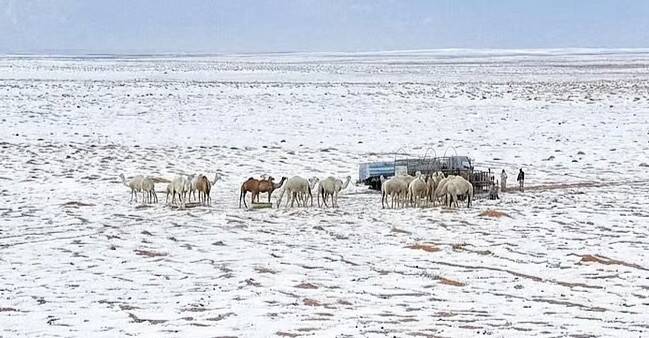
Saudi Deserts Once Had Rivers, Lakes, and Grasslands: Study
The deserts of Saudi Arabia are known for their harsh and arid conditions, with endless dunes of sand stretching as far as the eye can see. However, new studies have revealed that this was not always the case. In fact, Saudi Arabia’s deserts were once rich and vibrant landscapes, complete with rivers, lakes, and vast grasslands that supported a diverse range of plants, animals, and early humans.
The Rub’ al-Khali, also known as the Empty Quarter, is one of the largest sand deserts in the world, covering an area of over 650,000 square kilometers. Today, it is a barren and inhospitable environment, with temperatures often reaching as high as 50 degrees Celsius during the day and dropping to below freezing at night. However, researchers have found that this was not always the case. During certain periods in the past, the Rub’ al-Khali was actually a huge lake, with water levels fluctuating over time due to changes in the climate.
One of the key pieces of evidence for this claim comes from the discovery of fossilized remains of water-dependent species such as hippos and crocodiles. These animals are not typically found in desert environments, and their presence suggests that the area was once much wetter and more hospitable. Additionally, researchers have found evidence of ancient rivers and lakes, including sedimentary deposits and erosion patterns that are consistent with the presence of flowing water.
The study, which was conducted by a team of scientists from around the world, used a combination of fieldwork, satellite imagery, and computer modeling to reconstruct the environmental history of the region. By analyzing sediment cores, fossil records, and other data, the researchers were able to build a detailed picture of how the climate and landscape of Saudi Arabia have changed over time.
According to the study, the region experienced a number of wetter phases during the past few hundred thousand years, with the most recent of these phases occurring around 10,000 years ago. During these periods, the deserts of Saudi Arabia were transformed into lush and verdant landscapes, with rivers, lakes, and grasslands supporting a wide range of plants and animals. The presence of early humans in the region during these times is also well-documented, with archaeological evidence showing that people lived and thrived in the area.
However, when the climate shifted and the region became drier, the waters vanished and the sands reclaimed the land. The deserts of Saudi Arabia as we know them today began to take shape, with the Rub’ al-Khali and other areas becoming the arid and inhospitable environments that they are now.
The study’s findings have significant implications for our understanding of the environmental history of the region, and highlight the importance of considering the impact of climate change on ecosystems and human societies. By studying the past, researchers can gain insights into how the climate may change in the future, and how these changes may affect the environment and human populations.
In addition to shedding light on the environmental history of Saudi Arabia, the study also has important implications for the field of archaeology. The presence of early humans in the region during wetter phases suggests that the area may have been an important hub for human migration and cultural exchange, and the discovery of fossilized remains and other archaeological evidence could provide valuable insights into the lives and cultures of these early human populations.
The study’s findings also have significant implications for conservation and environmental management in the region. By understanding how the climate and landscape of Saudi Arabia have changed over time, researchers and policymakers can develop more effective strategies for managing the environment and conserving natural resources. This could include initiatives such as reforestation, wetland restoration, and the protection of endangered species, all of which could help to promote biodiversity and ecosystem health in the region.
In conclusion, the deserts of Saudi Arabia are not as barren and lifeless as they may seem. In fact, they have a rich and complex environmental history, with rivers, lakes, and grasslands having supported a wide range of plants, animals, and early humans in the past. By studying this history, researchers can gain insights into the impact of climate change on ecosystems and human societies, and develop more effective strategies for managing the environment and conserving natural resources.
The study’s findings are a powerful reminder of the dynamic and ever-changing nature of the environment, and highlight the importance of considering the past when planning for the future. As we move forward in an era of rapid climate change, it is more important than ever that we understand the complex and interconnected relationships between the environment, human societies, and the natural world.
About the Author