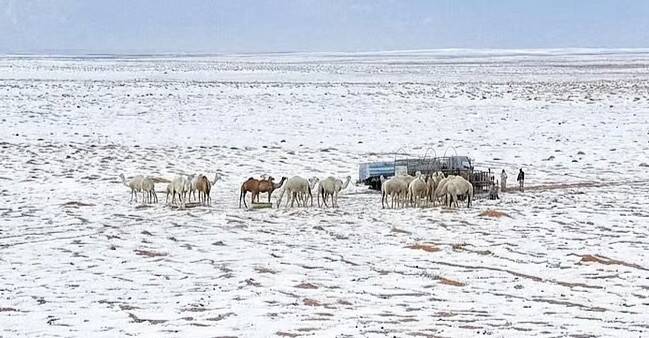
Saudi Deserts Once Had Rivers, Lakes, and Grasslands: Study
The Arabian Desert, which covers much of Saudi Arabia, is one of the most inhospitable and arid regions on Earth. The scorching sun, endless dunes, and lack of vegetation make it seem like an eternal and unchanging landscape. However, new studies have revealed a surprising truth: Saudi Arabia’s deserts were once rich landscapes with rivers, lakes, and vast grasslands that supported plants, animals, and early humans.
The findings, based on geological and archaeological evidence, paint a vivid picture of a bygone era when the Saudi deserts were teeming with life. The Rub’ al-Khali, also known as the Empty Quarter, which is now an ocean of sand, was once a huge lake. This massive body of water, which would have been one of the largest lakes in the world, was home to a diverse array of aquatic life, including hippos, crocodiles, and other water-dependent species.
During wetter climatic phases, the Saudi deserts were transformed into lush and verdant landscapes, with rivers, lakes, and wetlands supporting a wide range of flora and fauna. The region’s unique geology, with its complex network of ancient riverbeds, lakebeds, and deltas, provides a fascinating glimpse into the region’s past. The presence of fossilized remains of aquatic plants, such as diatoms and algae, and animal species, like fish and mollusks, further confirms the existence of these ancient water bodies.
The study’s findings are based on a combination of field observations, remote sensing data, and laboratory analysis of sediment cores and rock samples. By analyzing the sedimentary records and fossil evidence, researchers have been able to reconstruct the region’s paleoenvironmental history, including the timing and extent of the ancient lakes and rivers.
One of the most significant discoveries is the presence of a massive lake in the Rub’ al-Khali, which would have covered an area of over 10,000 square kilometers. This lake, which is believed to have existed during the Pleistocene era, around 10,000 to 20,000 years ago, would have been a major hub of life, supporting a wide range of aquatic and terrestrial species.
The presence of hippos, crocodiles, and other water-dependent species in the region’s fossil record provides further evidence of the existence of these ancient water bodies. These species, which are typically found in aquatic environments, would have been unable to survive in the arid conditions that prevail in the region today.
The study’s findings have significant implications for our understanding of the region’s ecological and geological history. They demonstrate that the Saudi deserts, which are often seen as a timeless and unchanging landscape, have in fact undergone significant transformations over the past few thousand years.
When the climate shifted, and the region became drier, the waters vanished, and the sands reclaimed the land. The ancient lakes and rivers were transformed into dry riverbeds and lakebeds, and the region’s vegetation and wildlife were forced to adapt to the new conditions.
The study’s findings also have important implications for our understanding of human migration and settlement patterns in the region. The presence of ancient lakes and rivers would have provided a source of water and food for early human populations, allowing them to thrive in the region.
In conclusion, the new study reveals a fascinating and unexpected history of the Saudi deserts, one that challenges our conventional understanding of this arid and inhospitable region. The discovery of ancient rivers, lakes, and grasslands, which once supported a wide range of plants and animals, provides a glimpse into a bygone era, one that was both familiar and yet strange.
As we continue to explore and understand the complex and dynamic history of our planet, studies like this one remind us of the importance of preserving and protecting our natural heritage, including the unique and fragile ecosystems that exist in some of the most inhospitable regions on Earth.
About the Author