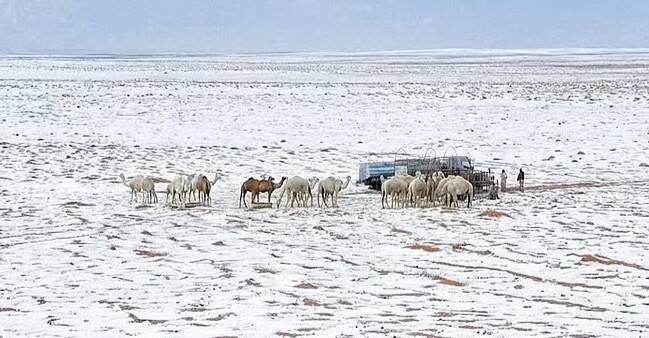
Saudi Deserts Once Had Rivers, Lakes, and Grasslands: Study
The deserts of Saudi Arabia are known for their harsh and arid conditions, with endless dunes of sand stretching as far as the eye can see. However, new studies have revealed that these deserts were not always the barren landscapes we see today. In fact, they were once rich and diverse ecosystems, teeming with life and filled with rivers, lakes, and vast grasslands. The discovery has shed new light on the region’s history and has significant implications for our understanding of the Earth’s climate and the impact of human activity on the environment.
The study, which was conducted by a team of scientists, used a combination of geological and archaeological evidence to reconstruct the history of the Saudi deserts. The team analyzed sediment cores, fossils, and other data to build a picture of what the region looked like in the past. What they found was surprising: the deserts of Saudi Arabia were once home to a wide range of plants and animals, including hippos, crocodiles, and other water-dependent species.
One of the most significant discoveries was that the Rub’ al-Khali, a vast desert region in southern Saudi Arabia, was once a huge lake. The lake, which was likely formed during a period of heavy rainfall, would have been a vital source of water for early humans and animals. The team found evidence of ancient shorelines, lake beds, and other features that are characteristic of lake systems. The presence of these features suggests that the lake was not just a small, temporary body of water, but a large and permanent one that played a crucial role in the region’s ecosystem.
The study also found that the Saudi deserts were once covered in vast grasslands, which would have supported a wide range of plant and animal life. The grasslands would have been fed by a network of rivers and streams, which would have flowed through the region during periods of heavy rainfall. The team found evidence of these rivers and streams, including ancient riverbeds and delta systems. The presence of these features suggests that the region was once much wetter than it is today, with a climate that was more similar to that of modern-day Africa or Asia.
The discovery of these ancient ecosystems has significant implications for our understanding of the Earth’s climate and the impact of human activity on the environment. The study suggests that the Saudi deserts were not always the arid and barren landscapes we see today, but were once rich and diverse ecosystems that supported a wide range of plant and animal life. The fact that these ecosystems were able to thrive in the region suggests that the climate was once much wetter and more hospitable than it is today.
So, what happened to these ancient ecosystems? The study suggests that the climate shifted, and the waters vanished, leaving behind the arid and barren landscapes we see today. The team found evidence of a dramatic shift in the climate, which would have had a devastating impact on the region’s ecosystems. The shift would have been caused by a combination of natural and human-induced factors, including changes in the Earth’s orbit, variations in solar radiation, and the impact of human activity on the environment.
The discovery of these ancient ecosystems has also significant implications for our understanding of human history and the migration of early humans out of Africa. The study suggests that the Saudi deserts were once a vital corridor for human migration, with early humans able to travel through the region using the network of rivers and streams. The presence of ancient human settlements and artifacts in the region supports this theory, and suggests that the Saudi deserts played a crucial role in the spread of human populations across the globe.
In conclusion, the study of the Saudi deserts has revealed a surprising and fascinating history of the region. The discovery of ancient rivers, lakes, and grasslands has shed new light on the region’s ecosystems and has significant implications for our understanding of the Earth’s climate and the impact of human activity on the environment. The study also highlights the importance of preserving and protecting our natural environments, and the need to take action to mitigate the effects of climate change and human activity on the planet.
The discovery of these ancient ecosystems is a reminder that the natural world is constantly changing, and that the environments we see today are not always the same as those that existed in the past. It is a fascinating and complex story that continues to unfold, and one that has significant implications for our understanding of the world and our place within it.
About the Author