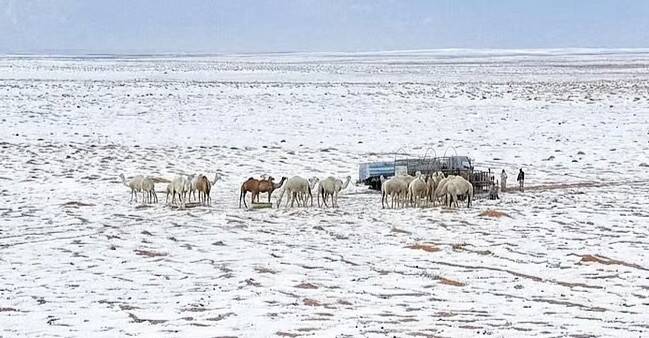
Saudi Deserts Once Had Rivers, Lakes and Grasslands: Study
The Arabian Desert, covering much of Saudi Arabia, is one of the most inhospitable and arid regions on Earth. The endless dunes of sand, scorching temperatures, and lack of vegetation make it seem like an eternal and unchanging landscape. However, new research has revealed a surprising truth: Saudi Arabia’s deserts were once rich and diverse landscapes, teeming with rivers, lakes, and vast grasslands that supported a wide range of plants, animals, and early human populations.
The study, which has shed new light on the region’s climatic past, has shown that the Saudi deserts have undergone significant transformations over the millennia. During wetter climatic phases, the area was characterized by an abundance of water, with rivers, lakes, and wetlands supporting a variety of aquatic life. The Rub’ al-Khali, also known as the Empty Quarter, which is now an ocean of sand, was once a huge lake, stretching as far as the eye could see.
The presence of water-dependent species, such as hippos and crocodiles, is a clear indication of the region’s lush past. These animals, which are typically found in aquatic environments, thrived in the Saudi deserts during periods of high rainfall and water availability. Fossil records and archaeological findings have confirmed the presence of these species, providing evidence of the region’s dramatic climatic shifts.
The research has also revealed that the Saudi deserts were once home to vast grasslands, which supported a wide range of herbivores, such as gazelles, antelopes, and wild asses. These grasslands, which are now nothing more than a distant memory, were sustained by the region’s wetter climate, which allowed for the growth of lush vegetation. The presence of these grasslands would have also supported early human populations, providing them with a source of food, shelter, and sustenance.
The study’s findings have significant implications for our understanding of the region’s climatic history and the impact of climate change on the environment. The research suggests that the Saudi deserts have undergone multiple periods of wetting and drying, with the climate shifting between wet and dry phases over the millennia. These shifts would have had a profound impact on the region’s ecosystems, with the availability of water determining the distribution and abundance of plants and animals.
The discovery of Saudi Arabia’s lush past has also raised questions about the potential for the region to support life in the future. As the global climate continues to change, there is a growing interest in understanding how regions like the Saudi deserts may respond to shifts in temperature and precipitation patterns. The study’s findings suggest that, with the right climatic conditions, the Saudi deserts could once again support a wide range of plants and animals, potentially even human populations.
The research has been made possible by advances in technologies, such as satellite imaging and remote sensing, which have allowed scientists to study the region’s geology and ecology in unprecedented detail. The use of these technologies has enabled researchers to reconstruct the region’s past environments, providing a unique glimpse into the Saudi deserts’ hidden history.
In conclusion, the discovery of Saudi Arabia’s lush past is a fascinating reminder of the dynamic and ever-changing nature of our planet’s environments. The study’s findings have significant implications for our understanding of the region’s climatic history, the impact of climate change, and the potential for the region to support life in the future. As we continue to explore and learn more about our planet’s past, we are reminded of the importance of preserving and protecting our natural environments for future generations.
About the Author