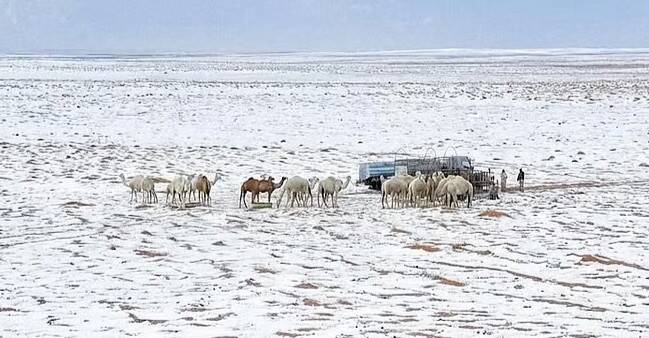
Saudi Deserts Once Had Rivers, Lakes, and Grasslands: Study
The deserts of Saudi Arabia are known for their vast expanses of sand, harsh climate, and limited vegetation. However, new studies have revealed that these deserts were not always the arid landscapes we see today. In fact, they were once rich and diverse ecosystems, complete with rivers, lakes, and vast grasslands that supported a wide range of plants, animals, and even early human populations.
The Rub’ al-Khali, also known as the Empty Quarter, is one of the largest sand deserts in the world, covering over 650,000 square kilometers in southern Saudi Arabia. Today, it is an ocean of sand, with dunes stretching as far as the eye can see. However, scientists have discovered that this desert was once a huge lake, with waters that supported a variety of aquatic life, including hippos, crocodiles, and other water-dependent species.
These findings are based on a combination of geological, paleontological, and archaeological evidence, which suggests that the climate in Saudi Arabia was much wetter in the past. During these wetter climatic phases, the deserts were transformed into lush landscapes, with rivers, lakes, and grasslands that supported a wide range of flora and fauna.
The presence of hippos and crocodiles in the Rub’ al-Khali is particularly significant, as these species are not typically found in desert environments. Hippos, for example, require large amounts of water to survive, and are usually found in rivers, lakes, and wetlands. The fact that they were once present in the Rub’ al-Khali suggests that the desert was once a much more hospitable place, with abundant water and vegetation.
The discovery of ancient lake beds, river systems, and grasslands in Saudi Arabia is not limited to the Rub’ al-Khali. Other parts of the country, including the Nafud Desert in the north and the Hejaz Mountains in the west, also show evidence of a wetter past. In these regions, scientists have found fossils of plants and animals that are not typically found in desert environments, including trees, grasses, and aquatic species.
The transformation of Saudi Arabia’s deserts from lush landscapes to arid environments is believed to have occurred as a result of changes in the global climate. During the last ice age, which ended around 11,700 years ago, the climate in Saudi Arabia was much cooler and wetter than it is today. As the climate shifted and became warmer and drier, the waters in the deserts began to evaporate, and the sands began to reclaim the land.
The impact of these changes on the ecosystems and human populations in Saudi Arabia would have been significant. The loss of water and vegetation would have made it difficult for plants and animals to survive, and would have forced early human populations to adapt to a new and more challenging environment. The fact that humans were able to survive and even thrive in these environments is a testament to their resourcefulness and ability to adapt to changing conditions.
The study of Saudi Arabia’s deserts and their transformation over time is an important area of research, with implications for our understanding of the natural world and the impact of climate change on ecosystems and human populations. By studying the past, scientists can gain insights into the likely effects of future climate change, and can develop strategies for mitigating its impacts.
In addition, the discovery of a wetter past in Saudi Arabia highlights the importance of conservation and environmental protection. The deserts of Saudi Arabia may seem like barren and inhospitable places, but they are still home to a wide range of unique and adapted species, and play an important role in the global ecosystem. By protecting these environments and preserving their natural beauty, we can help to ensure the long-term health and sustainability of our planet.
In conclusion, the deserts of Saudi Arabia are not just barren landscapes, but are instead complex and dynamic ecosystems that have undergone significant changes over time. The discovery of a wetter past in these deserts is a fascinating and important area of research, with implications for our understanding of the natural world and the impact of climate change on ecosystems and human populations. As we continue to learn more about the history and ecology of these environments, we can gain a deeper appreciation for the beauty and importance of the natural world, and can work to protect and preserve it for future generations.
About the Author