Saudi Deserts Once Had Rivers, Lakes, and Grasslands: Study
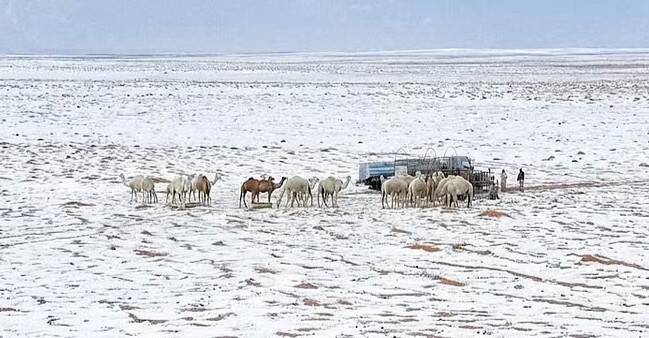
The vast expanse of the Saudi Arabian desert, stretching as far as the eye can see, is a testament to the harsh and arid conditions that prevail in this region. However, a new study has revealed that this was not always the case. In a fascinating discovery, scientists have found that the deserts of Saudi Arabia were once teeming with life, featuring rivers, lakes, and vast grasslands that supported a diverse range of plants and animals. The findings have significant implications for our understanding of the region’s climate history and the impact of environmental changes on ecosystems.
The study, which has shed new light on the geological history of Saudi Arabia, suggests that the region’s deserts were once lush and verdant, with rivers, lakes, and wetlands that supported a wide range of aquatic life. The Rub’ al-Khali, also known as the Empty Quarter, which is now a vast ocean of sand, was once a huge lake, according to the researchers. This lake, which would have been one of the largest in the world, was home to a variety of water-dependent species, including hippos, crocodiles, and fish.
The discovery of these ancient waterways and ecosystems has been made possible through the use of advanced technologies, including satellite imaging, ground-penetrating radar, and sediment core analysis. By analyzing sediment cores extracted from the desert floor, scientists have been able to reconstruct the region’s climate history, identifying periods of high rainfall and flooding that would have created these ancient lakes and rivers.
One of the most significant findings of the study is the presence of hippo and crocodile fossils in the desert region. These animals, which are typically found in aquatic environments, would have required large bodies of water to survive. The discovery of their fossils in the Saudi desert suggests that the region was once much wetter and more hospitable to life than it is today.
The study also found evidence of vast grasslands that would have covered much of the region. These grasslands would have supported a wide range of herbivores, including gazelles, antelopes, and wild boars, which would have been preyed upon by carnivores such as lions, leopards, and hyenas. The presence of these grasslands would have also supported early human populations, who would have been able to hunt and gather in the region.
So, what caused the decline of these ancient ecosystems and the transformation of the region into the arid desert we see today? The answer lies in changes to the global climate. During the last ice age, which ended around 11,700 years ago, the global climate was much cooler and wetter than it is today. This led to an increase in rainfall and flooding in the Saudi region, which would have created the lakes, rivers, and wetlands that supported the ancient ecosystems.
However, as the climate warmed and became drier, the waters began to recede, and the sands began to reclaim the land. The process of desertification, which would have occurred over thousands of years, would have been gradual, but ultimately, it would have had a profound impact on the region’s ecosystems. The loss of these ancient waterways and ecosystems would have had significant consequences for the plants and animals that depended on them, leading to extinctions and migrations to more hospitable regions.
The discovery of Saudi Arabia’s lush past has significant implications for our understanding of the region’s climate history and the impact of environmental changes on ecosystems. It also highlights the importance of preserving and protecting our planet’s natural environments, which are under threat from climate change, deforestation, and other human activities.
In conclusion, the study of Saudi Arabia’s deserts has revealed a fascinating and unexpected history, one that highlights the dynamic and changing nature of our planet’s ecosystems. The discovery of ancient rivers, lakes, and grasslands in the Saudi desert is a testament to the power of science to uncover the secrets of the past and to inform our understanding of the present and future. As we continue to face the challenges of climate change and environmental degradation, the story of Saudi Arabia’s lush past serves as a reminder of the importance of preserving and protecting our planet’s natural wonders for future generations.
About the Author