Saudi Deserts Once Had Rivers, Lakes, and Grasslands: Study
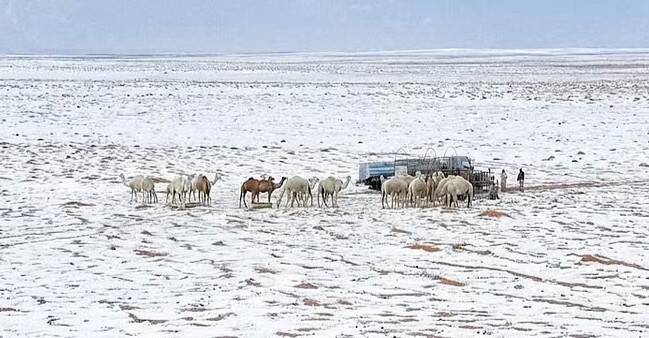
The Arabian Peninsula, particularly Saudi Arabia, is known for its vast and arid deserts that stretch as far as the eye can see. The harsh climate and lack of vegetation have led many to believe that this region has always been a desert. However, new studies have revealed a surprising truth: Saudi Arabia’s deserts were once rich landscapes with rivers, lakes, and vast grasslands that supported a wide range of plants, animals, and early humans.
The Rub’ al-Khali, also known as the Empty Quarter, is one of the largest sand deserts in the world, covering over 650,000 square kilometers. Today, it is an ocean of sand, with dunes that can reach as high as 250 meters. But, according to recent research, this desert was once a huge lake, teeming with life. The lake, which existed during the Pleistocene era, was fed by rivers and monsoonal rains, creating a lush and verdant landscape.
The evidence of this ancient lake is not just based on theoretical models or computer simulations. Scientists have found concrete proof in the form of fossils, sediment cores, and archaeological remains. For example, fossilized remains of hippos, crocodiles, and other water-dependent species have been discovered in the Rub’ al-Khali, indicating that these animals once thrived in the region. These findings suggest that the climate in Saudi Arabia was much wetter and more hospitable in the past, allowing for the existence of rivers, lakes, and grasslands.
The presence of these water bodies and grasslands would have supported a wide range of plant and animal life, including early humans. In fact, archaeological evidence suggests that early humans did inhabit the region, taking advantage of the abundant resources and favorable climate. The discovery of stone tools, rock art, and other artifacts in the Rub’ al-Khali and other parts of Saudi Arabia provides a glimpse into the lives of these early humans and their interaction with the environment.
So, what caused the climate to shift, and the waters to vanish? The answer lies in the Earth’s orbital patterns and changes in global climate. During the Pleistocene era, the Earth’s orbit was different from what it is today, resulting in a more pronounced monsoon season in the Arabian Peninsula. This led to increased rainfall and the formation of lakes and rivers. However, as the Earth’s orbit changed, the monsoon season weakened, and the climate became drier. The waters that once filled the lakes and rivers evaporated, leaving behind only sand and dust.
The transformation of the Saudi deserts from lush landscapes to arid wastelands would have had a significant impact on the early human populations that inhabited the region. As the climate changed, and the resources became scarce, these early humans would have been forced to adapt or migrate to other areas in search of food, water, and shelter. The discovery of archaeological sites in the region, such as the ones found in the Rub’ al-Khali, provides a glimpse into the lives of these early humans and their struggles to survive in a changing environment.
The study of Saudi Arabia’s past climate and environment has significant implications for our understanding of the region’s history and the impact of climate change on human societies. By analyzing the fossil record, sediment cores, and archaeological remains, scientists can gain insights into the Earth’s climate history and the factors that contribute to environmental change. This knowledge can also inform strategies for mitigating the effects of climate change and promoting sustainable development in the region.
In conclusion, the discovery that Saudi Arabia’s deserts were once rich landscapes with rivers, lakes, and grasslands is a fascinating one, challenging our assumptions about the region’s history and environment. The evidence of a huge lake in the Rub’ al-Khali, and the presence of water-dependent species, highlights the complex and dynamic nature of the Earth’s climate system. As we continue to learn more about the region’s past, we are reminded of the importance of preserving our natural heritage and addressing the challenges posed by climate change.
About the Author