Rare ‘Sandalwood Leopard’ Spotted for the First Time in Karnataka
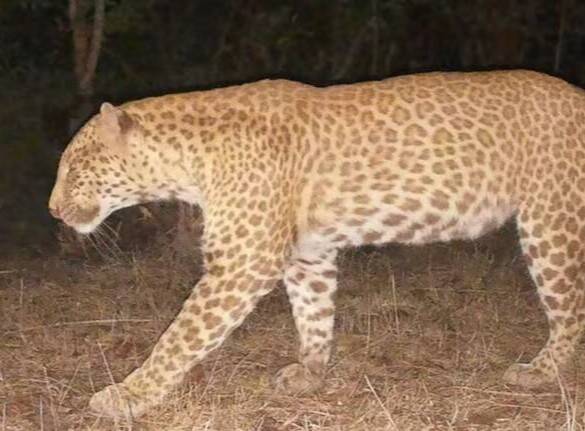
In a groundbreaking discovery, researchers in Karnataka have documented an ultra-rare leopard colour morph in Vijayanagara district, marking only the second confirmed sighting of such a big cat in India and the first in the state. The animal, named the ‘Sandalwood Leopard’ by conservationists, is distinguished by a pale reddish-pink coat with light-brown rosettes. This extraordinary finding has sent shockwaves of excitement throughout the scientific community and highlights the rich biodiversity of the region.
The ‘Sandalwood Leopard’ was spotted by renowned wildlife scientist Sanjay Gubbi, who has been studying the leopards of Karnataka for years. Gubbi’s team has been conducting extensive research in the Vijayanagara district, using camera traps and other monitoring techniques to track the leopard population. The team’s perseverance paid off when they captured images of the rare leopard, which has been identified as a unique colour morph.
The ‘Sandalwood Leopard’ gets its name from the distinctive pale reddish-pink coat, which is reminiscent of the colour of sandalwood. The light-brown rosettes on its fur add to its striking appearance, making it a truly one-of-a-kind animal. This colour morph is extremely rare, with only one other confirmed sighting in India, making this discovery all the more significant.
The sighting of the ‘Sandalwood Leopard’ has sparked widespread interest and excitement among wildlife enthusiasts and scientists alike. The discovery highlights the importance of conservation efforts and the need to protect the natural habitats of these magnificent creatures. Leopards are apex predators and play a crucial role in maintaining the balance of the ecosystem. However, they are facing numerous threats, including habitat loss, human-wildlife conflict, and poaching.
Karnataka is home to a significant population of leopards, and the state has been taking steps to conserve and protect these big cats. The government has established several protected areas, including national parks and wildlife sanctuaries, to provide a safe habitat for leopards and other wildlife. However, more needs to be done to address the ongoing threats faced by these animals.
The discovery of the ‘Sandalwood Leopard’ is a testament to the rich biodiversity of Karnataka and the importance of preserving the state’s natural heritage. The sighting of this rare colour morph is a reminder that there is still much to be discovered and explored in the natural world. It also highlights the need for continued conservation efforts and research into the biology and ecology of leopards.
Wildlife scientist Sanjay Gubbi, who documented the ‘Sandalwood Leopard’, has emphasized the importance of protecting the natural habitats of leopards and other wildlife. “The discovery of the ‘Sandalwood Leopard’ is a significant finding, and it highlights the need for continued conservation efforts in Karnataka,” Gubbi said. “We need to protect the habitats of these amazing animals and ensure that they continue to thrive in the wild.”
The ‘Sandalwood Leopard’ is not only an important discovery for science, but it also has significant cultural and symbolic value. Leopards have long been revered in Indian culture, and the ‘Sandalwood Leopard’ is a powerful symbol of the country’s rich natural heritage. The discovery of this rare colour morph is a reminder of the importance of preserving India’s natural treasures and the need to protect the country’s biodiversity.
In conclusion, the discovery of the ‘Sandalwood Leopard’ in Karnataka is a groundbreaking finding that highlights the importance of conservation efforts and the need to protect the natural habitats of these magnificent creatures. The ‘Sandalwood Leopard’ is a rare and unique colour morph that is a testament to the rich biodiversity of the region. As we continue to learn more about these amazing animals, it is essential that we take steps to ensure their survival and protect their habitats for future generations.
About the Author