Rare ‘Sandalwood Leopard’ Spotted for the First Time in Karnataka
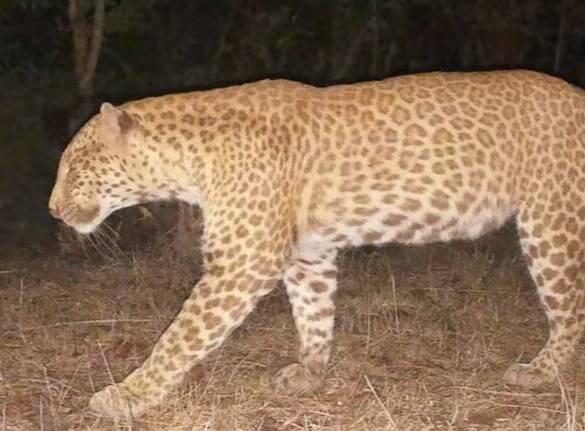
In a groundbreaking discovery, researchers in Karnataka have made a historic sighting of an ultra-rare leopard colour morph in the Vijayanagara district. This incredible find marks only the second confirmed sighting of such a big cat in India and the first in the state of Karnataka. The animal, affectionately named the ‘Sandalwood Leopard’ by conservationists, boasts a stunning pale reddish-pink coat adorned with light-brown rosettes, making it a truly unique and breathtaking specimen.
The Sandalwood Leopard’s discovery is a significant milestone for wildlife conservation in India, and it is a testament to the country’s rich biodiversity. The sighting was documented by renowned wildlife scientist Sanjay Gubbi, who has dedicated his career to studying and protecting India’s magnificent wildlife. Gubbi’s tireless efforts have shed light on the importance of preserving India’s natural habitats and the incredible creatures that inhabit them.
The Sandalwood Leopard’s distinctive coat is unlike any other leopard colour morph found in India. While leopards are known for their striking golden coats with dark spots or rosettes, the Sandalwood Leopard’s pale reddish-pink hue is a result of a rare genetic condition. This condition, known as leucism, affects the production of melanin, resulting in a reduction or complete loss of pigmentation in the animal’s skin and hair. Leucism is different from albinism, as it does not affect the animal’s eyes, and the Sandalwood Leopard’s eyes are likely to be normal.
The first confirmed sighting of a Sandalwood Leopard in India was recorded in 2019, and since then, there have been no other documented sightings of this rare colour morph. The recent sighting in Karnataka’s Vijayanagara district is, therefore, a significant discovery, and it highlights the importance of continued conservation efforts in the region. The Vijayanagara district is known for its rich biodiversity, and the presence of the Sandalwood Leopard is a testament to the district’s unique ecosystem.
The discovery of the Sandalwood Leopard has sparked widespread interest and excitement among wildlife enthusiasts and conservationists. The animal’s stunning appearance has captivated the imagination of people around the world, and it has raised awareness about the importance of protecting India’s wildlife and natural habitats. The Sandalwood Leopard’s story is a reminder of the beauty and diversity of India’s wildlife, and it highlights the need for continued conservation efforts to protect these incredible creatures.
In recent years, India has made significant strides in wildlife conservation, with a focus on protecting endangered species and preserving natural habitats. The country has established a network of national parks and wildlife sanctuaries, which provide a safe haven for animals like the Sandalwood Leopard. However, despite these efforts, many challenges remain, and continued conservation efforts are necessary to protect India’s wildlife.
The discovery of the Sandalwood Leopard is a significant milestone for Karnataka, and it highlights the state’s importance in India’s wildlife conservation efforts. Karnataka is home to a diverse range of wildlife, including elephants, tigers, and leopards, and the state’s natural habitats are essential for the survival of these species. The presence of the Sandalwood Leopard in Karnataka is a testament to the state’s unique ecosystem, and it underscores the need for continued conservation efforts to protect the state’s wildlife.
In conclusion, the discovery of the Sandalwood Leopard in Karnataka’s Vijayanagara district is a historic find that highlights the importance of continued conservation efforts in India. The animal’s stunning appearance has captivated the imagination of people around the world, and it has raised awareness about the importance of protecting India’s wildlife and natural habitats. As we continue to learn more about this incredible creature, we are reminded of the beauty and diversity of India’s wildlife, and the need for continued conservation efforts to protect these incredible animals.
About the Author