Rare ‘Sandalwood Leopard’ Spotted for the First Time in Karnataka
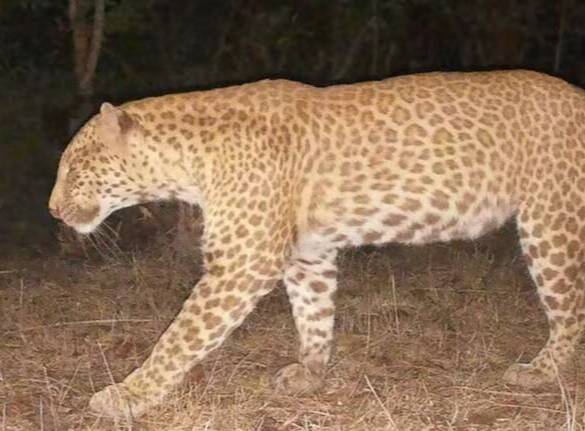
In a groundbreaking discovery, researchers in Karnataka have documented an ultra-rare leopard colour morph in Vijayanagara district, marking only the second confirmed sighting of such a big cat in India and the first in the state. The animal, named the ‘Sandalwood Leopard’ by conservationists, is distinguished by a pale reddish-pink coat with light-brown rosettes. This extraordinary finding has sent shockwaves of excitement throughout the wildlife community, and we are eager to delve into the details of this remarkable sighting.
The ‘Sandalwood Leopard’ was spotted by renowned wildlife scientist Sanjay Gubbi, who has been studying leopards in the region for years. Gubbi’s team has been conducting research in the Vijayanagara district, and it was during one of their camera trap surveys that they captured images of the rare leopard. The camera trap, which is a non-invasive method of monitoring wildlife, snapped photos of the leopard, providing conclusive evidence of its existence.
The ‘Sandalwood Leopard’ is an extremely rare colour morph of the Indian leopard (Panthera pardus fusca), which is already a threatened species in India. The leopard’s distinctive coat pattern, featuring pale reddish-pink fur with light-brown rosettes, sets it apart from other leopards. This unique colouration is the result of a genetic variation, which is extremely rare in the leopard population.
The first confirmed sighting of a ‘Sandalwood Leopard’ was recorded in 2019 in the Satpura-Maikal landscape of central India. However, this recent sighting in Karnataka marks the first time such a leopard has been spotted in the state. The discovery of this rare leopard in Karnataka highlights the importance of conservation efforts in the region and underscores the need to protect the state’s rich biodiversity.
Sanjay Gubbi, the wildlife scientist who documented the ‘Sandalwood Leopard’, expressed his excitement about the discovery, stating that it was a “once-in-a-lifetime” experience. Gubbi’s team has been working tirelessly to monitor and study leopards in the region, and this discovery is a testament to their dedication and hard work.
The ‘Sandalwood Leopard’ is not only an extraordinary sight to behold, but it also holds significant scientific value. The discovery of this rare colour morph can provide valuable insights into the genetics and ecology of leopards, which can inform conservation efforts. Furthermore, the presence of such a rare and unique animal in Karnataka can help raise awareness about the importance of conservation and the need to protect the state’s wildlife.
The Karnataka government has been taking steps to conserve the state’s wildlife, including the establishment of protected areas and the implementation of anti-poaching laws. However, more needs to be done to ensure the long-term survival of leopards and other wildlife species in the state. The discovery of the ‘Sandalwood Leopard’ serves as a reminder of the importance of continued conservation efforts and the need to protect Karnataka’s rich biodiversity.
In conclusion, the spotting of the ‘Sandalwood Leopard’ in Karnataka is a groundbreaking discovery that highlights the importance of conservation efforts in the region. The discovery of this rare and unique animal serves as a reminder of the beauty and diversity of India’s wildlife and underscores the need to protect the country’s rich biodiversity. We hope that this extraordinary finding will inspire further research and conservation efforts, ensuring the long-term survival of leopards and other wildlife species in Karnataka.
About the Author