Rare ‘sandalwood leopard’ spotted for the first time in Karnataka
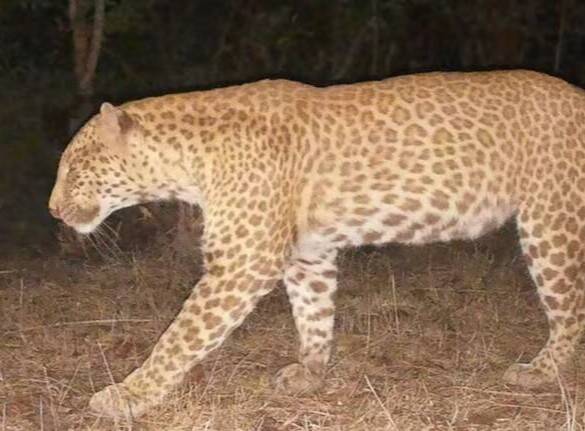
In a groundbreaking discovery, researchers in Karnataka have documented an ultra-rare leopard colour morph in Vijayanagara district, marking only the second confirmed sighting of such a big cat in India and the first in the state. The animal, named the ‘Sandalwood Leopard’ by conservationists, is distinguished by a pale reddish-pink coat with light-brown rosettes. This extraordinary finding has sent shockwaves of excitement throughout the scientific community, and wildlife enthusiasts are eager to learn more about this elusive and stunning creature.
The Sandalwood Leopard was spotted by renowned wildlife scientist Sanjay Gubbi, who has spent years studying and tracking leopards in the region. Gubbi’s team has been conducting extensive research in the Vijayanagara district, using camera traps and other monitoring techniques to gather data on the local leopard population. It was during one of these monitoring sessions that they captured the remarkable images of the Sandalwood Leopard, which has left the scientific community abuzz with excitement.
The Sandalwood Leopard’s unique coat colouration is unlike anything seen before in the region. The pale reddish-pink hue with light-brown rosettes gives the animal a distinctive appearance, setting it apart from other leopards. This rare colour morph is thought to be the result of a genetic variation, which affects the production of melanin, the pigment responsible for skin and hair colour. The exact causes of this variation are still not fully understood and require further research.
The discovery of the Sandalwood Leopard has significant implications for conservation efforts in the region. Leopards are already an endangered species, and the loss of habitat and prey base has made it challenging for them to survive. The presence of this rare colour morph highlights the importance of preserving the natural habitats of these majestic creatures. The Karnataka government and conservation organizations must work together to protect the forests and grasslands of the Vijayanagara district, ensuring the long-term survival of the Sandalwood Leopard and other wildlife species.
The Sandalwood Leopard is not the only rare colour morph of leopards found in India. In the past, there have been reports of “strawberry” or “golden” leopards, which exhibit a similar pale coat colouration. However, these sightings are extremely rare, and the Sandalwood Leopard is only the second confirmed sighting of such a big cat in the country. The first recorded sighting of a strawberry leopard was in 2019, in the nearby state of Tamil Nadu.
The discovery of the Sandalwood Leopard has sparked a renewed interest in leopard conservation in Karnataka. The state government has announced plans to increase protection for the Vijayanagara district’s forests and wildlife, including the establishment of new protected areas and anti-poaching units. These efforts are crucial in safeguarding the future of the Sandalwood Leopard and other endangered species in the region.
In addition to conservation efforts, the discovery of the Sandalwood Leopard has also raised awareness about the importance of scientific research and monitoring in wildlife conservation. The use of camera traps and other monitoring techniques has proven to be an effective way to track and study leopards, providing valuable insights into their behavior, habitat, and population dynamics. This information can be used to inform conservation strategies and ensure the long-term survival of these majestic creatures.
In conclusion, the discovery of the Sandalwood Leopard in Karnataka is a significant finding that highlights the importance of conservation and scientific research in protecting endangered species. The unique coat colouration of this rare leopard has captivated the imagination of wildlife enthusiasts and scientists alike, and its discovery has sparked a renewed interest in leopard conservation in the region. As we continue to learn more about this extraordinary creature, it is essential that we take immediate action to protect its habitat and ensure its survival for generations to come.
About the Author