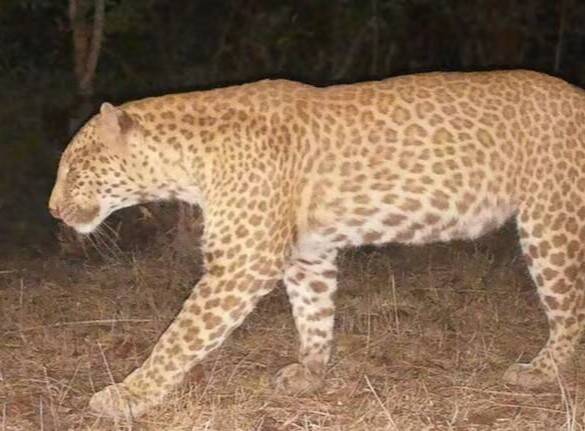
Rare ‘sandalwood leopard’ spotted for the first time in Karnataka
In a groundbreaking discovery, researchers in Karnataka have documented an ultra-rare leopard colour morph in Vijayanagara district, marking only the second confirmed sighting of such a big cat in India and the first in the state. The animal, named the ‘Sandalwood Leopard’ by conservationists, is distinguished by a pale reddish-pink coat with light-brown rosettes. This extraordinary finding has sent shockwaves of excitement throughout the wildlife community, and we are thrilled to delve into the details of this remarkable discovery.
The Sandalwood Leopard, as it has been dubbed, is a rare genetic variation of the Indian leopard (Panthera pardus fusca), which is already a majestic and elusive creature. The Indian leopard is widely distributed across the country, but the Sandalwood Leopard is a unique colour morph that has only been spotted once before in India. The first recorded sighting of this colour morph was in a different part of the country, making this recent discovery in Karnataka all the more significant.
Wildlife scientist Sanjay Gubbi, who documented the leopard, has been studying the wildlife of Karnataka for many years. His team has been conducting extensive research in the Vijayanagara district, which is known for its rich biodiversity and lush forests. The region is home to a wide range of flora and fauna, including several endangered species. The discovery of the Sandalwood Leopard is a testament to the importance of preserving and protecting these natural habitats, which are essential for the survival of these incredible creatures.
The Sandalwood Leopard’s distinctive coat is its most striking feature. The pale reddish-pink colour with light-brown rosettes is a result of a rare genetic variation that affects the production of melanin, the pigment responsible for skin and hair colour. This unique colouration is not only breathtakingly beautiful but also provides the leopard with exceptional camouflage in its natural habitat. The light-brown rosettes help the leopard to blend in with its surroundings, making it nearly invisible in the dappled light of the forest.
The discovery of the Sandalwood Leopard has significant implications for conservation efforts in Karnataka. The state is already home to several protected areas, including national parks and wildlife sanctuaries, which provide a safe haven for endangered species. However, the presence of this rare colour morph highlights the need for continued conservation efforts and the importance of protecting these natural habitats. The Karnataka government has been taking steps to preserve the state’s biodiversity, including the creation of new protected areas and the implementation of anti-poaching laws.
The Sandalwood Leopard is not only a rare and beautiful creature, but it is also an important part of the ecosystem. Leopards play a vital role in maintaining the balance of nature, preying on herbivores that might otherwise overgraze and damage the vegetation. The loss of these apex predators can have a ripple effect throughout the ecosystem, leading to a decline in biodiversity and ecosystem health.
The discovery of the Sandalwood Leopard is a reminder of the importance of preserving our natural heritage. As we continue to urbanize and develop our natural resources, it is essential that we take steps to protect these incredible creatures and their habitats. The Karnataka government, in collaboration with conservation organizations and local communities, must work together to ensure the long-term survival of the Sandalwood Leopard and other endangered species.
In conclusion, the discovery of the Sandalwood Leopard in Karnataka is a momentous occasion that highlights the importance of conservation and the need to protect our natural heritage. This rare and beautiful creature is a testament to the incredible biodiversity of our planet, and it is our responsibility to ensure its survival. As we marvel at the beauty of the Sandalwood Leopard, let us also remember the importance of preserving its habitat and the ecosystem that it inhabits.
About the Author