Pits, Pores, and more: The science behind India’s newest mushrooms
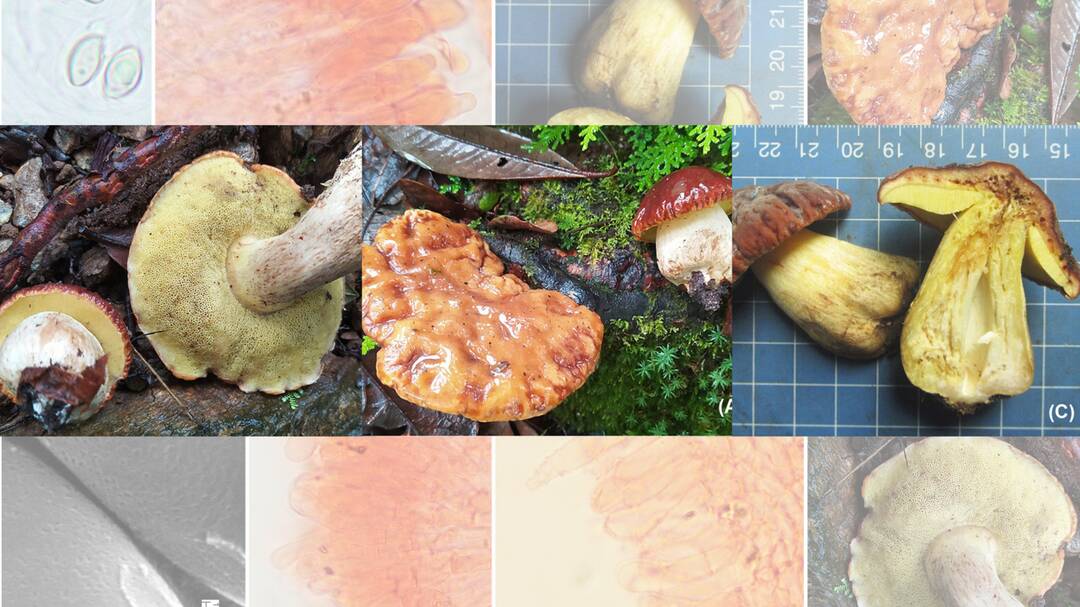
The world of mycology, the study of fungi, is a vast and fascinating one. With new species of mushrooms being discovered all the time, it’s an exciting field that continues to surprise and delight scientists and enthusiasts alike. Recently, a team of researchers at St. Xavier’s College, Jharkhand, made a groundbreaking discovery in the Himalayas, identifying a new species of mushroom that has never been seen before in India. The new species, named Hemileccinum indicum, was found at an altitude of 2,600 meters, and its unique characteristics have shed new light on the diversity of fungal life in the region.
The discovery of Hemileccinum indicum is significant not only because it is a new species, but also because it represents the first time that this genus has been recorded in India. The genus Hemileccinum is a group of mushrooms that are commonly found in temperate and subtropical regions, but until now, they had not been found in India. The fact that this species was discovered in the Himalayas, a region known for its rich biodiversity, is not surprising, but it does highlight the importance of continued exploration and research in this area.
So, what makes Hemileccinum indicum so special? The answer lies in its unique “pitted” spores. Spores are the reproductive structures of fungi, and they play a crucial role in the life cycle of these organisms. In the case of Hemileccinum indicum, the spores have small pits or depressions on their surface, which is a characteristic that sets them apart from other species of mushrooms. To identify these unique spores, the researchers used a combination of DNA sequencing and electron microscopy, two powerful tools that have revolutionized the field of mycology.
DNA sequencing is a technique that involves analyzing the genetic material of an organism to determine its genetic makeup. By comparing the DNA sequence of Hemileccinum indicum to other species of mushrooms, the researchers were able to confirm that it was a new species and to identify its closest relatives. Electron microscopy, on the other hand, is a technique that uses a beam of electrons to produce high-resolution images of small structures, such as spores. By using electron microscopy, the researchers were able to visualize the unique pits on the surface of the spores and to study their morphology in detail.
The discovery of Hemileccinum indicum is not only significant from a scientific perspective, but it also highlights the importance of preserving and protecting the natural habitats of these organisms. The Himalayas are home to a vast array of plant and animal species, many of which are found nowhere else on Earth. However, the region is also facing numerous threats, including deforestation, climate change, and human development. By studying the unique species that are found in this region, scientists can gain a better understanding of the complex relationships between organisms and their environments, and can work to develop strategies for preserving these ecosystems.
In addition to its scientific significance, the discovery of Hemileccinum indicum also has potential practical applications. Mushrooms have been used for centuries in traditional medicine, and many species have been found to have unique properties that make them useful for a range of applications, from food to pharmaceuticals. By studying the properties of Hemileccinum indicum, scientists may be able to identify new uses for this species, such as the development of new medicines or food products.
The discovery of Hemileccinum indicum is also a testament to the power of collaboration and international cooperation in scientific research. The team of researchers who made the discovery included scientists from India and other countries, and their work was supported by a range of organizations and institutions. By working together and sharing their expertise and resources, scientists can achieve far more than they could alone, and can make new discoveries that advance our understanding of the world.
In conclusion, the discovery of Hemileccinum indicum is a significant breakthrough in the field of mycology, and it highlights the importance of continued research and exploration in the natural world. By studying the unique characteristics of this new species, scientists can gain a better understanding of the diversity of fungal life in the Himalayas, and can work to develop new strategies for preserving and protecting these ecosystems. Whether you are a scientist, a nature enthusiast, or simply someone who is curious about the world around you, the discovery of Hemileccinum indicum is a reminder of the awe-inspiring complexity and beauty of the natural world.
News Source: https://researchmatters.in/news/new-pitted-spore-mushroom-found-himalayas-oak-forests-uttarakhand
About the Author