Pits, Pores, and more: The science behind India’s newest mushrooms
The world of fungi is a vast and wondrous place, full of mysteries waiting to be uncovered. In recent years, India has emerged as a hotspot for mycological research, with scientists discovering new species of mushrooms in various parts of the country. One such discovery has been making waves in the scientific community, with researchers at St. Xavier’s College, Jharkhand, identifying a new species of mushroom that has never been seen before in India. Meet Hemileccinum indicum, a fascinating fungus that has shed new light on the diversity of India’s mycological landscape.
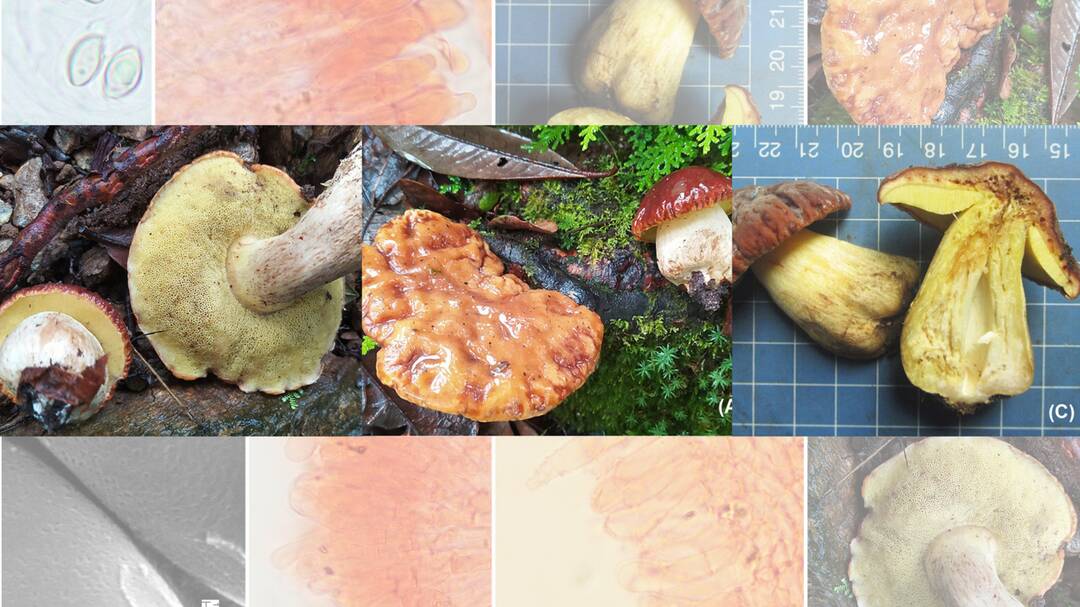
The story of Hemileccinum indicum begins in the picturesque oak forests of Uttarakhand, where researchers stumbled upon a peculiar-looking mushroom growing at an altitude of 2,600 meters. Initial observations suggested that this mushroom belonged to the genus Hemileccinum, a group of fungi known for their distinctive “pitted” spores. However, further analysis was needed to confirm the identity of this enigmatic fungus.
To unravel the secrets of Hemileccinum indicum, researchers employed a range of cutting-edge techniques, including DNA sequencing and electron microscopy. DNA sequencing allowed scientists to analyze the genetic material of the mushroom, comparing it to existing databases of fungal genomes. This helped them to confirm that Hemileccinum indicum was indeed a new species, one that had never been recorded in India before.
Electron microscopy, on the other hand, provided a detailed look at the mushroom’s microscopic features, including its spores. The “pitted” spores of Hemileccinum indicum are a distinctive characteristic of this genus, with each spore featuring a series of tiny pits or depressions on its surface. These pits are thought to play a crucial role in the dispersal of spores, allowing them to adhere to surfaces and germinate in new locations.
The discovery of Hemileccinum indicum is significant not only because it represents a new species, but also because it highlights the vast and unexplored world of Indian mycology. India is home to a staggering array of fungal species, many of which remain undescribed and unstudied. The identification of Hemileccinum indicum serves as a reminder of the importance of continued exploration and research into the country’s rich mycological heritage.
So, what does the future hold for Hemileccinum indicum? As researchers continue to study this fascinating fungus, they hope to uncover more about its ecology, distribution, and potential uses. For example, some species of Hemileccinum are known to form symbiotic relationships with tree roots, playing a vital role in forest ecosystems. Could Hemileccinum indicum have similar properties, making it a valuable ally in the quest to protect India’s fragile forest ecosystems?
As we delve deeper into the world of Hemileccinum indicum, we are reminded of the awe-inspiring complexity and diversity of the natural world. From the tiny pits on its spores to the vast, unexplored landscapes of India’s mycological frontier, there is still so much to discover and learn. As scientists continue to push the boundaries of our knowledge, we are invited to join them on a journey of exploration and wonder, one that will take us to the very limits of human understanding.
In conclusion, the discovery of Hemileccinum indicum is a testament to the power of scientific inquiry and the importance of continued exploration into the natural world. As we celebrate this remarkable find, we are also reminded of the many mysteries that still await us, hidden in the forests, fields, and fungi of India. Whether you are a scientist, a nature lover, or simply someone who is curious about the world around you, the story of Hemileccinum indicum is sure to inspire and delight, offering a glimpse into the incredible diversity and complexity of the natural world.
News source: https://researchmatters.in/news/new-pitted-spore-mushroom-found-himalayas-oak-forests-uttarakhand
About the Author