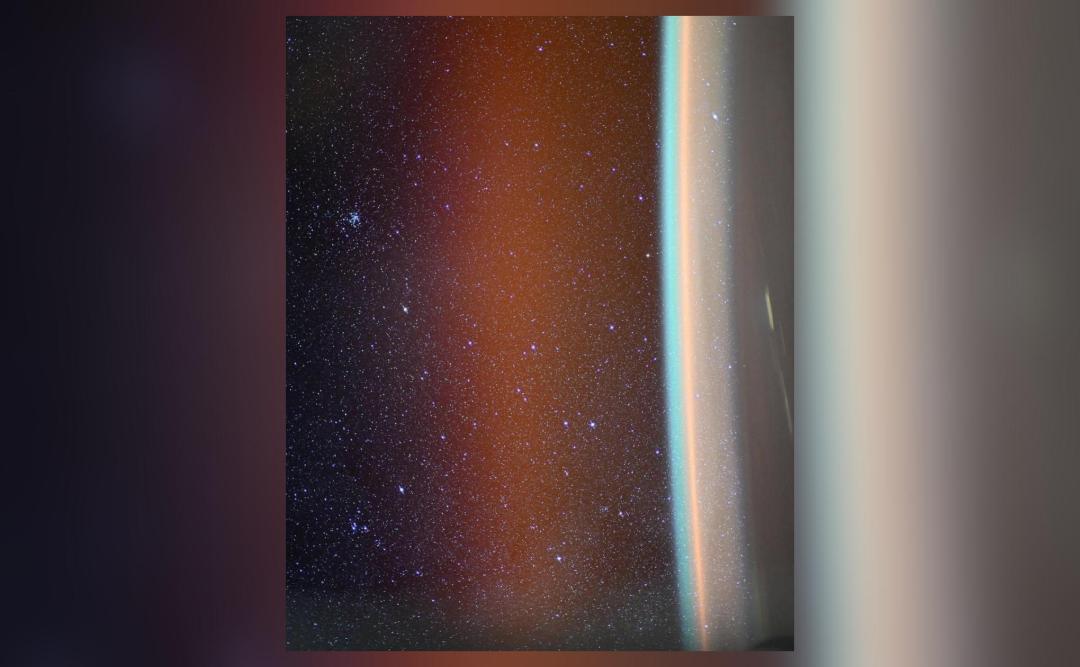
Pic shows colours of Earth’s atmosphere as seen from space
The Earth’s atmosphere is a complex and fascinating system that surrounds our planet, protecting us from the harsh conditions of space. While we often take it for granted, the atmosphere is a remarkable sight to behold, especially when viewed from space. Recently, an image captured from the International Space Station (ISS) has given us a glimpse into the vibrant colors of our atmosphere, showcasing the stunning beauty of our planet.
The image, shared by NASA astronaut Don Pettit, reveals the multiple layers of the atmosphere, each with its own unique characteristics. “Multiple vibrant layers of green atomic oxygen, orange hydroxyl radicals, and red airglow excited from solar activity,” Pettit wrote, describing the breathtaking view. The image is a testament to the incredible beauty of our planet, and the complex processes that occur in the upper atmosphere.
One of the most striking features of the image is the airglow, which appears as a bright red layer in the atmosphere. Airglow occurs when atoms and molecules in the upper atmosphere, excited by sunlight, emit light in order to shed their excess energy. This process is similar to the glow of a neon sign, where electricity excites the atoms, causing them to emit light. In the case of airglow, the energy source is the sun, which excites the atoms and molecules in the upper atmosphere, causing them to emit light.
The airglow is not just a beautiful sight; it also plays an important role in the Earth’s atmosphere. It helps to regulate the temperature of the upper atmosphere, and it also affects the formation of the aurorae, also known as the northern or southern lights. The airglow is most pronounced during periods of high solar activity, when the sun’s energy is at its strongest. This is why the image captured by Pettit shows such a vibrant display of airglow, with the red color dominating the upper atmosphere.
In addition to the airglow, the image also shows the presence of green atomic oxygen and orange hydroxyl radicals. These are both important components of the upper atmosphere, and they play a crucial role in the Earth’s climate system. The green atomic oxygen is formed when oxygen molecules are broken down by ultraviolet radiation, while the orange hydroxyl radicals are formed when water molecules are broken down by ultraviolet radiation. Both of these components are important for understanding the chemistry of the upper atmosphere, and they have a significant impact on the Earth’s climate.
The image captured by Pettit is not just a beautiful sight; it is also an important tool for scientists studying the Earth’s atmosphere. By analyzing the colors and layers of the atmosphere, scientists can gain a better understanding of the complex processes that occur in the upper atmosphere. This knowledge can be used to improve our understanding of the Earth’s climate system, and to develop more accurate models of the atmosphere.
The ISS, where the image was captured, is a unique platform for studying the Earth’s atmosphere. The station orbits the Earth at an altitude of around 250 miles, which gives it a unique perspective on the planet. The ISS is equipped with a range of instruments and cameras, which allow scientists to study the Earth’s atmosphere in unprecedented detail. The station is also home to a range of scientific experiments, which are designed to study the Earth’s atmosphere and the effects of space travel on the human body.
In conclusion, the image captured by NASA astronaut Don Pettit is a stunning example of the beauty and complexity of the Earth’s atmosphere. The vibrant colors and layers of the atmosphere are a testament to the incredible processes that occur in the upper atmosphere, and they highlight the importance of continued research and exploration of our planet. By studying the Earth’s atmosphere, scientists can gain a better understanding of the complex systems that govern our planet, and develop new technologies and strategies for protecting our planet.
The image is a reminder of the incredible beauty and complexity of our planet, and it highlights the importance of continued exploration and research. As we continue to explore and study the Earth’s atmosphere, we are constantly reminded of the awe-inspiring beauty of our planet, and the importance of protecting it for future generations.
Source: https://www.instagram.com/p/DRsbl4PEZJx/
About the Author