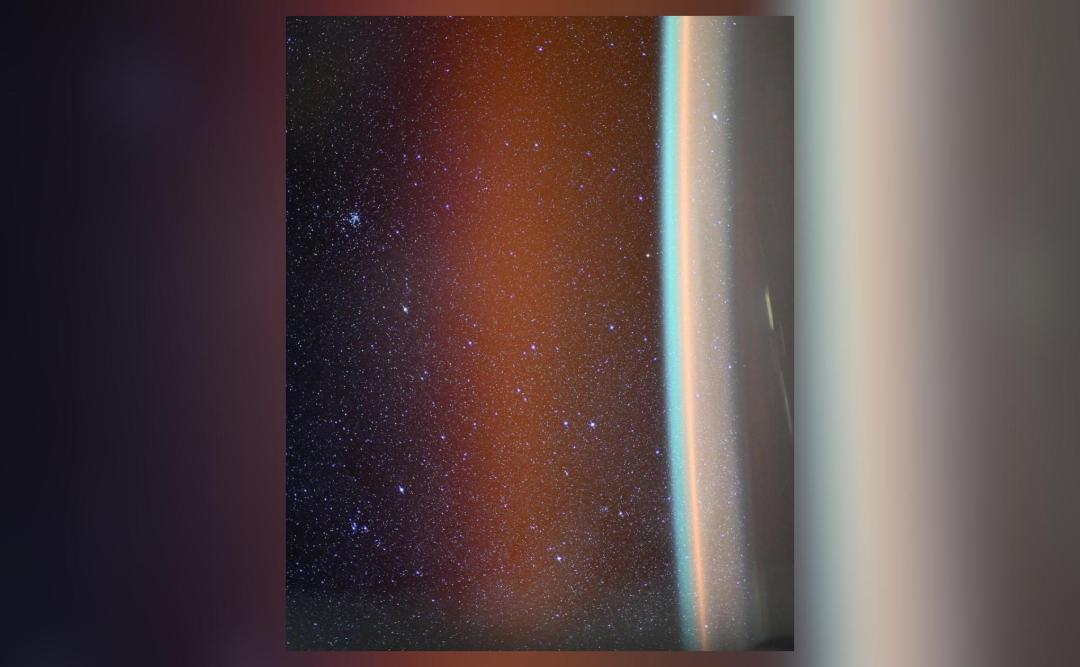
Pic shows colours of Earth’s atmosphere as seen from space
The Earth’s atmosphere is a complex and fascinating system that surrounds our planet, and a recent image captured from the International Space Station (ISS) has given us a glimpse of its breathtaking beauty. The picture, shared by NASA astronaut Don Pettit, shows the bright colours of the Earth’s atmosphere as seen from space, revealing the multiple vibrant layers that make up this vital component of our planet.
According to Pettit, the image captures “multiple vibrant layers of green atomic oxygen, orange hydroxyl radicals, and red airglow excited from solar activity.” This stunning display of colours is a result of a phenomenon known as airglow, which occurs when atoms and molecules in the upper atmosphere, excited by sunlight, emit light in order to shed their excess energy. This process is similar to the way a neon sign works, where electrically excited atoms release energy in the form of light.
Airglow is a natural process that occurs in the Earth’s atmosphere, and it is most visible at night, when the sun’s rays are no longer directly illuminating the atmosphere. The colours produced by airglow can vary depending on the altitude and the type of atoms and molecules present in the atmosphere. In this particular image, the green colour is produced by atomic oxygen, which is present at altitudes of around 100-200 km. The orange colour, on the other hand, is produced by hydroxyl radicals, which are formed when ozone molecules react with hydrogen atoms.
The red colour in the image is produced by airglow excited from solar activity, which is a result of the sun’s ultraviolet radiation interacting with the atmosphere. This type of airglow is more variable and can be influenced by the sun’s activity, such as during solar flares and coronal mass ejections.
The image captured by Pettit is not only visually stunning but also provides valuable insights into the Earth’s atmosphere and its interaction with the sun. By studying airglow, scientists can gain a better understanding of the atmospheric chemistry and the physical processes that occur in the upper atmosphere.
The ISS, from where the image was captured, is a unique platform for observing the Earth’s atmosphere. The station’s orbit takes it to an altitude of around 400 km, which is above the majority of the atmosphere, allowing astronauts to observe the atmosphere from a unique perspective. The ISS is also equipped with a range of instruments that can measure the properties of the atmosphere, such as temperature, pressure, and composition.
The study of the Earth’s atmosphere is essential for understanding our planet’s climate and weather patterns. The atmosphere plays a critical role in regulating the Earth’s temperature, and changes in the atmosphere can have significant impacts on the climate. By studying the atmosphere from space, scientists can gain a better understanding of the complex processes that occur in the atmosphere and how they interact with the Earth’s surface.
In addition to its scientific value, the image captured by Pettit is also a reminder of the beauty and complexity of the Earth’s atmosphere. The vibrant colours and delicate layers of the atmosphere are a testament to the awe-inspiring beauty of our planet, and the importance of preserving and protecting it for future generations.
In conclusion, the image captured from the ISS shows the breathtaking colours of the Earth’s atmosphere as seen from space, revealing the complex and fascinating processes that occur in this vital component of our planet. The study of the atmosphere is essential for understanding our planet’s climate and weather patterns, and images like this one remind us of the beauty and importance of preserving our planet’s atmosphere.
News Source: https://www.instagram.com/p/DRsbl4PEZJx/
About the Author