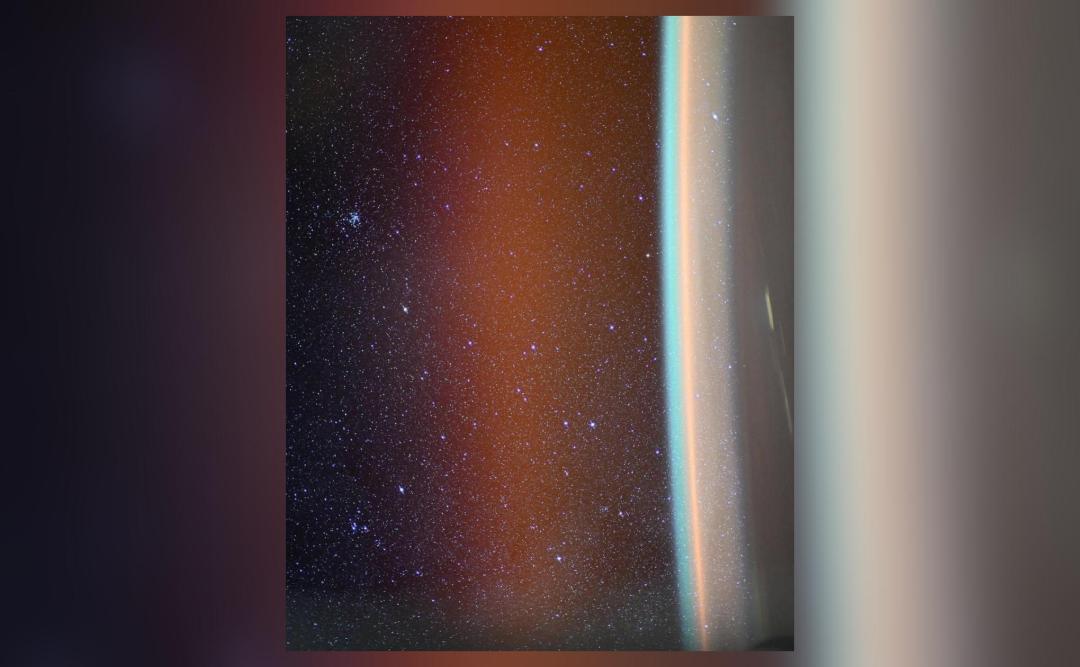
Pic shows colours of Earth’s atmosphere as seen from space
The Earth’s atmosphere is a complex and fascinating entity, comprising multiple layers of gases that surround our planet. While we are accustomed to seeing the Earth’s atmosphere from the ground, a recent image captured from the International Space Station (ISS) offers a breathtaking perspective on the vibrant colors of our atmosphere as seen from space. The image, shared by NASA astronaut Don Pettit, showcases the stunning beauty of the Earth’s atmosphere, with multiple vibrant layers of green atomic oxygen, orange hydroxyl radicals, and red airglow excited from solar activity.
The image, which has been making waves on social media, provides a unique glimpse into the Earth’s atmosphere, highlighting the distinct layers of gases that surround our planet. According to Pettit, the image captures the “multiple vibrant layers of green atomic oxygen, orange hydroxyl radicals, and red airglow excited from solar activity.” This phenomenon, known as airglow, occurs when atoms and molecules in the upper atmosphere, excited by sunlight, emit light in order to shed their excess energy. The result is a spectacular display of colors that are visible from space, offering a glimpse into the dynamic and ever-changing nature of the Earth’s atmosphere.
Airglow is a natural process that occurs when the sun’s radiation excites the atoms and molecules in the upper atmosphere, causing them to emit light. This process is similar to the aurora borealis, or northern lights, which occur when charged particles from the sun interact with the Earth’s magnetic field and atmosphere. However, airglow is a more diffuse and widespread phenomenon, occurring at all latitudes and longitudes, whereas the aurora borealis is typically limited to high-latitude regions.
The image captured by Pettit shows the distinct layers of the Earth’s atmosphere, with the green atomic oxygen layer visible at the bottom, followed by the orange hydroxyl radicals, and finally the red airglow excited from solar activity at the top. The green layer is caused by the emission of light by atomic oxygen, which is excited by the sun’s ultraviolet radiation. The orange layer, on the other hand, is caused by the emission of light by hydroxyl radicals, which are formed when oxygen and hydrogen atoms react with each other. The red layer, which is the highest layer visible in the image, is caused by the emission of light by atoms and molecules that are excited by the sun’s solar activity.
The image is not only aesthetically pleasing but also provides valuable insights into the Earth’s atmosphere and its dynamics. By studying the airglow and the various layers of the atmosphere, scientists can gain a better understanding of the Earth’s atmospheric circulation patterns, as well as the interactions between the atmosphere and the sun’s radiation. This knowledge can, in turn, help us better understand the Earth’s climate and weather patterns, which are critical for predicting and mitigating the impacts of climate change.
The image also highlights the importance of space-based observations in studying the Earth’s atmosphere. The ISS, which orbits the Earth at an altitude of approximately 250 miles, provides a unique vantage point for observing the Earth’s atmosphere and its dynamics. By capturing images and data from space, scientists can gain a more comprehensive understanding of the Earth’s atmosphere and its interactions with the sun and the surrounding space environment.
In conclusion, the image captured by NASA astronaut Don Pettit from the ISS offers a breathtaking perspective on the vibrant colors of the Earth’s atmosphere as seen from space. The image showcases the stunning beauty of the Earth’s atmosphere, with multiple vibrant layers of green atomic oxygen, orange hydroxyl radicals, and red airglow excited from solar activity. By studying the airglow and the various layers of the atmosphere, scientists can gain valuable insights into the Earth’s atmospheric circulation patterns and the interactions between the atmosphere and the sun’s radiation. As we continue to explore and study the Earth’s atmosphere from space, we can gain a deeper understanding of our planet and its complex systems, which is essential for mitigating the impacts of climate change and ensuring a sustainable future for generations to come.
News Source: https://www.instagram.com/p/DRsbl4PEZJx/
About the Author