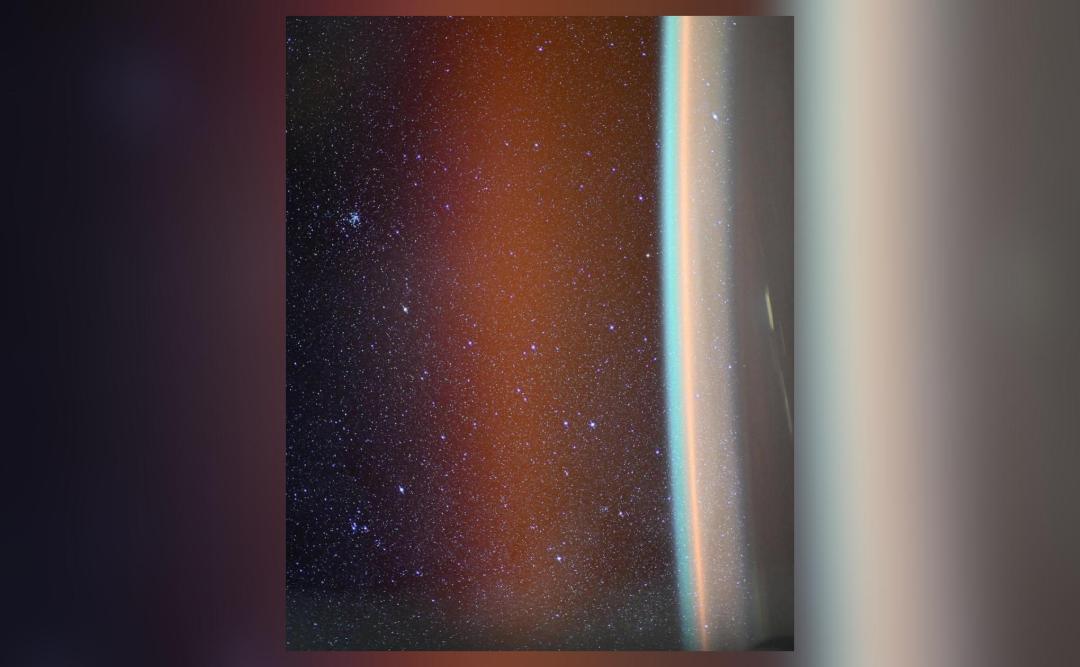
Pic shows colours of Earth’s atmosphere as seen from space
The Earth’s atmosphere is a complex and fascinating phenomenon that has captivated humans for centuries. Recently, an image captured from the International Space Station (ISS) has given us a glimpse into the breathtaking beauty of our planet’s atmosphere as seen from space. The photo, which has been making rounds on social media, showcases the vibrant colors of the Earth’s atmosphere, highlighting the intricate layers of gases that surround our planet.
According to NASA astronaut Don Pettit, who shared the image on his social media account, the photo depicts “multiple vibrant layers of green atomic oxygen, orange hydroxyl radicals, and red airglow excited from solar activity.” This stunning display of colors is a result of a phenomenon known as airglow, which occurs when atoms and molecules in the upper atmosphere, excited by sunlight, emit light in order to shed their excess energy.
Airglow is a natural process that occurs when the sun’s radiation interacts with the atoms and molecules in the Earth’s atmosphere. This interaction excites the atoms and molecules, causing them to emit light at specific wavelengths, resulting in the vibrant colors we see in the image. The colors are not just limited to the visible spectrum; airglow can also emit light in the ultraviolet and infrared regions of the electromagnetic spectrum.
The image shows the Earth’s atmosphere as a multicolored layer, with the green atomic oxygen dominating the lower altitudes, while the orange hydroxyl radicals and red airglow are more pronounced at higher altitudes. The green color is a result of the excitation of atomic oxygen by the sun’s radiation, which emits light at a wavelength of 557.7 nanometers, giving the atmosphere its characteristic green hue. The orange color, on the other hand, is caused by the emission of light by hydroxyl radicals, which are formed when the sun’s radiation interacts with the water molecules in the atmosphere.
The red airglow, which is visible at higher altitudes, is a result of the excitation of oxygen molecules by the sun’s radiation. This excitation causes the oxygen molecules to emit light at a wavelength of 630.0 nanometers, giving the atmosphere its reddish hue. The red airglow is also influenced by the solar activity, with increased solar radiation resulting in a more intense red glow.
The image captured from the ISS is not just a beautiful representation of the Earth’s atmosphere; it also provides valuable insights into the complex processes that occur in the upper atmosphere. By studying airglow, scientists can gain a better understanding of the interactions between the sun’s radiation and the Earth’s atmosphere, which is essential for predicting space weather events and understanding the impact of solar activity on the Earth’s magnetic field.
The study of airglow is also important for the development of new technologies, such as satellite communications and navigation systems. By understanding the properties of airglow, scientists can design more efficient and reliable systems that can operate in the presence of this natural phenomenon.
In conclusion, the image captured from the ISS is a stunning representation of the Earth’s atmosphere as seen from space. The vibrant colors of the atmosphere, caused by the airglow phenomenon, are a testament to the complex and fascinating processes that occur in the upper atmosphere. By studying airglow, scientists can gain a better understanding of the interactions between the sun’s radiation and the Earth’s atmosphere, which is essential for predicting space weather events and developing new technologies.
The image is a reminder of the beauty and complexity of our planet’s atmosphere, and the importance of continued scientific research and exploration. As we continue to explore and study the Earth’s atmosphere, we may uncover new and exciting phenomena that will help us better understand our planet and its place in the universe.
News Source: https://www.instagram.com/p/DRsbl4PEZJx/
About the Author