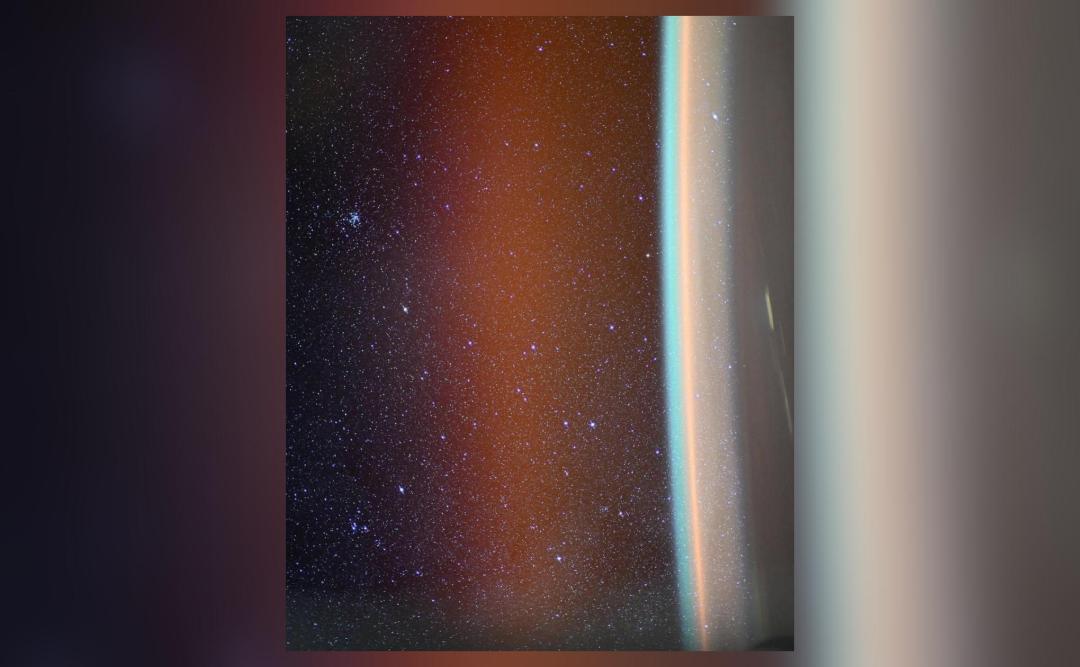
Pic shows colours of Earth’s atmosphere as seen from space
The Earth’s atmosphere is a complex and fascinating layer of gases that surrounds our planet, and it’s not often that we get to see it in all its glory. But a recent image captured from the International Space Station (ISS) has given us a breathtaking glimpse of the vibrant colors that make up our atmosphere. The image, which was shared by NASA astronaut Don Pettit, shows the bright colors of the Earth’s atmosphere as seen from space, and it’s a truly stunning sight.
According to Pettit, the image captures “multiple vibrant layers of green atomic oxygen, orange hydroxyl radicals, and red airglow excited from solar activity.” The airglow, which is the emission of light by atoms and molecules in the upper atmosphere, is a result of the atoms and molecules being excited by sunlight and then emitting light in order to shed their excess energy. This phenomenon occurs when the atoms and molecules in the upper atmosphere are energized by the sun’s radiation, causing them to vibrate and release their excess energy as light.
The image shows a kaleidoscope of colors, with the green atomic oxygen and orange hydroxyl radicals visible in the lower layers of the atmosphere, and the red airglow dominating the upper layers. The colors are so vivid and intense that it’s almost as if the atmosphere is glowing with an otherworldly light. The image is a powerful reminder of the beauty and complexity of the Earth’s atmosphere, and it’s a testament to the incredible work being done by NASA and its astronauts to explore and understand our planet.
But what exactly is airglow, and how does it occur? Airglow is a natural phenomenon that occurs when atoms and molecules in the upper atmosphere are excited by sunlight, causing them to emit light. This light is typically in the form of a glow, which is why it’s called airglow. The color of the airglow depends on the type of atoms and molecules that are being excited, as well as the energy level of the excitation. In the case of the image captured by Pettit, the green atomic oxygen and orange hydroxyl radicals are emitting light at specific wavelengths, which is why they appear as green and orange in the image.
The red airglow, on the other hand, is caused by the excitation of oxygen atoms and molecules by solar activity. When the sun is active, it emits a large amount of radiation, which can excite the atoms and molecules in the upper atmosphere, causing them to emit light. This light is typically in the form of a red glow, which is why the upper layers of the atmosphere appear red in the image.
The image captured by Pettit is not only a stunning example of the beauty of the Earth’s atmosphere, but it’s also an important reminder of the complex and dynamic nature of our planet. The atmosphere is constantly changing, with atoms and molecules being excited and emitting light in response to solar activity. This process is an important part of the Earth’s energy balance, and it plays a critical role in regulating the planet’s temperature and climate.
In addition to its scientific significance, the image is also a powerful reminder of the incredible work being done by NASA and its astronauts to explore and understand our planet. The ISS is a remarkable achievement, and it’s a testament to human ingenuity and curiosity. The fact that we can capture images like this from space is a remarkable achievement, and it’s a reminder of the incredible advances that have been made in space exploration and technology.
In conclusion, the image captured by NASA astronaut Don Pettit is a breathtaking example of the beauty and complexity of the Earth’s atmosphere. The vibrant colors of the atmosphere, which are caused by the excitation of atoms and molecules by sunlight, are a stunning sight to behold. The image is not only a powerful reminder of the beauty of our planet, but it’s also an important reminder of the complex and dynamic nature of the Earth’s atmosphere. As we continue to explore and understand our planet, images like this will play an important role in helping us to appreciate the beauty and complexity of the Earth’s atmosphere.
News source: https://www.instagram.com/p/DRsbl4PEZJx/
About the Author