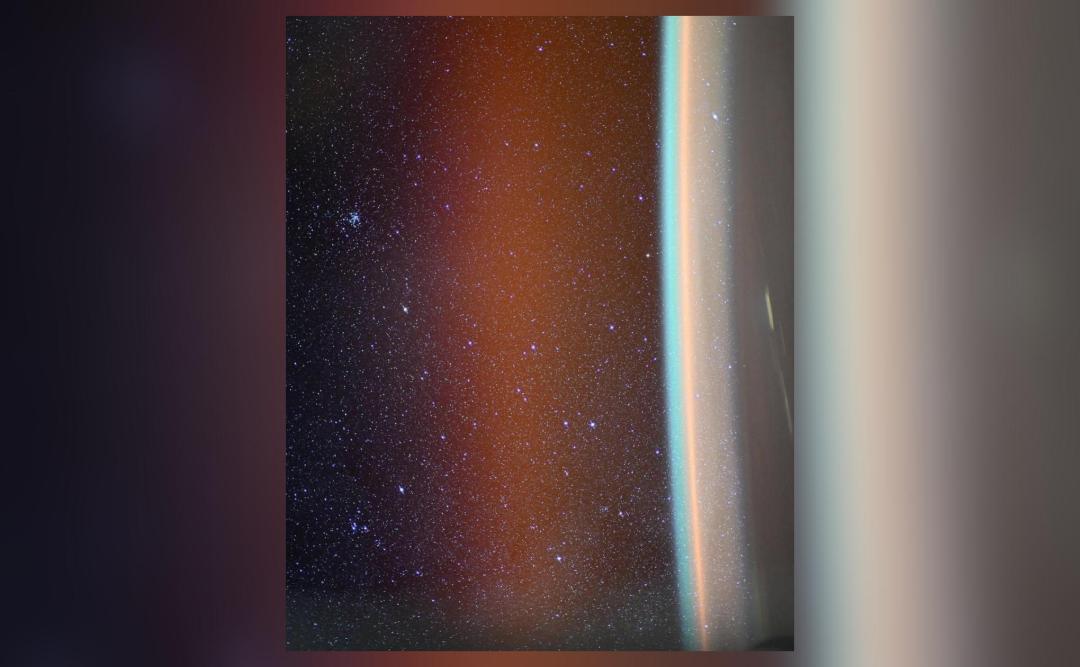
Pic shows colours of Earth’s atmosphere as seen from space
The Earth’s atmosphere is a complex and fascinating entity, comprising multiple layers of gases that surround our planet. While we are accustomed to seeing the Earth’s surface in all its glory, the atmosphere is often overlooked, despite its crucial role in sustaining life on our planet. Recently, a stunning image captured from the International Space Station (ISS) has provided a glimpse into the vibrant colors of the Earth’s atmosphere as seen from space.
The image, which has been widely shared on social media, shows the bright colors of the Earth’s atmosphere, with multiple vibrant layers of green atomic oxygen, orange hydroxyl radicals, and red airglow excited from solar activity. The photo was taken by NASA astronaut Don Pettit, who described the scene as “multiple vibrant layers of green atomic oxygen, orange hydroxyl radicals, and red airglow excited from solar activity.” The image is a breathtaking reminder of the beauty and complexity of our planet’s atmosphere.
But what exactly is airglow, and how does it occur? Airglow is a phenomenon that occurs when atoms and molecules in the upper atmosphere, excited by sunlight, emit light in order to shed their excess energy. This process is similar to the way that a neon sign works, where an electric current excites the gas inside the sign, causing it to emit light. In the case of airglow, the energy source is the sun, and the result is a spectacular display of colored light that can be seen from space.
The Earth’s atmosphere is composed of several layers, each with its own unique characteristics and properties. The troposphere, which extends from the Earth’s surface up to about 12 kilometers (7.5 miles) altitude, is the layer where weather occurs. The stratosphere, which extends from about 12 kilometers (7.5 miles) to 50 kilometers (31 miles) altitude, is a stable layer where the ozone layer is located. The mesosphere, which extends from about 50 kilometers (31 miles) to 80 kilometers (50 miles) altitude, is a layer where meteors burn up, and the thermosphere, which extends from about 80 kilometers (50 miles) to 600 kilometers (373 miles) altitude, is a layer where the atmosphere interacts with the solar wind.
The image captured by Don Pettit shows the airglow in the Earth’s atmosphere, which is most pronounced in the thermosphere and mesosphere. The green color is due to the emission of light by atomic oxygen, while the orange color is due to the emission of light by hydroxyl radicals. The red color is due to the emission of light by excited nitrogen molecules. The airglow is not just a pretty sight; it also provides scientists with valuable information about the Earth’s atmosphere and its interactions with the solar wind.
The study of airglow has been an active area of research for many years, with scientists using a variety of techniques to study this phenomenon. One of the most common methods is to use spectrometers, which can detect the different wavelengths of light emitted by the atmosphere. By analyzing the spectra of the airglow, scientists can determine the composition and temperature of the atmosphere, as well as the amount of energy being deposited by the solar wind.
In addition to its scientific value, the image of the Earth’s atmosphere is also a powerful reminder of the beauty and fragility of our planet. The Earth’s atmosphere is a delicate system that is essential for life on Earth, and it is being impacted by human activities such as pollution and climate change. The image serves as a reminder of the importance of protecting our planet and preserving its natural beauty for future generations.
In conclusion, the image captured by Don Pettit from the ISS is a stunning reminder of the beauty and complexity of the Earth’s atmosphere. The airglow phenomenon is a fascinating area of study that provides scientists with valuable information about the Earth’s atmosphere and its interactions with the solar wind. As we continue to explore and study our planet, images like this serve as a powerful reminder of the importance of protecting our planet and preserving its natural beauty for future generations.
News Source: https://www.instagram.com/p/DRsbl4PEZJx/
About the Author