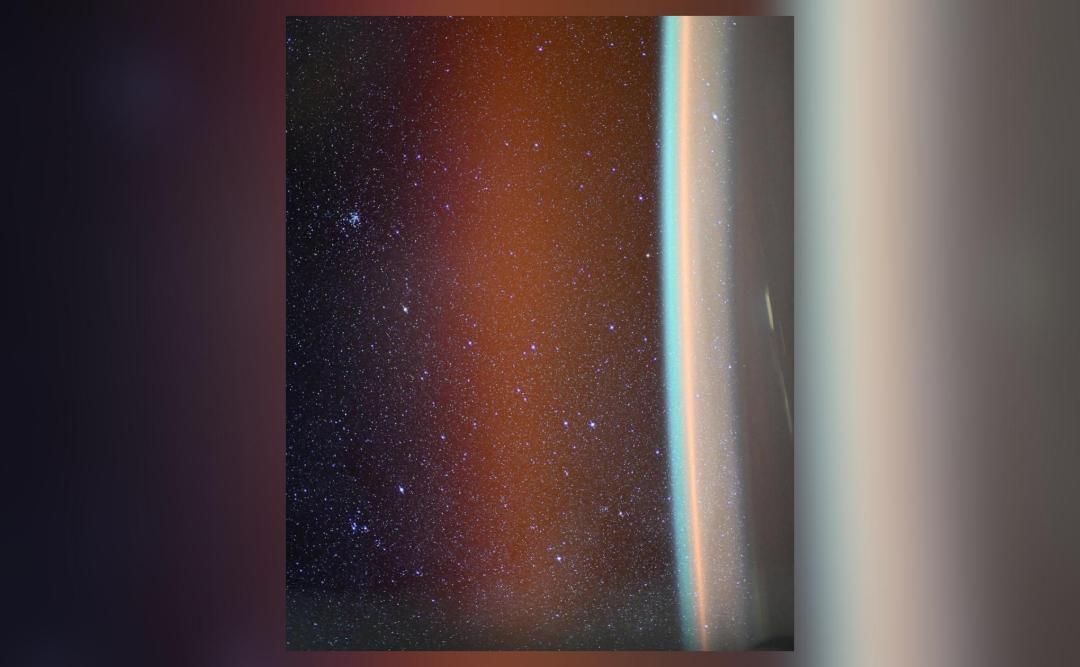
Pic shows colours of Earth’s atmosphere as seen from space
The Earth’s atmosphere is a complex and fascinating system that surrounds our planet, and a recent image captured from the International Space Station (ISS) has given us a stunning glimpse into its vibrant colors. The picture, which was shared by NASA astronaut Don Pettit, shows the bright colors of the Earth’s atmosphere as seen from space, with multiple layers of green, orange, and red hues visible.
According to Pettit, the image captures “multiple vibrant layers of green atomic oxygen, orange hydroxyl radicals, and red airglow excited from solar activity.” This phenomenon is known as airglow, which occurs when atoms and molecules in the upper atmosphere, excited by sunlight, emit light in order to shed their excess energy. The result is a breathtaking display of color that is normally invisible to the naked eye.
The image shows the Earth’s atmosphere as a series of distinct layers, each with its own unique color and characteristics. The green layer, which is visible at the bottom of the image, is caused by the presence of atomic oxygen in the atmosphere. This oxygen is excited by sunlight and emits light at a wavelength of around 557.7 nanometers, which appears green to our eyes.
Above the green layer, the image shows a layer of orange hydroxyl radicals. These radicals are formed when oxygen and hydrogen atoms in the atmosphere combine, and they emit light at a wavelength of around 656.3 nanometers, which appears orange. The orange layer is less intense than the green layer, but it adds a beautiful warmth and depth to the image.
The top layer of the image shows a faint red glow, which is caused by the airglow excited by solar activity. This airglow is produced when atoms and molecules in the upper atmosphere are excited by ultraviolet radiation from the sun, and they emit light at a wavelength of around 630.0 nanometers, which appears red. The red glow is a sign of the intense energy that is present in the upper atmosphere, and it adds a sense of drama and power to the image.
The image captured by Pettit is not only beautiful, but it also provides valuable insights into the workings of the Earth’s atmosphere. By studying the colors and layers of the atmosphere, scientists can learn more about the chemical and physical processes that occur in the upper atmosphere, and how they are affected by solar activity and other factors.
The image is also a reminder of the incredible beauty and complexity of the Earth’s atmosphere, and the importance of continued exploration and research into this critical component of our planet. The Earth’s atmosphere is what makes life on our planet possible, and it plays a vital role in regulating the climate, weather patterns, and the overall health of our ecosystem.
In recent years, there has been a growing interest in the study of the Earth’s atmosphere, particularly in the context of climate change and the impact of human activities on the environment. By studying the atmosphere and its many layers, scientists can gain a better understanding of the complex interactions that occur between the atmosphere, the oceans, and the land, and how these interactions affect the Earth’s climate and weather patterns.
The image captured by Pettit is a powerful reminder of the beauty and importance of the Earth’s atmosphere, and it highlights the need for continued research and exploration into this critical component of our planet. By studying the atmosphere and its many layers, we can gain a deeper understanding of the complex processes that occur on our planet, and how we can work to protect and preserve the Earth’s atmosphere for future generations.
In conclusion, the image captured by NASA astronaut Don Pettit is a stunning example of the beauty and complexity of the Earth’s atmosphere. The multiple layers of green, orange, and red hues that are visible in the image are a testament to the incredible diversity and complexity of the atmosphere, and they provide valuable insights into the chemical and physical processes that occur in the upper atmosphere. By studying the Earth’s atmosphere and its many layers, we can gain a better understanding of the complex interactions that occur on our planet, and how we can work to protect and preserve the Earth’s atmosphere for future generations.
News Source: https://www.instagram.com/p/DRsbl4PEZJx/
About the Author