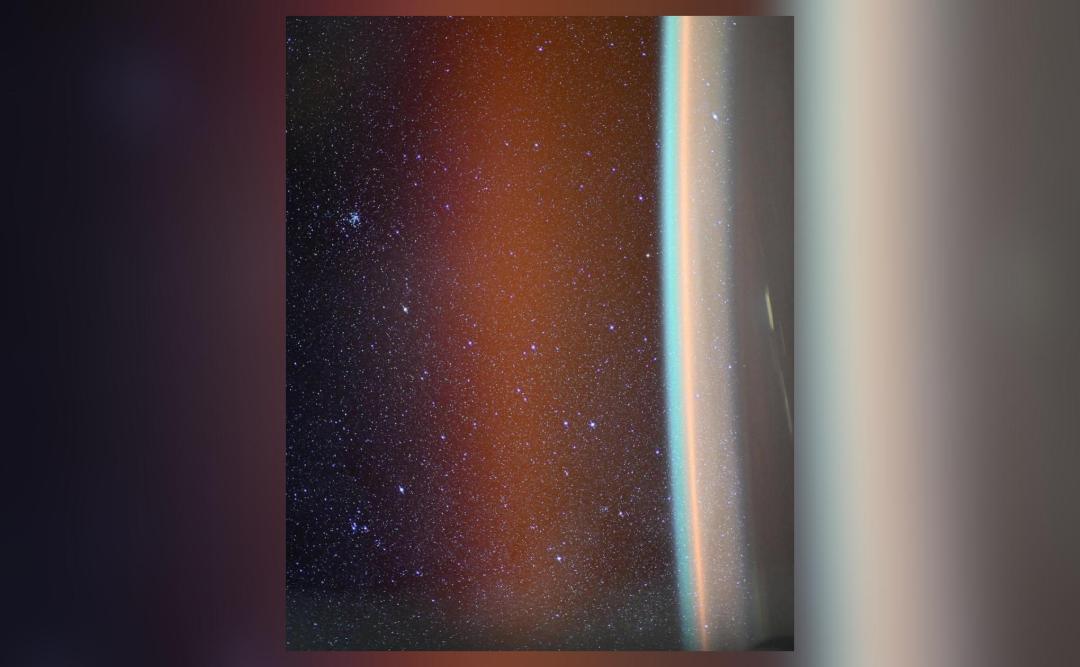
Pic shows colours of Earth’s atmosphere as seen from space
The Earth’s atmosphere is a complex and fascinating system that is essential for life on our planet. It is composed of multiple layers, each with its own unique characteristics and properties. Recently, an image captured from the International Space Station (ISS) has given us a glimpse into the breathtaking beauty of the Earth’s atmosphere as seen from space. The picture, shared by NASA astronaut Don Pettit, showcases the vibrant colors of the atmosphere, with multiple layers of green, orange, and red hues.
According to Pettit, the image captures “multiple vibrant layers of green atomic oxygen, orange hydroxyl radicals, and red airglow excited from solar activity.” This phenomenon is known as airglow, which occurs when atoms and molecules in the upper atmosphere, excited by sunlight, emit light in order to shed their excess energy. The result is a spectacular display of colors that are visible from space.
The airglow phenomenon is not unique to the Earth, as it can be observed on other planets and moons in our solar system. However, the Earth’s atmosphere is particularly well-suited for airglow due to its composition and the amount of solar radiation it receives. The upper atmosphere is home to a variety of atoms and molecules, including oxygen, nitrogen, and hydroxyl radicals, which are excited by solar radiation and emit light at specific wavelengths.
The colors captured in the image are a result of the different wavelengths of light emitted by these atoms and molecules. The green color is produced by atomic oxygen, which emits light at a wavelength of around 557.7 nanometers. The orange color is due to the presence of hydroxyl radicals, which emit light at a wavelength of around 656.3 nanometers. The red color, on the other hand, is produced by the airglow excited by solar activity, which emits light at a wavelength of around 630.0 nanometers.
The image captured by Pettit is not only aesthetically pleasing but also provides valuable insights into the Earth’s atmosphere and its interaction with the solar radiation. The airglow phenomenon is an important area of research, as it can help scientists understand the dynamics of the upper atmosphere and its response to solar activity.
The ISS is an ideal platform for capturing images of the Earth’s atmosphere, as it orbits the planet at an altitude of around 250 miles (400 kilometers). From this vantage point, astronauts can capture stunning images of the Earth’s atmosphere, including the airglow phenomenon. The ISS is also equipped with a range of scientific instruments that allow researchers to study the Earth’s atmosphere in detail.
The image shared by Pettit is a reminder of the beauty and complexity of the Earth’s atmosphere. It is a powerful reminder of the importance of continued research and exploration of our planet and its surroundings. By studying the Earth’s atmosphere and its interaction with the solar radiation, scientists can gain a better understanding of the complex processes that shape our planet and its climate.
In conclusion, the image captured by NASA astronaut Don Pettit is a stunning representation of the colors of the Earth’s atmosphere as seen from space. The vibrant layers of green, orange, and red hues are a result of the airglow phenomenon, which occurs when atoms and molecules in the upper atmosphere emit light in order to shed their excess energy. The image provides valuable insights into the Earth’s atmosphere and its interaction with solar radiation, and is a reminder of the importance of continued research and exploration of our planet and its surroundings.
News Source: https://www.instagram.com/p/DRsbl4PEZJx/
About the Author