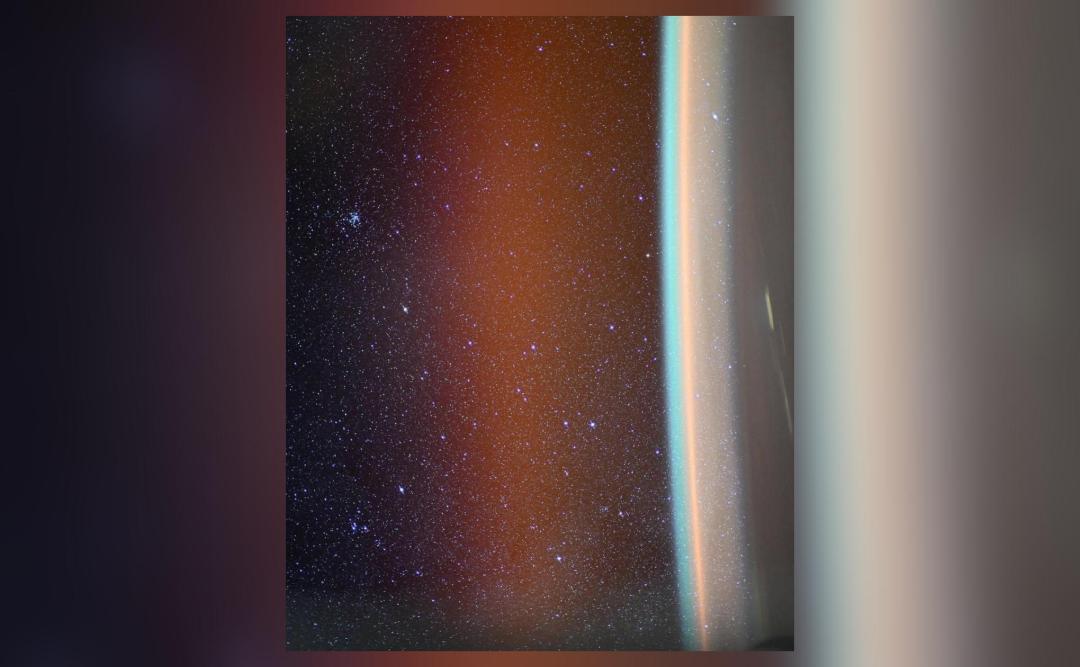
Pic shows colours of Earth’s atmosphere as seen from space
The Earth’s atmosphere is a complex and fascinating entity that has captivated human imagination for centuries. From the deep blues and whites of the lower atmosphere to the vibrant hues of the upper atmosphere, the colours of our planet’s atmospheric layers are a sight to behold. Recently, an image captured from the International Space Station (ISS) has given us a glimpse into the breathtaking beauty of the Earth’s atmosphere as seen from space. The image, which was shared by NASA astronaut Don Pettit, shows the bright colours of the Earth’s atmosphere, with multiple vibrant layers of green atomic oxygen, orange hydroxyl radicals, and red airglow excited from solar activity.
The image, which was taken from the ISS, showcases the stunning beauty of the Earth’s atmosphere, with the curved horizon of our planet visible in the distance. The colours of the atmosphere are a result of a phenomenon called airglow, which occurs when atoms and molecules in the upper atmosphere, excited by sunlight, emit light in order to shed their excess energy. This process results in a spectacular display of colours, with different wavelengths of light being emitted by different atoms and molecules.
The green colour visible in the image is due to the presence of atomic oxygen, which is a common component of the upper atmosphere. Atomic oxygen is formed when oxygen molecules (O2) are broken down by ultraviolet radiation from the sun, resulting in individual oxygen atoms. These atoms then emit light at a wavelength of 557.7 nanometers, which appears green to our eyes.
The orange colour, on the other hand, is due to the presence of hydroxyl radicals (OH), which are formed when water molecules (H2O) are broken down by ultraviolet radiation. The hydroxyl radicals then emit light at a wavelength of 656.8 nanometers, which appears orange to our eyes.
The red colour visible in the image is due to the presence of excited nitrogen molecules (N2), which are formed when nitrogen molecules are excited by solar activity. These molecules then emit light at a wavelength of 630.0 nanometers, which appears red to our eyes.
The image captured by NASA astronaut Don Pettit is a remarkable example of the beauty and complexity of the Earth’s atmosphere. The vibrant colours of the atmosphere, which are visible from space, are a reminder of the awe-inspiring beauty of our planet and the importance of continued exploration and study of the Earth’s atmosphere.
Airglow is a fascinating phenomenon that has been studied by scientists for decades. It is an important area of research, as it can provide valuable insights into the composition and dynamics of the upper atmosphere. By studying airglow, scientists can gain a better understanding of the chemical and physical processes that occur in the upper atmosphere, and how these processes affect the Earth’s climate and weather patterns.
The image captured by NASA astronaut Don Pettit is also a reminder of the importance of space exploration and the role that space agencies like NASA play in advancing our understanding of the Earth and the universe. The ISS, which is a collaborative project between space agencies around the world, provides a unique platform for scientists to conduct research and gather data on the Earth’s atmosphere and other phenomena.
In conclusion, the image captured from the ISS shows the breathtaking beauty of the Earth’s atmosphere as seen from space. The vibrant colours of the atmosphere, which are due to the presence of atomic oxygen, hydroxyl radicals, and excited nitrogen molecules, are a reminder of the complexity and beauty of our planet. The image is a testament to the importance of continued exploration and study of the Earth’s atmosphere, and the role that space agencies like NASA play in advancing our understanding of the Earth and the universe.
Short Description: An image captured from ISS shows the bright colours of Earth’s atmosphere as seen from space. “Multiple vibrant layers of green atomic oxygen, orange hydroxyl radicals, and red airglow excited from solar activity,” NASA astronaut Don Pettit wrote. Airglow occurs when atoms and molecules in the upper atmosphere, excited by sunlight, emit light in order to shed their excess energy.
News Source: https://www.instagram.com/p/DRsbl4PEZJx/
About the Author