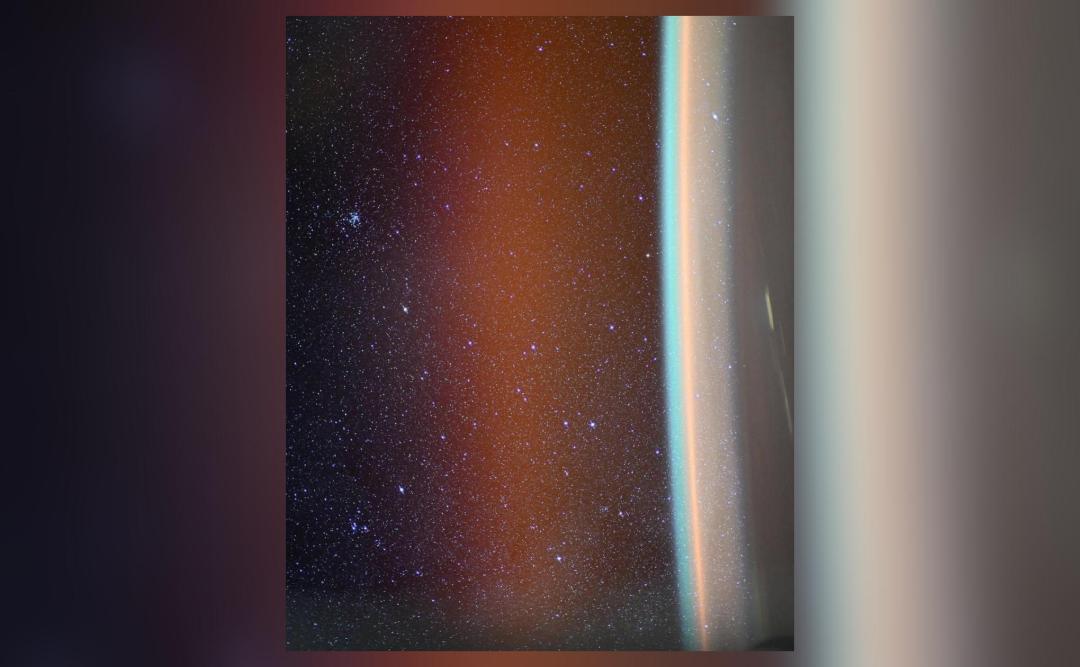
Pic shows colours of Earth’s atmosphere as seen from space
The Earth’s atmosphere is a complex and dynamic system that is essential for life on our planet. It is composed of different layers, each with its own unique characteristics and properties. Recently, a stunning image captured from the International Space Station (ISS) has given us a glimpse of the vibrant colors of the Earth’s atmosphere as seen from space. The image, which was shared by NASA astronaut Don Pettit, shows the bright colors of the atmosphere in all their glory.
According to Pettit, the image shows “multiple vibrant layers of green atomic oxygen, orange hydroxyl radicals, and red airglow excited from solar activity.” The different colors in the image are a result of various chemical reactions that occur in the upper atmosphere. Atomic oxygen, which is a common component of the atmosphere, emits a green color when it is excited by sunlight. Hydroxyl radicals, on the other hand, emit an orange color. The red color in the image is due to airglow, which occurs when atoms and molecules in the upper atmosphere, excited by sunlight, emit light in order to shed their excess energy.
Airglow is a natural phenomenon that occurs when the sun’s energy excites the atoms and molecules in the upper atmosphere. This energy is then released as light, which can be seen from space. Airglow is an important aspect of the Earth’s atmosphere, as it helps to regulate the temperature and composition of the upper atmosphere. It is also a key indicator of the Earth’s atmospheric conditions, and scientists use airglow to study the atmosphere and its interactions with the solar wind.
The image captured by Pettit is not only stunning but also provides valuable insights into the Earth’s atmosphere. The different colors in the image show the varying levels of excitation and energy release in the upper atmosphere. The green color of atomic oxygen, for example, indicates a high level of excitation, while the orange color of hydroxyl radicals suggests a lower level of energy release. The red color of airglow, on the other hand, indicates a high level of energy release due to solar activity.
The image also highlights the importance of the Earth’s atmosphere in protecting life on our planet. The atmosphere acts as a shield, absorbing and scattering the sun’s radiation and protecting living organisms from harm. The atmosphere also plays a crucial role in regulating the Earth’s climate, and changes in the atmosphere can have significant impacts on the planet’s ecosystems.
The study of the Earth’s atmosphere is an active area of research, with scientists using a range of techniques to study the atmosphere and its interactions with the solar wind. The ISS, where the image was captured, is an important platform for atmospheric research, providing scientists with a unique perspective on the Earth’s atmosphere. The ISS orbits the Earth at an altitude of around 250 miles, which allows scientists to study the atmosphere in detail.
In addition to the ISS, scientists use a range of other platforms to study the Earth’s atmosphere. These include satellites, such as the NASA’s Aura satellite, which is dedicated to studying the Earth’s atmosphere and its interactions with the solar wind. Scientists also use ground-based instruments, such as spectrometers and telescopes, to study the atmosphere and its chemical composition.
In conclusion, the image captured by NASA astronaut Don Pettit from the ISS is a stunning example of the vibrant colors of the Earth’s atmosphere as seen from space. The image shows the different layers of the atmosphere, each with its own unique characteristics and properties. The image also highlights the importance of the Earth’s atmosphere in protecting life on our planet and regulating the climate. The study of the Earth’s atmosphere is an active area of research, with scientists using a range of techniques to study the atmosphere and its interactions with the solar wind.
Short Description: An image captured from ISS shows the bright colours of Earth’s atmosphere as seen from space. “Multiple vibrant layers of green atomic oxygen, orange hydroxyl radicals, and red airglow excited from solar activity,” NASA astronaut Don Pettit wrote. Airglow occurs when atoms and molecules in the upper atmosphere, excited by sunlight, emit light in order to shed their excess energy.
News Source: https://www.instagram.com/p/DRsbl4PEZJx/
About the Author