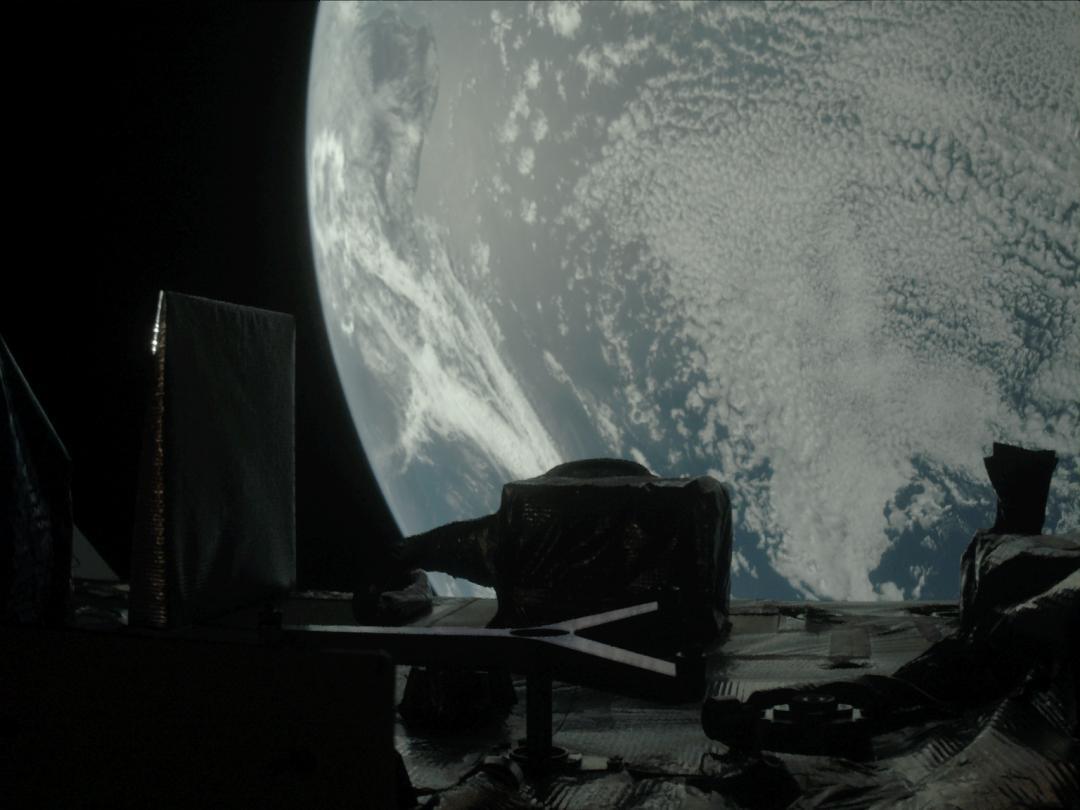
OSIRIS-APEX spacecraft takes selfie with Earth during flyby
NASA’s Osiris-Apex spacecraft has captured a stunning selfie with Earth as it used the planet’s gravity to push onward towards asteroid Apophis. On 23 September, the probe skimmed just 3,438 kilometres above the surface, flying closer than many high-orbit satellites. During the manoeuvre, it passed within roughly 2,100 miles of Earth, about half the height of a typical low Earth orbit.
The Osiris-Apex spacecraft is on a mission to explore asteroid Apophis, a near-Earth asteroid that is expected to pass close to our planet in 2029. The spacecraft is equipped with a range of instruments, including cameras, spectrometers, and a laser altimeter, which will allow it to study the asteroid’s composition, shape, and size.
As the spacecraft flew by Earth, it took advantage of the planet’s gravity to gain speed and alter its trajectory. This manoeuvre, known as a gravity assist, is a common technique used by spacecraft to change their course and gain momentum. By flying close to Earth, the Osiris-Apex spacecraft was able to gain a significant amount of speed, which will help it reach asteroid Apophis in a shorter amount of time.
During the flyby, the spacecraft captured a stunning selfie with Earth, which shows the curvature of our planet and the blackness of space. The image is a reminder of the beauty and fragility of our planet, and the importance of space exploration and research.
The Osiris-Apex spacecraft is a significant mission for NASA, as it will provide scientists with valuable information about asteroid Apophis and the potential risks it poses to our planet. Asteroid Apophis is a large asteroid, estimated to be about 340 metres in diameter, and its close approach to Earth in 2029 has raised concerns about the potential for impact.
However, scientists are confident that the asteroid will not hit Earth, and the Osiris-Apex mission will provide valuable insights into the asteroid’s composition and orbit. The mission will also help scientists to better understand the formation and evolution of our solar system, and the role that asteroids play in shaping the planets and their orbits.
The Osiris-Apex spacecraft is just one of several missions that NASA has planned to explore asteroids and other small bodies in our solar system. The agency’s Artemis program, for example, aims to return humans to the lunar surface by 2025, and to establish a sustainable presence on the Moon. The program also includes plans to send astronauts to Mars in the 2030s, and to explore the asteroid belt and other regions of the solar system.
The Osiris-Apex mission is a significant step forward in our understanding of the solar system and the potential risks and opportunities that it presents. The spacecraft’s flyby of Earth and its capture of a stunning selfie with our planet are a reminder of the beauty and wonder of space exploration, and the importance of continued research and investment in this field.
As we look to the future of space exploration, it is clear that missions like Osiris-Apex will play a critical role in advancing our knowledge and understanding of the solar system. By exploring asteroids and other small bodies, we can gain valuable insights into the formation and evolution of our solar system, and the potential risks and opportunities that it presents.
In conclusion, the Osiris-Apex spacecraft’s flyby of Earth and its capture of a stunning selfie with our planet are a significant achievement in the field of space exploration. The mission highlights the importance of continued research and investment in this field, and the potential benefits that it can bring to our understanding of the solar system and the universe.
News Source: https://x.com/NASASolarSystem/status/1993344978848792773
About the Author