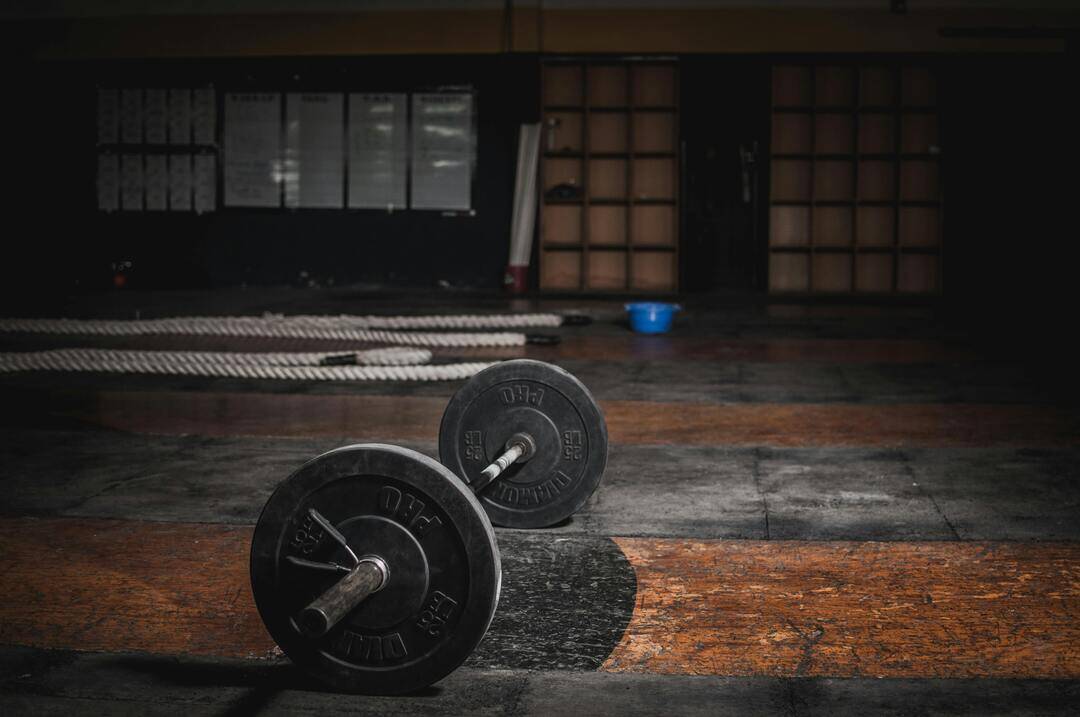
New study shows heavy weights not required for muscle growth
For decades, the fitness community has been led to believe that lifting heavy weights is the key to building muscle. The idea that heavier weights are necessary for muscle growth has been deeply ingrained in the minds of gym-goers and athletes alike. However, a recent study published in The Journal of Physiology has challenged this long-held notion, revealing that lifting very heavy weights is not required to build muscle.
The study, which aimed to investigate the effects of different load ranges on muscle growth, found that both heavy and light loads produced similar muscle growth when sets were performed close to fatigue. This groundbreaking discovery has significant implications for the way we approach resistance training and challenges the conventional wisdom that heavier is always better.
To understand the study’s findings, it’s essential to delve into the details of the research. The study involved a group of participants who were divided into two groups: a heavy load group and a light load group. The heavy load group lifted weights that allowed them to complete 3-5 repetitions, while the light load group lifted weights that allowed them to complete 10-15 repetitions. Both groups performed sets to the point of fatigue, meaning they stopped when they could no longer complete another repetition.
The results showed that both groups experienced significant muscle growth, with no significant difference between the two groups. This suggests that the load used is not the primary determining factor in muscle growth, but rather the effort and consistency of the training.
So, what does this mean for those looking to build muscle? The study’s findings highlight that training effort and consistency matter more than the amount of weight lifted. This is a crucial distinction, as it implies that individuals can still achieve significant muscle growth without having to lift extremely heavy weights.
One of the key takeaways from the study is that the concept of “progressive overload” is not necessarily about lifting heavier weights, but rather about progressively increasing the challenge to the muscles over time. This can be achieved through a variety of means, including increasing the number of repetitions, sets, or frequency of workouts.
For example, an individual who is currently lifting 10 pounds for 10 repetitions can increase the challenge to their muscles by adding an additional set, increasing the number of repetitions to 12, or decreasing rest time between sets. This approach allows individuals to continue making progress and challenging their muscles without having to lift extremely heavy weights.
Another important implication of the study is that it can help to reduce the risk of injury associated with heavy weightlifting. Lifting heavy weights can be stressful on the joints and muscles, particularly for those who are new to weightlifting or have pre-existing injuries. By focusing on lighter weights and higher repetitions, individuals can still achieve significant muscle growth while minimizing the risk of injury.
In addition, the study’s findings can help to make weightlifting more accessible to a wider range of individuals. Many people are intimidated by the idea of lifting heavy weights, and may feel that they are not strong enough or capable of lifting the weights required to build muscle. However, this study shows that lighter weights can be just as effective, making it more accessible to those who may have previously been deterred.
In conclusion, the study published in The Journal of Physiology provides compelling evidence that heavy weights are not required for muscle growth. The findings highlight the importance of training effort and consistency, and challenge the conventional wisdom that heavier is always better. By focusing on progressive overload and increasing the challenge to the muscles over time, individuals can achieve significant muscle growth without having to lift extremely heavy weights.
Whether you’re a seasoned athlete or just starting out on your fitness journey, this study’s findings have significant implications for the way you approach resistance training. So, the next time you’re at the gym, don’t feel like you need to lift the heaviest weights to build muscle. Instead, focus on challenging yourself and progressively increasing the difficulty of your workouts over time.
News Source: https://shop.thepfc.club/blogs/news/does-lifting-heavy-matter-for-muscle-growth
About the Author