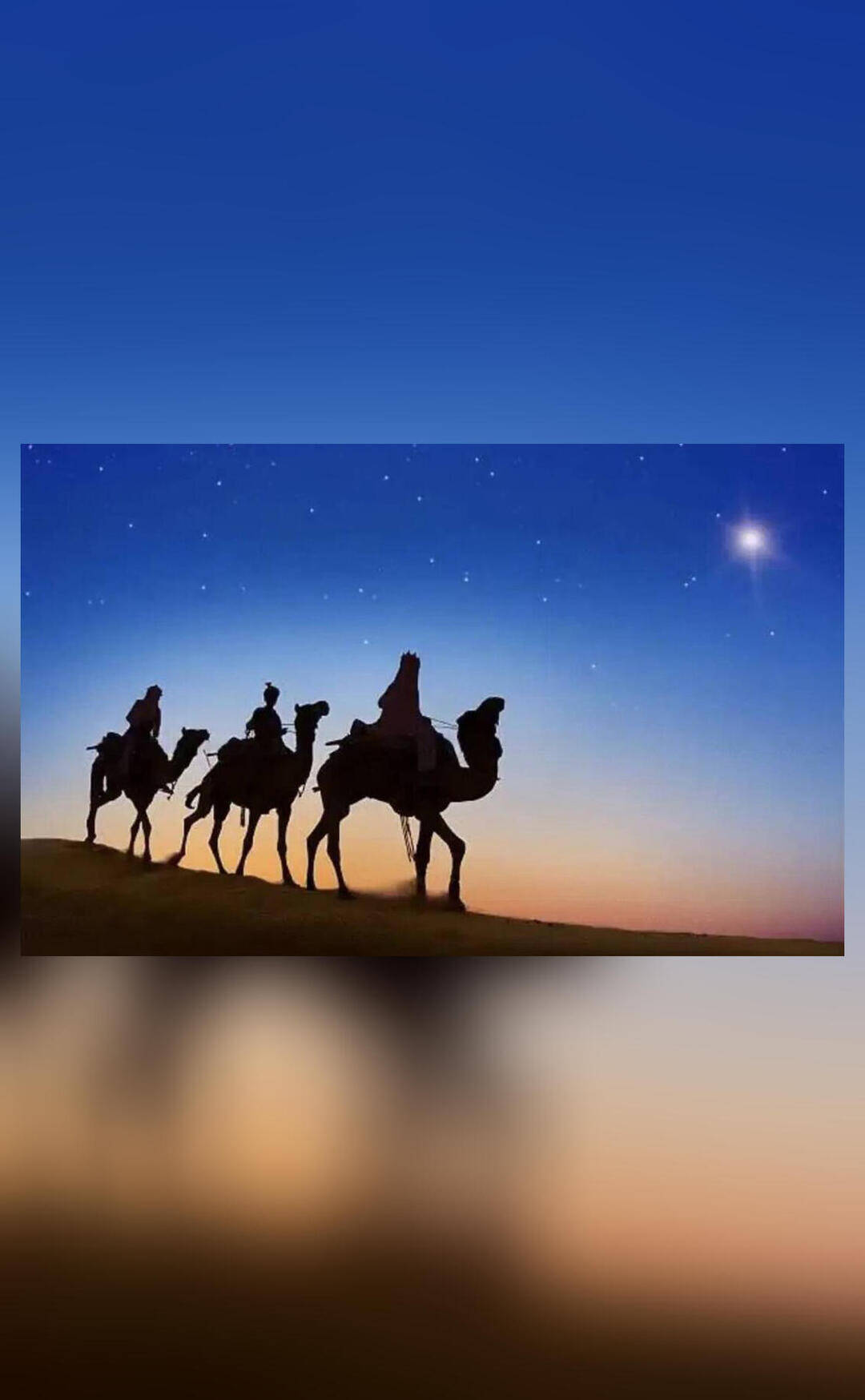
NASA scientist says biblical Star of Bethlehem may have been comet
For centuries, the Star of Bethlehem, also known as the Christmas Star, has been a topic of fascination and debate among astronomers, historians, and theologians. The biblical account of the Star of Bethlehem, which guided the Magi to the birthplace of Jesus, has been the subject of numerous interpretations and explanations. Now, a NASA planetary scientist, Mark Matney, has revived the debate with a new theory that suggests the Star of Bethlehem may have been a comet recorded by Chinese astronomers in 5 BC.
According to Matney, the comet may have passed extremely close to Earth, making it shine during the daytime and remaining visible for over 70 days. This theory is based on Matney’s orbital analysis, which showed that the comet may have seemed to move and then “stand still” in the sky, as described in the Gospel account. This phenomenon, known as a “stationary point,” occurs when a comet appears to pause in its motion across the sky, creating a striking and memorable sight.
The Chinese astronomical records from 5 BC describe a “broom star” that was visible for over 70 days, which is consistent with Matney’s theory. A broom star was a term used by Chinese astronomers to describe a comet with a long, sweeping tail, similar to a broom. The fact that this comet was visible for such a long period suggests that it may have been a spectacular sight, potentially visible during the day and easily noticeable to the Magi, who were skilled astronomers.
Matney’s theory is not the first attempt to explain the Star of Bethlehem, but it is one of the most compelling. Previous explanations have ranged from a planetary alignment to a supernova or a meteor shower. However, these theories often fail to account for the specific details of the biblical account, such as the star’s apparent motion and its visibility during the day.
One of the strengths of Matney’s theory is that it is based on actual astronomical records from the time period. The Chinese astronomical records are some of the most detailed and reliable from ancient times, and they provide a unique insight into the night sky of 5 BC. By combining these records with modern orbital analysis, Matney has been able to reconstruct the possible path of the comet and demonstrate how it may have appeared to ancient observers.
The idea that the Star of Bethlehem may have been a comet is not new, but Matney’s theory provides a fresh perspective on this hypothesis. Comets have long been associated with significant events and omens in human culture, and it is possible that the Magi, who were skilled astronomers, may have interpreted the appearance of a comet as a sign of great importance.
The implications of Matney’s theory are significant, as they suggest that the Star of Bethlehem may have been a real astronomical event, rather than simply a mythical or symbolic representation. This challenges the traditional view of the Star of Bethlehem as a supernatural or miraculous event, and instead, suggests that it may have been a natural phenomenon that was interpreted by the Magi as a sign of great importance.
In conclusion, the mystery of the Star of Bethlehem remains one of the most enduring and fascinating puzzles of human history. While Matney’s theory provides a compelling explanation for the Star of Bethlehem, it is unlikely to be the final word on the subject. The debate over the nature and significance of the Star of Bethlehem will likely continue, with new theories and explanations emerging as our understanding of astronomy and history evolves.
As we continue to explore the night sky and uncover the secrets of the universe, we may yet uncover new evidence that sheds light on the mystery of the Star of Bethlehem. For now, Matney’s theory provides a fascinating glimpse into the possible astronomical origins of this enigmatic event, and reminds us of the enduring power of human curiosity and ingenuity.
About the Author