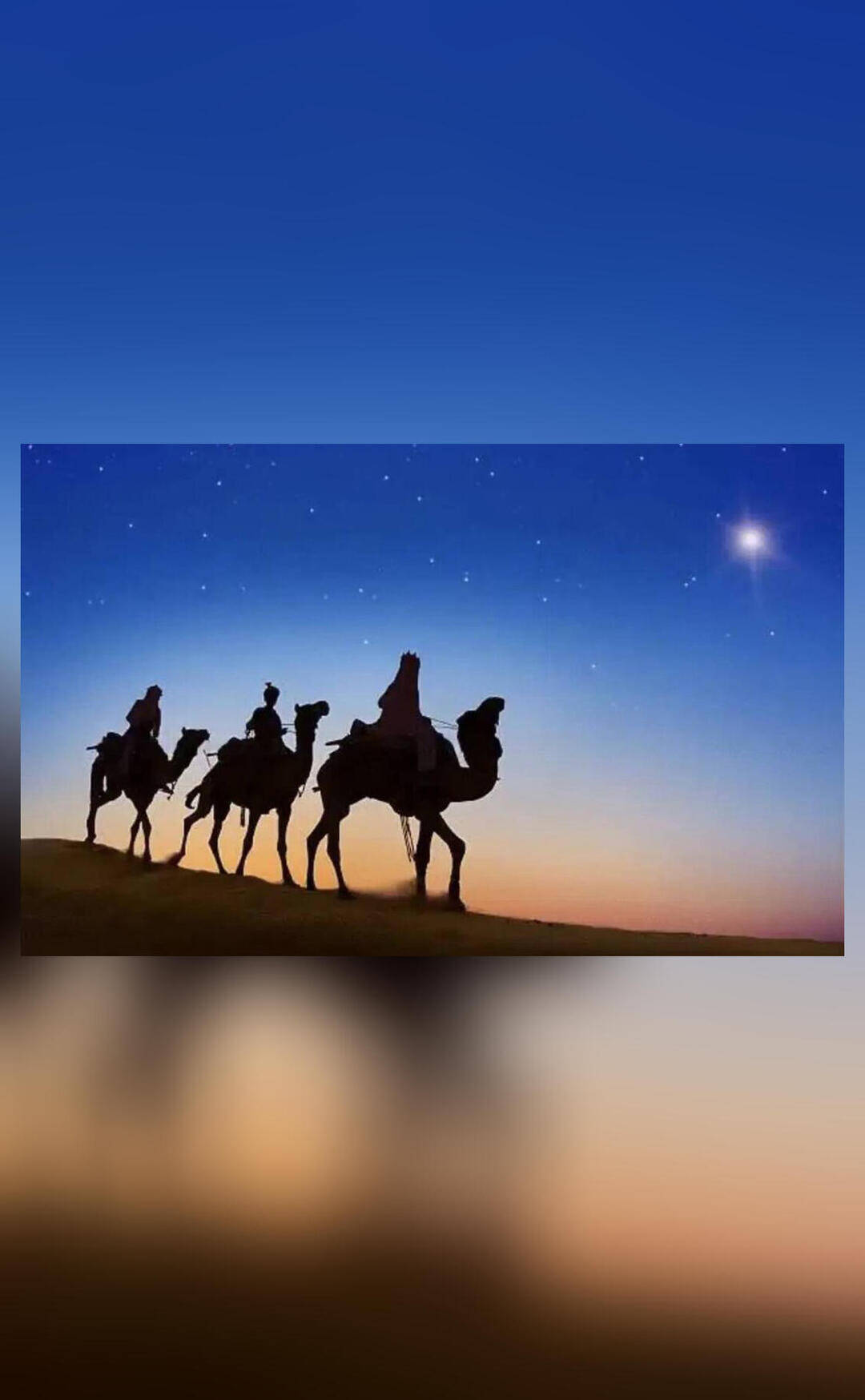
NASA Scientist Says Biblical Star of Bethlehem May Have Been Comet
For centuries, the biblical account of the Star of Bethlehem has fascinated people around the world. The story, which appears in the Gospel of Matthew, tells of a bright star that guided the Magi, also known as the Three Wise Men, to the birthplace of Jesus Christ. While the story is deeply rooted in Christian tradition, its historical and astronomical significance has long been debated among scholars and scientists. Recently, a NASA planetary scientist, Mark Matney, has reignited the debate by suggesting that the Star of Bethlehem may have been a comet recorded by Chinese astronomers in 5 BC.
According to Matney, the comet, which was visible for over 70 days, may have passed extremely close to Earth, making it shine during the daytime. This proximity to our planet would have made the comet appear incredibly bright, potentially even outshining the sun. Matney’s orbital analysis of the comet’s trajectory suggests that it may have seemed to move and then “stand still” in the sky, which aligns with the description of the Star of Bethlehem in the Gospel of Matthew.
The idea that the Star of Bethlehem was a comet is not new, but Matney’s research provides new insights into the possibility. By analyzing the comet’s orbital path, Matney was able to determine that it would have been visible in the sky for an extended period, which would have allowed the Magi to follow it to the birthplace of Jesus. Additionally, the comet’s close proximity to Earth would have made it appear to be stationary in the sky, which would have been a remarkable sight for the ancient astronomers.
The biblical account of the Star of Bethlehem has been interpreted in many ways over the centuries, with some scholars suggesting that it was a supernatural event, while others have proposed that it was a natural astronomical phenomenon. While Matney’s research does not provide definitive proof that the Star of Bethlehem was a comet, it does offer a compelling explanation for the biblical account.
The possibility that the Star of Bethlehem was a comet is also supported by historical records from Chinese astronomers, who documented a comet in 5 BC that was visible for over 70 days. This comet, which was known as the “Great Comet of 5 BC,” was reportedly seen in the constellation of Capricorn, which is consistent with the biblical account of the Star of Bethlehem.
Matney’s research has significant implications for our understanding of the biblical account of the Star of Bethlehem. If the Star of Bethlehem was indeed a comet, it would provide a natural explanation for the biblical account, which has long been shrouded in mystery. Additionally, it would highlight the importance of astronomical events in ancient cultures, which often used celestial phenomena to guide their spiritual and philosophical beliefs.
The study of the Star of Bethlehem is also a fascinating example of how science and faith can intersect. While the biblical account of the Star of Bethlehem is deeply rooted in Christian tradition, the search for a natural explanation for the phenomenon is a testament to human curiosity and the desire to understand the world around us. By exploring the possibility that the Star of Bethlehem was a comet, scientists like Matney are able to shed new light on an ancient mystery, while also deepening our understanding of the cultural and historical context in which the biblical account was written.
In conclusion, the possibility that the Star of Bethlehem was a comet is a fascinating area of research that highlights the intersection of science and faith. Matney’s research provides new insights into the possibility, and his orbital analysis of the comet’s trajectory offers a compelling explanation for the biblical account. While the debate over the nature of the Star of Bethlehem is likely to continue, Matney’s research is an important contribution to our understanding of this ancient mystery.
About the Author