Microplastics leak invisible chemical clouds into water: Study
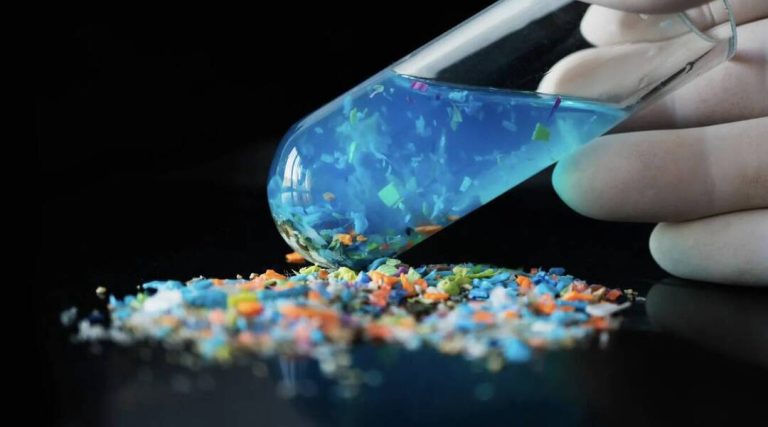
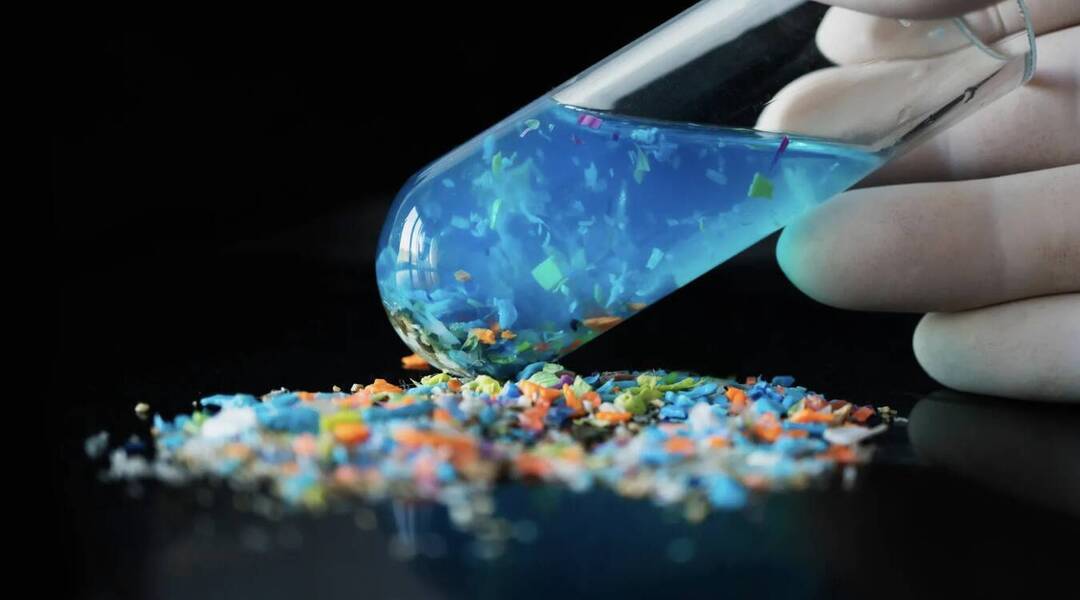
The world’s oceans, rivers, and lakes are facing a growing threat from microplastics, which are small plastic particles that are less than 5 millimeters in size. These tiny particles have been found to harm marine life, contaminate the food chain, and even affect human health. However, a recent study has revealed that microplastics are not just a physical hazard, but also a source of invisible chemical clouds that can leak into the water, driven by sunlight.
The study, which examined four common plastic types, found that each releases its own unique chemical mixture into the water. The researchers discovered that plastics labelled as biodegradable release the most chemicals, which is a surprising and alarming finding. The study’s results have significant implications for our understanding of the impact of microplastics on the environment and human health.
The researchers used a combination of laboratory experiments and computer modelling to simulate the effects of sunlight on microplastics in water. They found that when microplastics are exposed to sunlight, they release a mixture of chemicals, including dissolved organic matter (DOM), into the water. DOM is a complex mixture of carbon-based compounds that can be found in all natural waters. However, the DOM released by microplastics is different from natural DOM, and is more biologically active.
The study’s findings suggest that the chemicals released by microplastics can have a range of effects on the environment and human health. For example, the chemicals can react with other substances in the water to form new compounds, some of which may be toxic. The chemicals can also be taken up by marine organisms, which can lead to the accumulation of toxic substances in the food chain.
One of the most surprising findings of the study was that plastics labelled as biodegradable released the most chemicals. This is because biodegradable plastics are designed to break down more quickly than traditional plastics, but this process can also release more chemicals into the environment. The researchers found that biodegradable plastics released a mixture of chemicals that was different from traditional plastics, and was more biologically active.
The study’s results have significant implications for our understanding of the impact of microplastics on the environment and human health. The researchers suggest that the chemicals released by microplastics could be contributing to the decline of marine ecosystems, and may also be affecting human health. For example, the chemicals could be contaminating drinking water sources, or accumulating in the food chain.
The study’s findings also highlight the need for more research into the effects of microplastics on the environment and human health. The researchers suggest that further studies are needed to fully understand the impacts of microplastics, and to develop effective strategies for reducing their release into the environment.
In addition, the study’s results suggest that the use of biodegradable plastics may not be as environmentally friendly as previously thought. While biodegradable plastics may break down more quickly than traditional plastics, they can also release more chemicals into the environment. This highlights the need for a more nuanced approach to the use of biodegradable plastics, and for further research into their environmental impacts.
Overall, the study’s findings suggest that microplastics are a more significant threat to the environment and human health than previously thought. The release of invisible chemical clouds into the water, driven by sunlight, is a previously unknown hazard that needs to be addressed. The study’s results highlight the need for further research into the effects of microplastics, and for the development of effective strategies for reducing their release into the environment.
As the world grapples with the challenges of microplastics, it is clear that more needs to be done to address this growing problem. The study’s findings are a wake-up call for policymakers, businesses, and individuals to take action to reduce the release of microplastics into the environment. This can be achieved through a range of measures, including reducing plastic use, increasing recycling, and improving waste management.
In conclusion, the study’s findings are a significant contribution to our understanding of the impacts of microplastics on the environment and human health. The release of invisible chemical clouds into the water, driven by sunlight, is a previously unknown hazard that needs to be addressed. As we move forward, it is essential that we take a comprehensive approach to addressing the challenges of microplastics, and work towards reducing their release into the environment.
News source: https://www.sciencedaily.com/releases/2025/12/251224032408.htm
About the Author