Largest Solar Storm in Over 20 Years Hits Earth
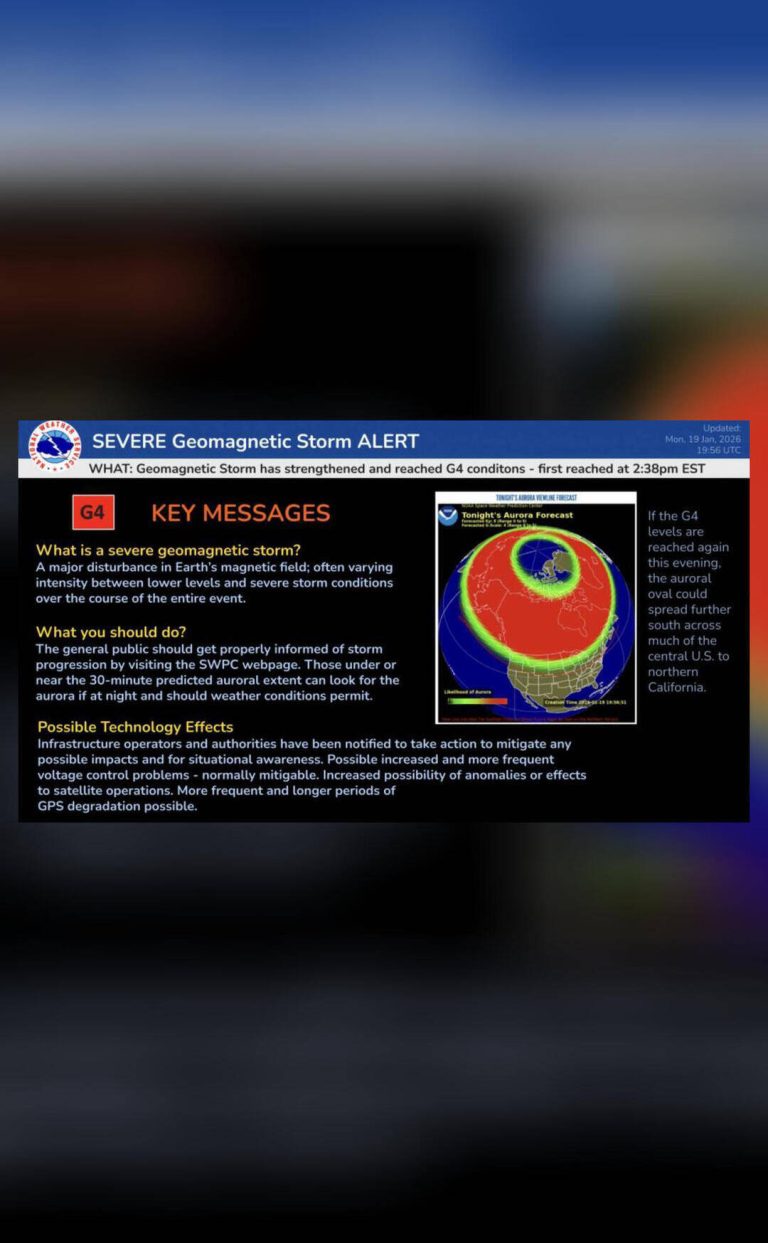
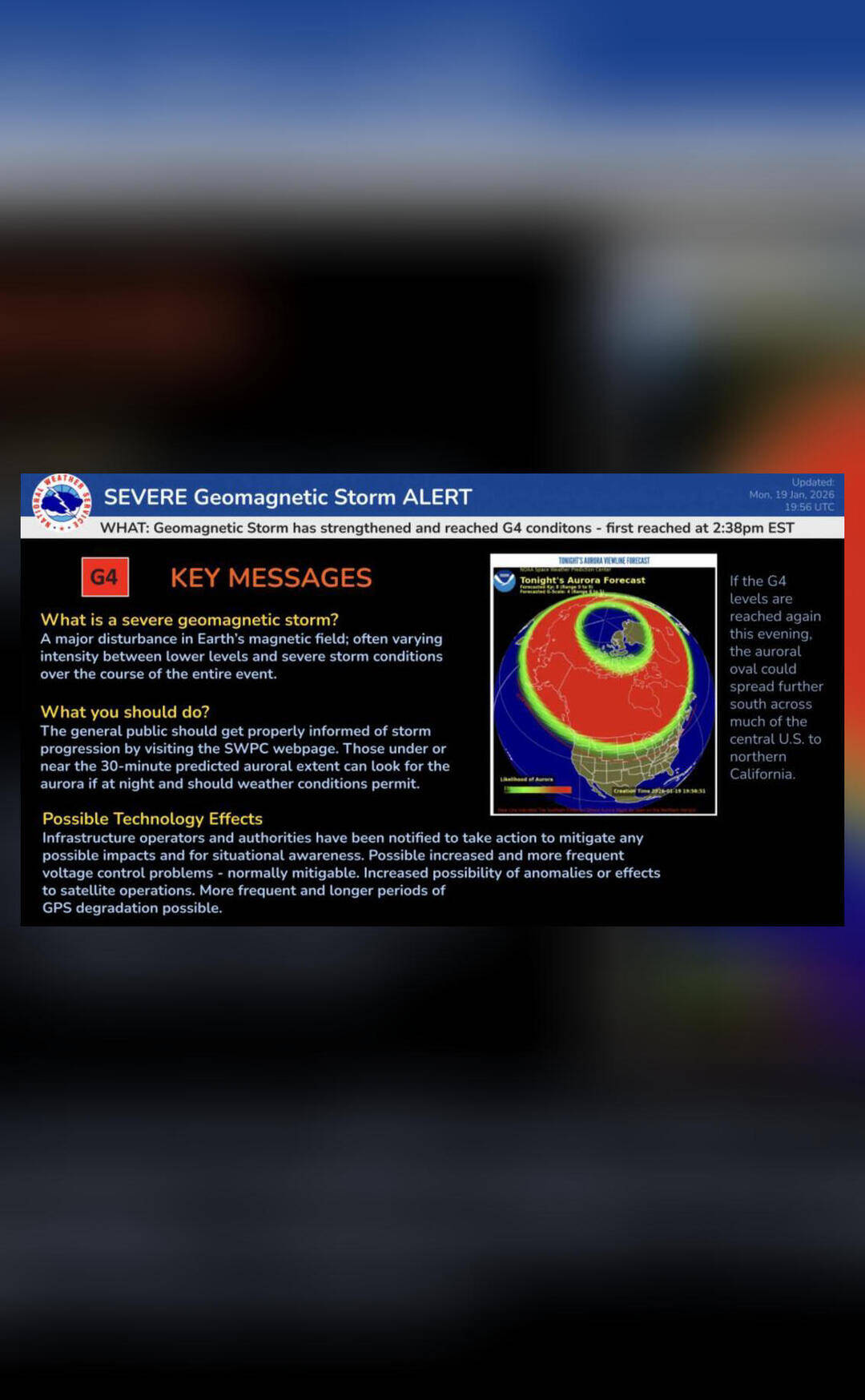
A powerful solar storm hit the Earth on Monday evening and early Tuesday morning, creating dazzling auroral displays at several locations across the globe. The storm, which is the largest in over 20 years, is expected to have significant effects on satellite-based communications and GPS accuracy. Additionally, solar radiation storms can cause increased radiation exposure risks for passengers on flights that are traveling polar routes.
The solar storm, which was classified as a G5-level geomagnetic storm, was caused by a massive burst of energy released from the sun’s surface. This energy, known as a coronal mass ejection (CME), traveled through space and collided with the Earth’s magnetic field, causing the storm. The impact of the CME was so powerful that it caused the Earth’s magnetic field to vibrate, resulting in spectacular displays of the aurora borealis, also known as the northern lights, and the aurora australis, also known as the southern lights.
The auroral displays were visible in several locations across the globe, including the northern United States, Canada, and Europe. The displays were characterized by vibrant colors and patterns, with some areas experiencing the most intense and widespread auroral activity in decades. The spectacle was a treat for sky gazers and photographers, who captured stunning images of the phenomenon.
However, the solar storm is not just a visual spectacle; it also has significant effects on technology and communication systems. The storm’s impact on satellite-based communications and GPS accuracy is a major concern, as it can disrupt critical systems and infrastructure. The increased radiation from the sun can cause satellites to malfunction or experience signal loss, which can have significant consequences for navigation, communication, and weather forecasting.
Furthermore, the solar radiation storms can cause increased radiation exposure risks for passengers on flights that are traveling polar routes. This is because the Earth’s magnetic field is weaker near the poles, allowing more radiation to penetrate the atmosphere. As a result, airlines may need to take precautions to minimize exposure to radiation, such as flying at lower altitudes or taking alternate routes.
The effects of the solar storm are expected to be felt for several days, with the auroral displays continuing to be visible in some areas. However, the impact on technology and communication systems is likely to be more significant, with potential disruptions to satellite-based communications and GPS accuracy.
In conclusion, the largest solar storm in over 20 years has hit the Earth, causing spectacular auroral displays and significant effects on technology and communication systems. While the displays are a treat for sky gazers and photographers, the storm’s impact on critical systems and infrastructure is a major concern. As the storm continues to affect the Earth, it is essential to monitor its progress and take precautions to minimize its effects.
The solar storm is a reminder of the awe-inspiring power of the sun and the importance of monitoring and preparing for space weather events. As our reliance on technology and communication systems continues to grow, it is essential to develop strategies to mitigate the effects of solar storms and other space weather events.
In recent years, there has been an increasing focus on space weather and its potential impacts on technology and communication systems. Governments and organizations around the world are working to develop systems and protocols to monitor and respond to space weather events, including solar storms.
For example, the National Oceanic and Atmospheric Administration (NOAA) operates a network of satellites and ground-based observatories to monitor space weather and provide early warnings of potential storms. The agency also works with other organizations, such as the Federal Aviation Administration (FAA) and the National Aeronautics and Space Administration (NASA), to develop strategies for mitigating the effects of space weather events.
In addition to government efforts, there are also many private companies and organizations working to develop technologies and systems to mitigate the effects of space weather events. For example, some companies are developing specialized shielding materials to protect satellites and other spacecraft from radiation, while others are working on advanced navigation systems that can operate independently of GPS.
As the effects of the solar storm continue to be felt, it is essential to stay informed and up-to-date on the latest developments. By monitoring the progress of the storm and taking precautions to minimize its effects, we can reduce the risks associated with space weather events and ensure the continued operation of critical systems and infrastructure.
News Source: https://x.com/RT_com/status/2013348883477233817
About the Author