Largest solar storm in over 20 years hits Earth
A powerful solar storm hit the Earth and created dazzling auroral displays at several locations across the globe on Monday evening and early Tuesday morning. The largest solar storm in over 20 years could also disrupt satellite-based communications and GPS accuracy. Solar radiation storms can cause increased radiation exposure risks for passengers on flights that are traveling polar routes.
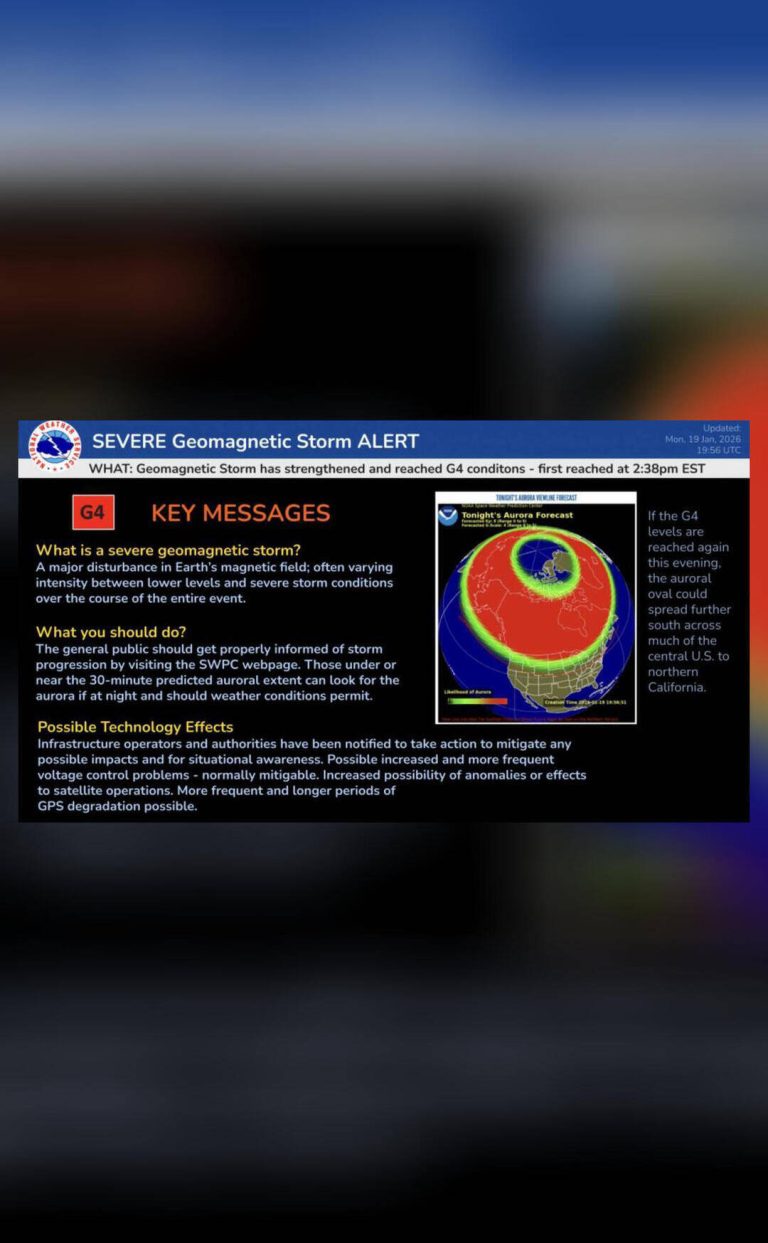
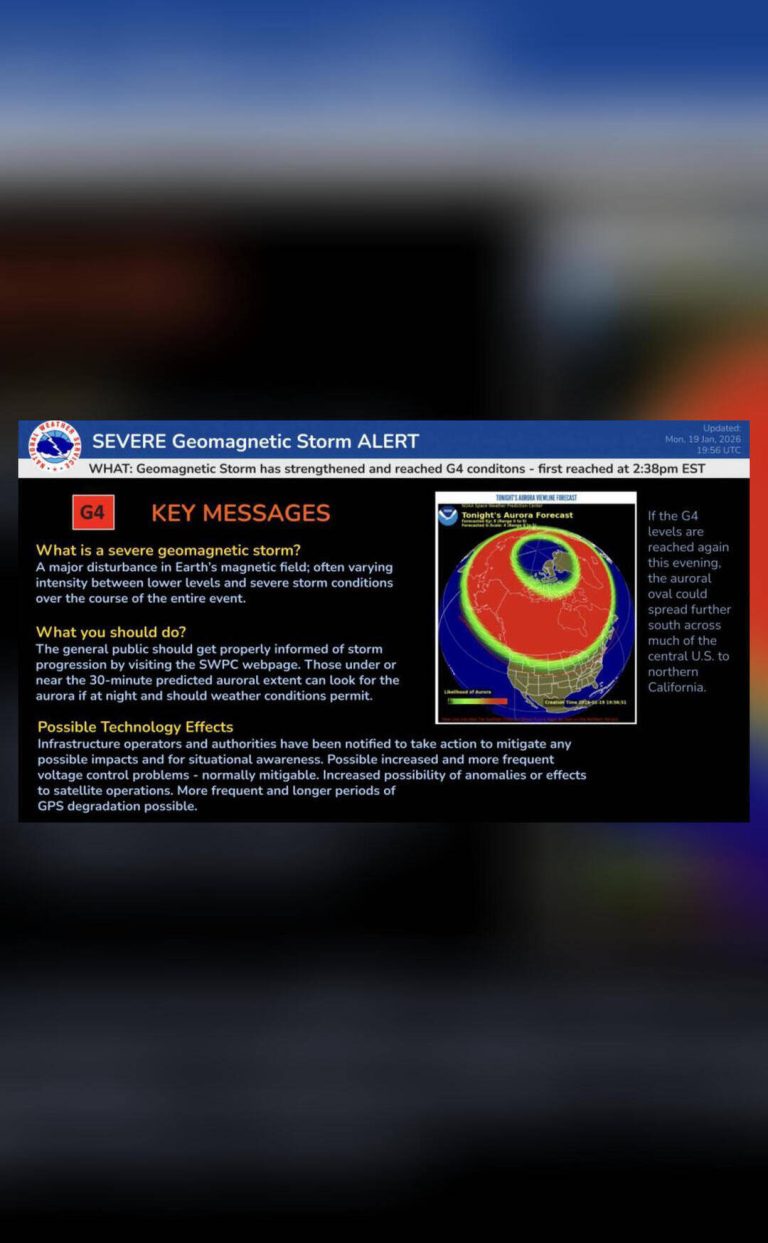
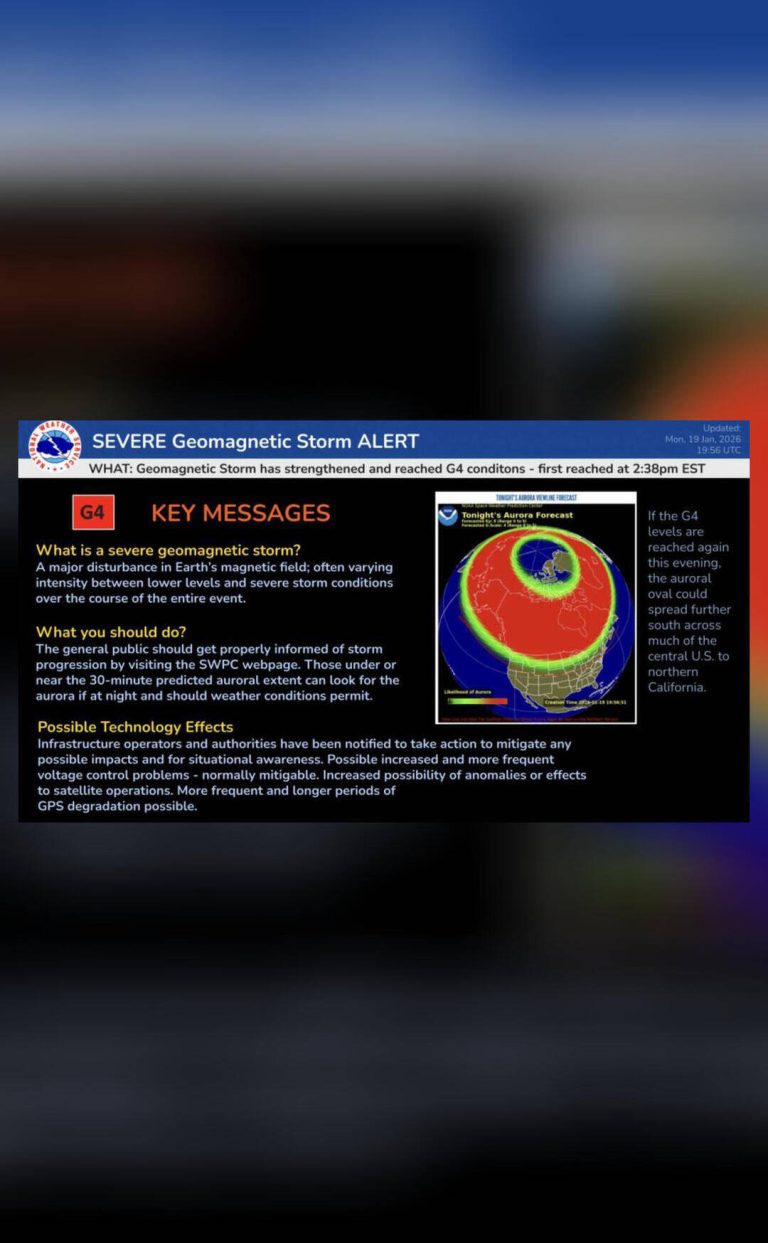
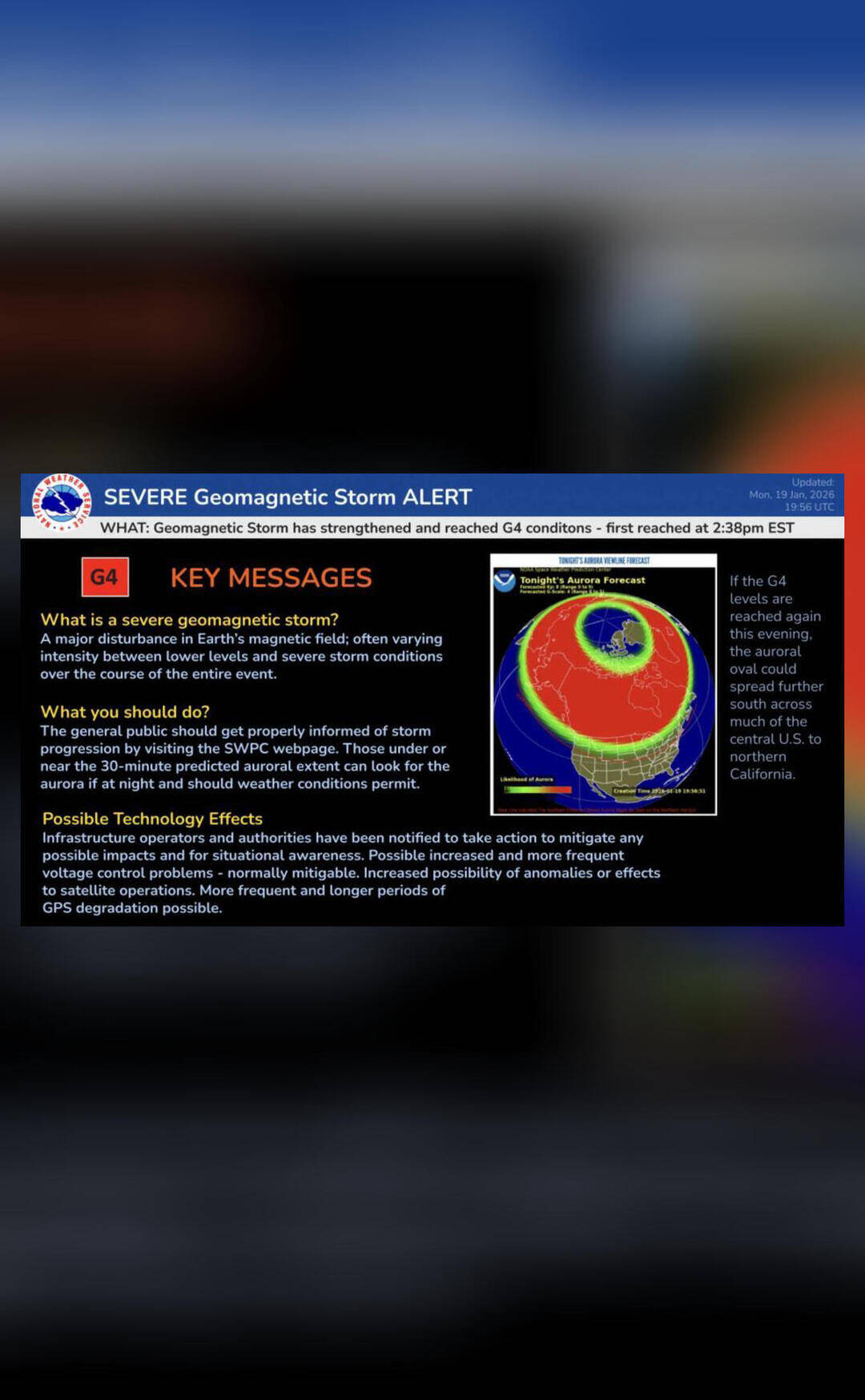
The solar storm, which is a coronal mass ejection (CME) from the sun, was detected by NASA’s Deep Space Climate Observatory (DSCOVR) and the National Weather Service’s Space Weather Prediction Center (SWPC). The storm is classified as a G5-level geomagnetic storm, which is the highest level on the NOAA’s space weather scale. This level of storm is known to cause significant disruptions to satellite communications, GPS, and power grids.
The auroral displays caused by the solar storm were visible in several locations across the globe, including the northern United States, Canada, and Europe. The displays were particularly vivid in areas with low light pollution, such as national parks and remote areas. Many people took to social media to share their photos and videos of the stunning displays, which were characterized by vibrant colors and patterns in the night sky.
However, the solar storm is not just a spectacle to behold. It also poses significant risks to our technological infrastructure. Satellite-based communications, such as satellite TV and radio, may be disrupted by the storm. This could cause problems for people who rely on these services for news, entertainment, and communication. Additionally, the storm could cause GPS signals to be less accurate, which could affect navigation systems used in aviation, maritime, and other industries.
The solar storm also poses risks to passengers on flights that are traveling polar routes. Solar radiation storms can cause increased radiation exposure risks for people who are flying at high altitudes. This is because the Earth’s magnetic field, which protects us from the sun’s radiation, is weaker at the poles. Airlines may need to take precautions to minimize the risks to their passengers, such as flying at lower altitudes or taking alternative routes.
The solar storm is also expected to cause disruptions to power grids. Geomagnetically induced currents (GICs) caused by the storm could flow through power grids, causing equipment to fail or malfunction. This could lead to power outages, which could affect millions of people. Utility companies may need to take precautions to protect their equipment and minimize the risks of power outages.
The solar storm is a reminder of the importance of space weather forecasting. Space weather forecasting is the prediction of the conditions in the space environment, including the sun’s magnetic field, solar wind, and radiation. Accurate space weather forecasts can help us prepare for and mitigate the effects of solar storms. NASA and other space agencies around the world are working to improve our understanding of space weather and to develop better forecasting tools.
In conclusion, the largest solar storm in over 20 years has hit the Earth, causing dazzling auroral displays and posing significant risks to our technological infrastructure. The storm could disrupt satellite-based communications, GPS accuracy, and power grids, and poses risks to passengers on flights that are traveling polar routes. It is essential to stay informed about space weather and to take precautions to minimize the risks associated with solar storms.
News Source: https://x.com/RT_com/status/2013348883477233817
About the Author