Largest solar storm in over 20 years hits Earth
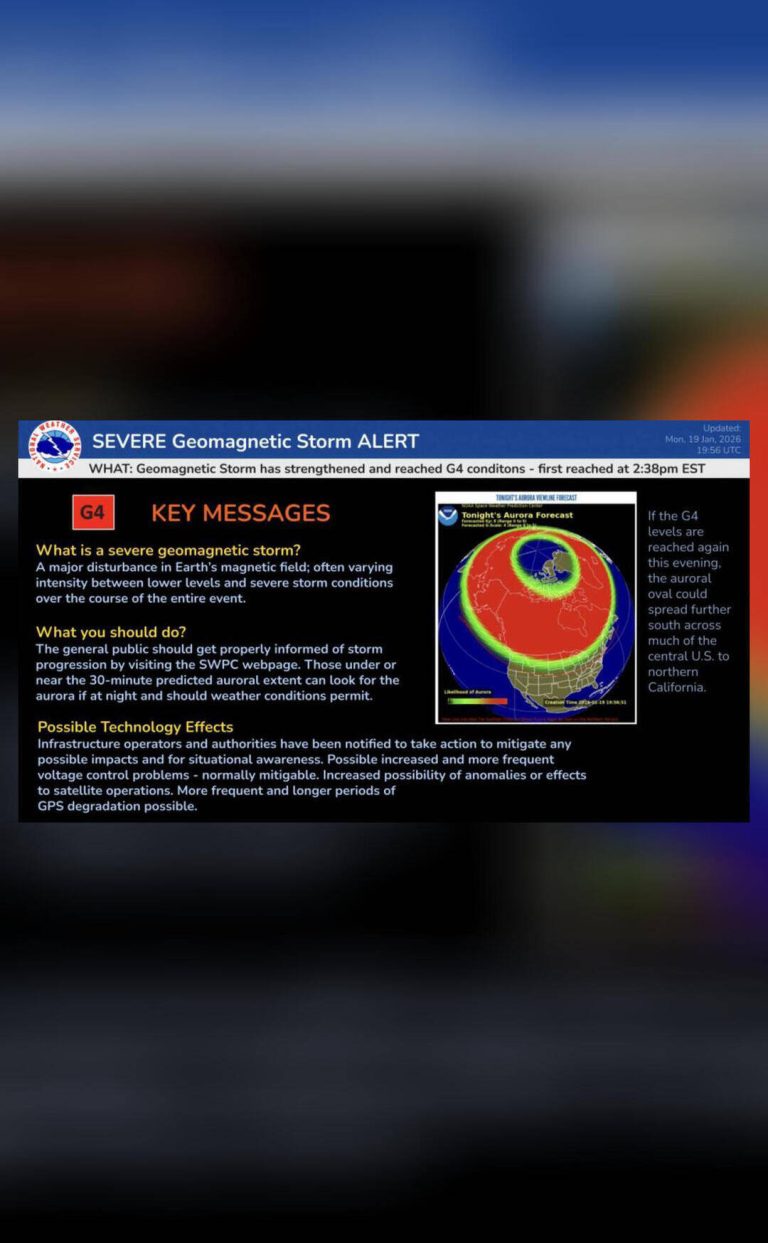
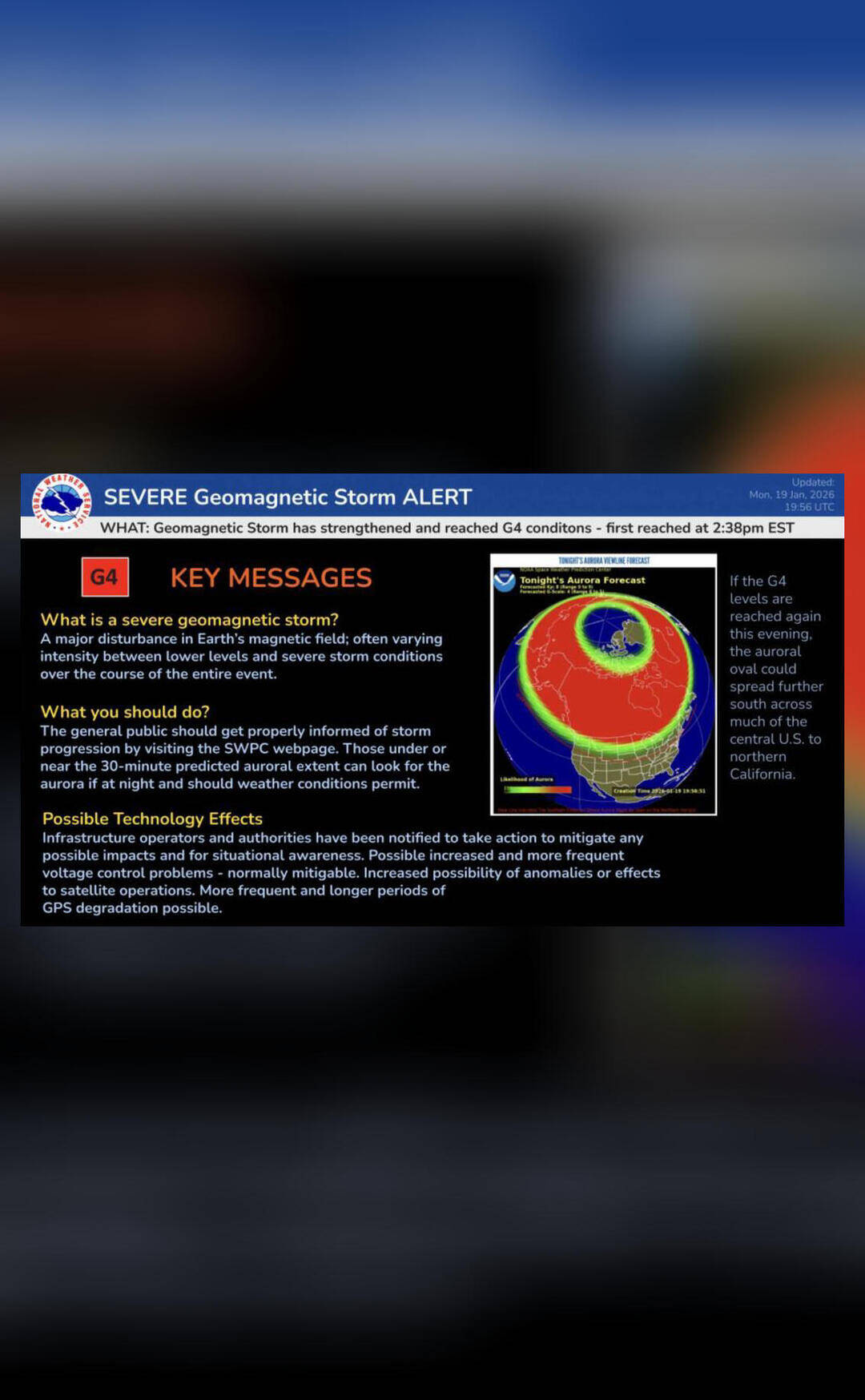
A powerful solar storm hit the Earth and created dazzling auroral displays at several locations across the globe on Monday evening and early Tuesday morning. The largest solar storm in over 20 years could also disrupt satellite-based communications and GPS accuracy. Solar radiation storms can cause increased radiation exposure risks for passengers on flights that are traveling polar routes.
The solar storm, which was classified as a G5-level geomagnetic storm, was the result of a massive solar flare that erupted from the sun on Sunday. The flare was so powerful that it released a huge amount of energy in the form of radiation and charged particles, which then traveled through space and interacted with the Earth’s magnetic field.
As the solar storm hit the Earth, it caused the planet’s magnetic field to vibrate, resulting in spectacular displays of the aurora borealis, also known as the northern lights, and the aurora australis, also known as the southern lights. The aurora was visible at lower latitudes than usual, with sightings reported in the United States, Europe, and Asia.
The solar storm also had the potential to disrupt satellite-based communications and GPS accuracy. The radiation and charged particles released by the solar flare can interfere with satellite signals, causing errors and disruptions to communication systems. This can have significant impacts on a range of industries, including aviation, navigation, and telecommunications.
In addition to the disruption to satellite communications, the solar storm also posed a risk to passengers on flights that were traveling polar routes. Solar radiation storms can cause increased radiation exposure risks for people who are flying at high altitudes, particularly over the polar regions. This is because the Earth’s magnetic field is weaker over the poles, providing less protection against the radiation.
The solar storm was detected by a range of spacecraft and ground-based observatories, including the National Oceanic and Atmospheric Administration’s (NOAA) Space Weather Prediction Center (SWPC). The SWPC issued a warning about the potential impacts of the solar storm, including the disruption to satellite communications and the increased radiation exposure risks for passengers on flights.
The solar storm was also monitored by the European Space Agency’s (ESA) Space Weather Office, which provides forecasts and warnings about space weather events. The ESA’s Space Weather Office worked closely with the SWPC and other space weather organizations to provide updates and warnings about the solar storm.
The impact of the solar storm was felt across the globe, with reports of auroral displays and disruptions to satellite communications coming in from a range of countries. The storm was also the subject of widespread media coverage, with many news outlets reporting on the spectacular displays of the aurora and the potential impacts on satellite communications.
In conclusion, the largest solar storm in over 20 years hit the Earth on Monday evening and early Tuesday morning, causing dazzling auroral displays and disrupting satellite-based communications and GPS accuracy. The solar storm also posed a risk to passengers on flights that were traveling polar routes, due to the increased radiation exposure risks. As our reliance on satellite communications and GPS technology continues to grow, it is essential that we are aware of the potential impacts of space weather events like solar storms.
News Source: https://x.com/RT_com/status/2013348883477233817
About the Author