Largest solar storm in over 20 years hits Earth
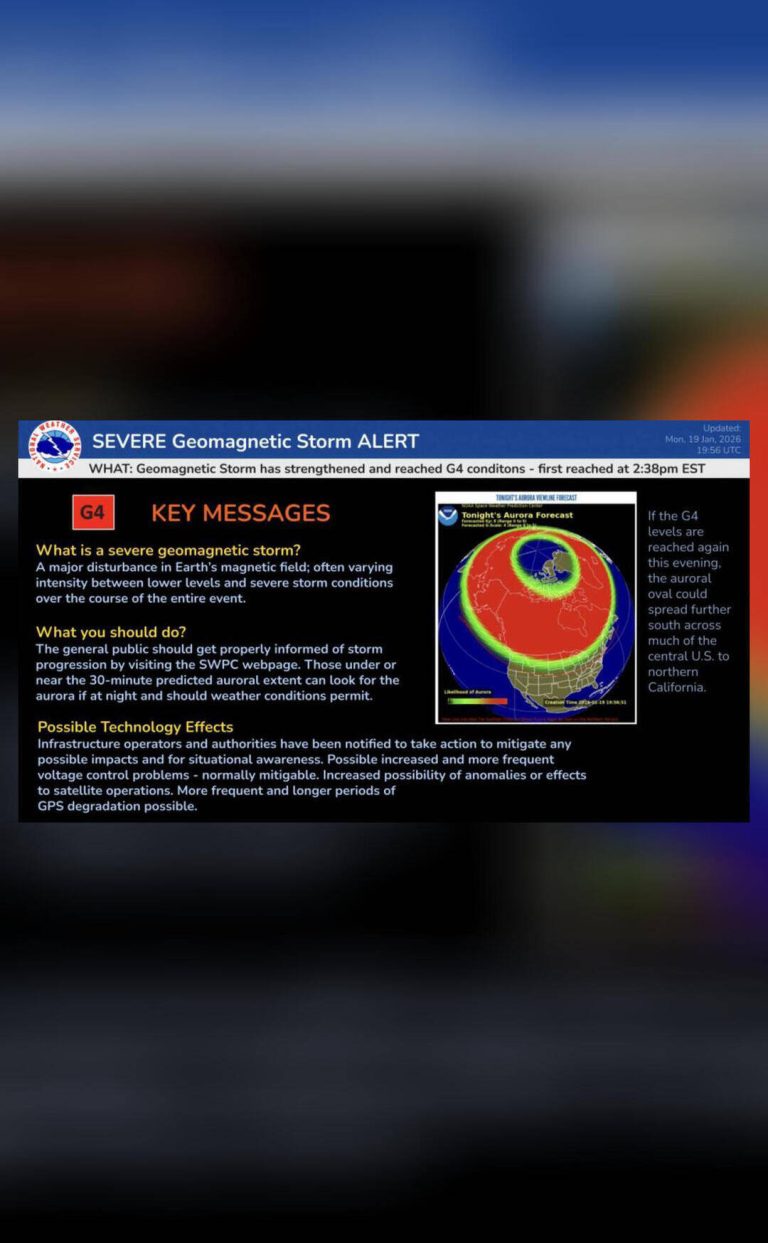
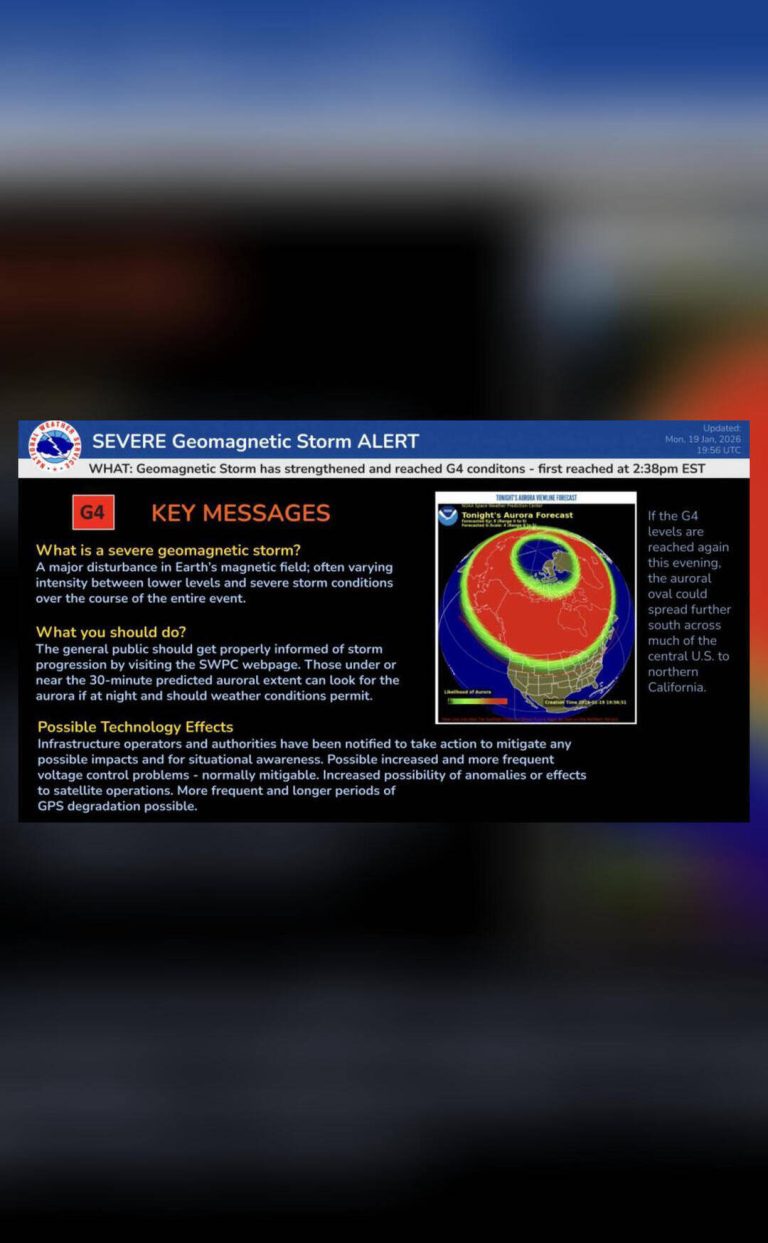
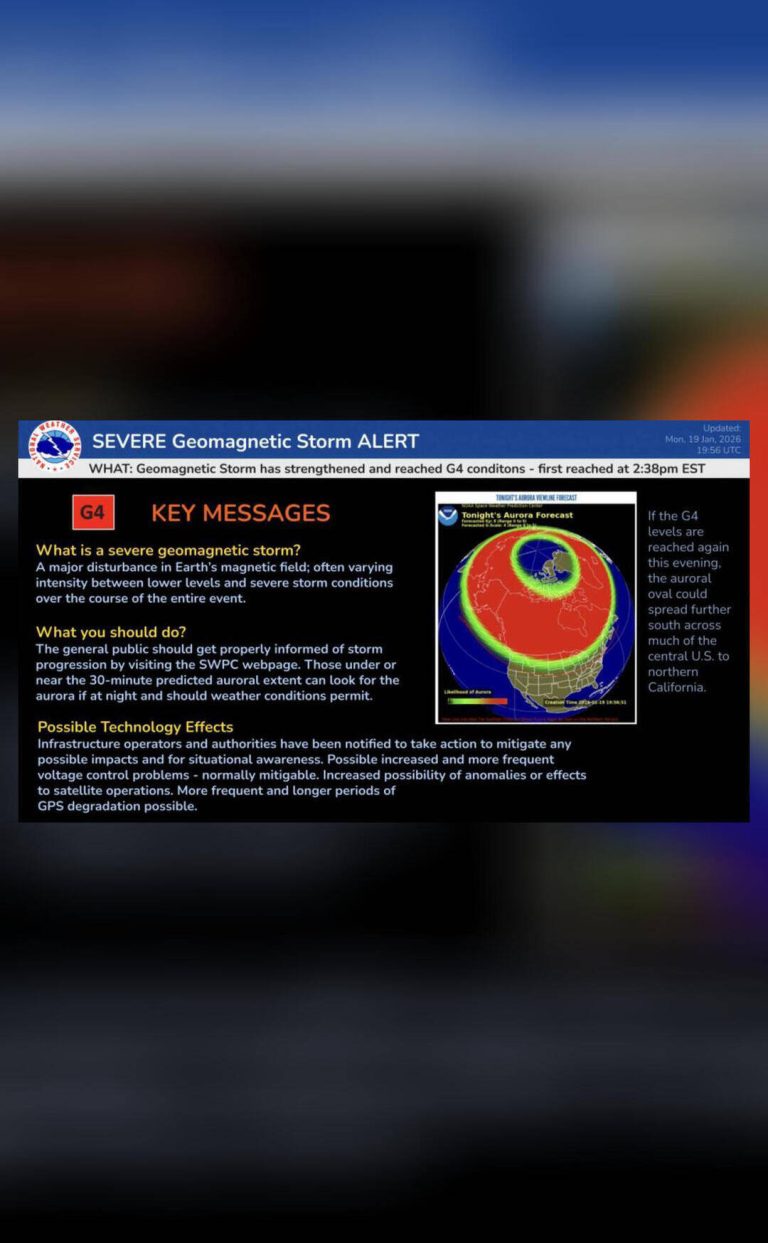
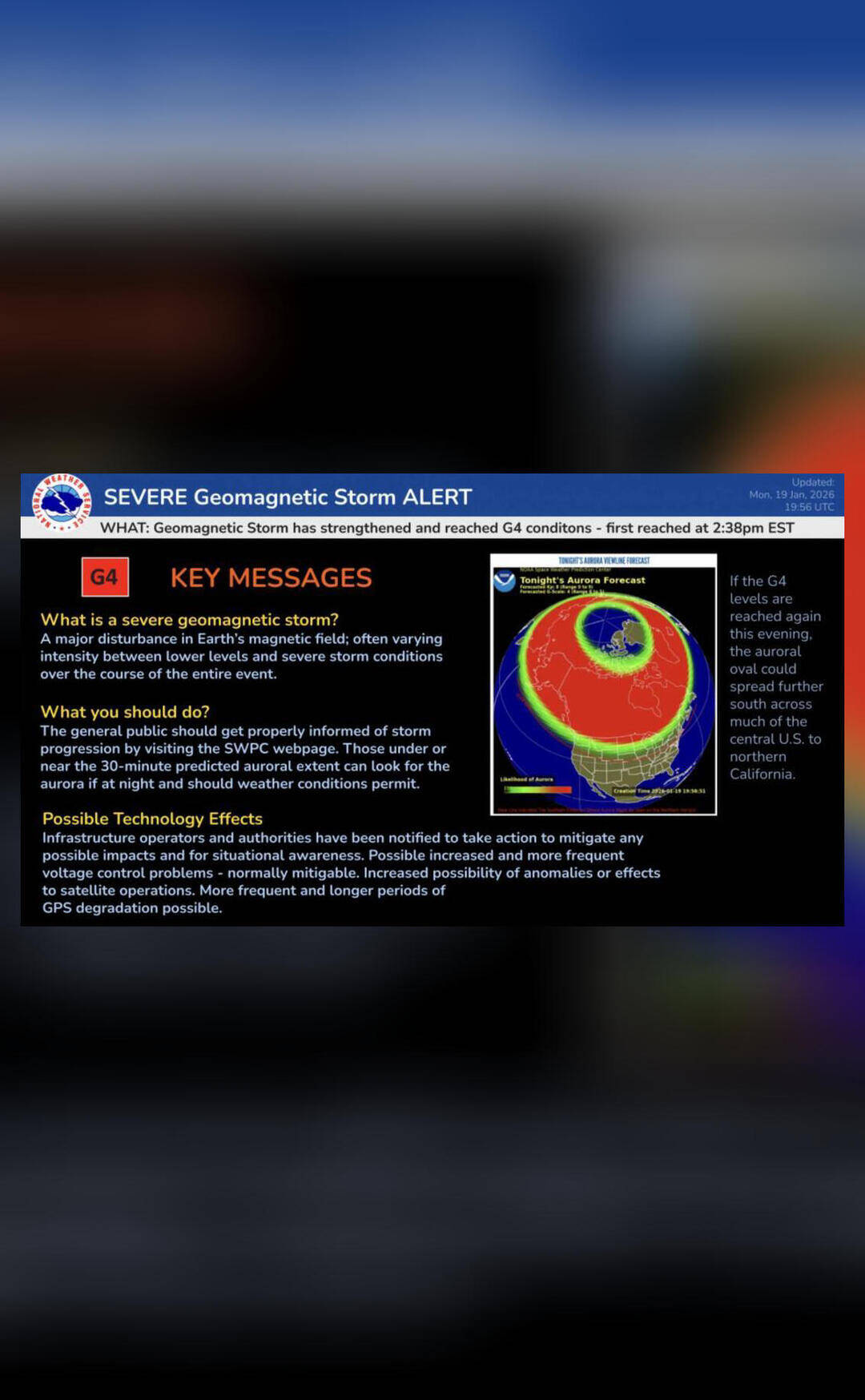
A powerful solar storm hit the Earth and created dazzling auroral displays at several locations across the globe on Monday evening and early Tuesday morning. The largest solar storm in over 20 years could also disrupt satellite-based communications and GPS accuracy. Solar radiation storms can cause increased radiation exposure risks for passengers on flights that are traveling polar routes.
The solar storm, which was classified as a G5-level geomagnetic storm, was caused by a massive burst of energy released from the sun’s surface. This energy was carried towards the Earth by a stream of charged particles, known as a coronal mass ejection (CME). When the CME interacted with the Earth’s magnetic field, it caused a disturbance that led to the spectacular display of the aurora borealis, also known as the northern lights.
The aurora borealis was visible in several locations across the northern hemisphere, including the United States, Canada, and parts of Europe. The display was particularly vivid in areas with low light pollution, such as national parks and remote wilderness areas. Many people took to social media to share their photos and videos of the stunning display, with some describing it as a “once-in-a-lifetime” experience.
However, the solar storm is not just a spectacle to be enjoyed. It also has the potential to disrupt satellite-based communications and GPS accuracy. The charged particles from the CME can interact with the Earth’s magnetic field and cause a phenomenon known as “scintillation,” which can lead to errors in GPS signals. This can have significant impacts on a range of industries, including aviation, navigation, and telecommunications.
In addition to the potential disruptions to satellite-based communications and GPS accuracy, the solar storm also poses a risk to passengers on flights that are traveling polar routes. Solar radiation storms can cause increased radiation exposure risks for people who are flying at high altitudes, particularly over the polar regions. This is because the Earth’s magnetic field is weaker over the poles, providing less protection against the harmful radiation from the sun.
As a result, some airlines have taken precautions to minimize the risks to their passengers. For example, some flights may be rerouted to avoid the polar regions, or passengers may be provided with additional shielding to protect them from the radiation. However, the risks associated with solar radiation storms are still not fully understood, and more research is needed to determine the potential health impacts on passengers.
The solar storm is also expected to have an impact on the Earth’s magnetic field, which could lead to a range of effects on the planet’s climate and weather patterns. Some research has suggested that solar storms can influence the formation of clouds and the distribution of precipitation, although the exact mechanisms are still not well understood.
In terms of the potential impacts on the Earth’s climate, the solar storm is likely to be a relatively short-term event. However, it is part of a larger pattern of solar activity that could have significant effects on the planet’s climate over the coming years. The sun is currently in a period of high activity, with a number of large sunspots and solar flares expected to occur over the next few years.
Overall, the largest solar storm in over 20 years is a significant event that has the potential to disrupt satellite-based communications and GPS accuracy, as well as pose risks to passengers on flights that are traveling polar routes. While the display of the aurora borealis has been a spectacular sight to behold, it is also a reminder of the powerful forces that are at work in the universe, and the need for continued research and monitoring of the sun’s activity.
As we continue to learn more about the sun and its effects on the Earth, it is clear that there is still much to be discovered. The solar storm is a reminder of the awe-inspiring power of the universe, and the importance of continued exploration and research into the mysteries of the cosmos.
In conclusion, the largest solar storm in over 20 years has hit the Earth, causing dazzling auroral displays and disrupting satellite-based communications and GPS accuracy. While the display of the aurora borealis has been a spectacular sight to behold, it is also a reminder of the potential risks and impacts associated with solar storms. As we continue to learn more about the sun and its effects on the Earth, it is clear that there is still much to be discovered, and that continued research and monitoring of the sun’s activity is essential for understanding and mitigating the potential impacts of solar storms.
News Source: https://x.com/RT_com/status/2013348883477233817
About the Author