Largest solar storm in over 20 years hits Earth
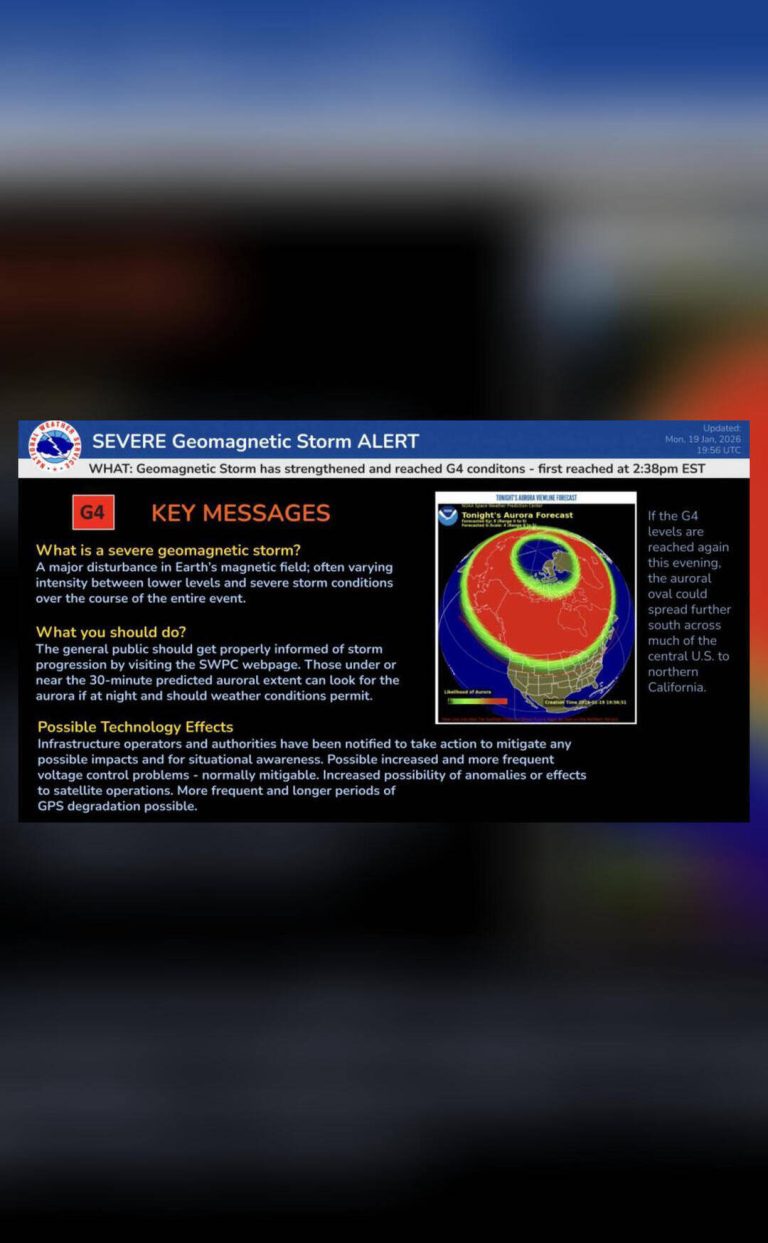
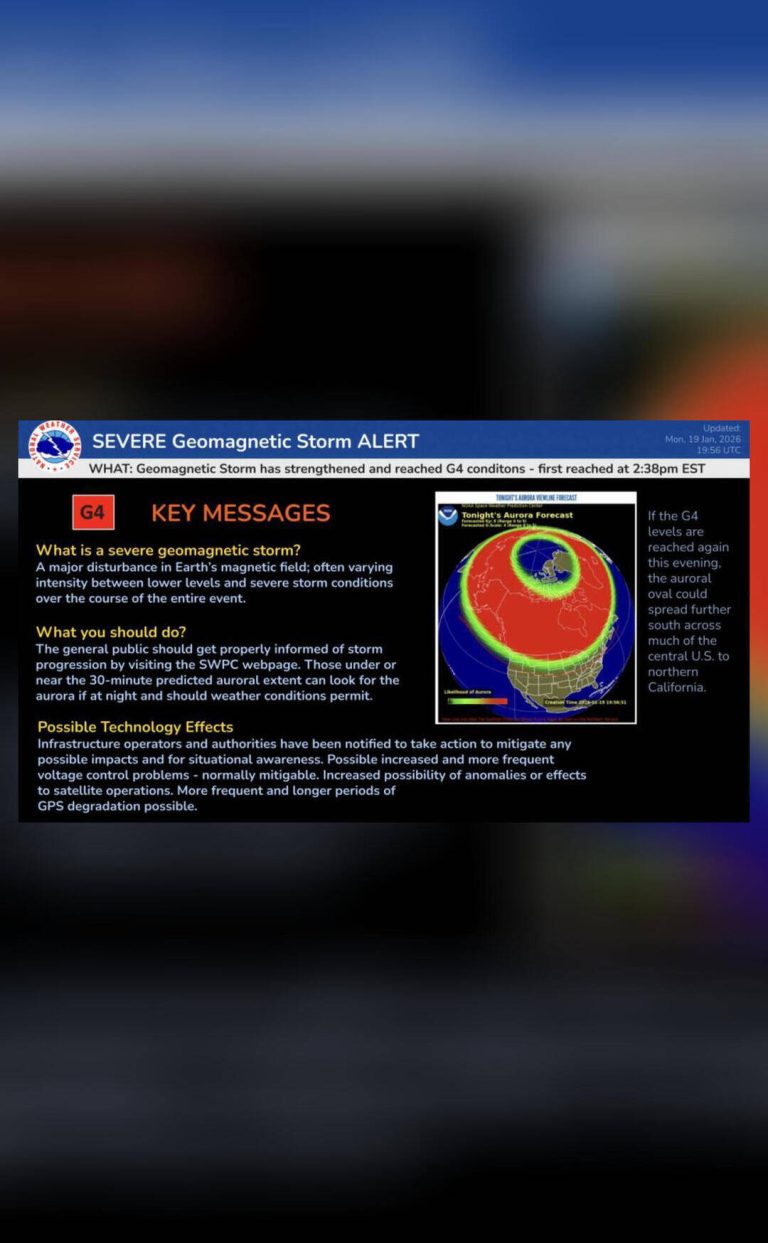
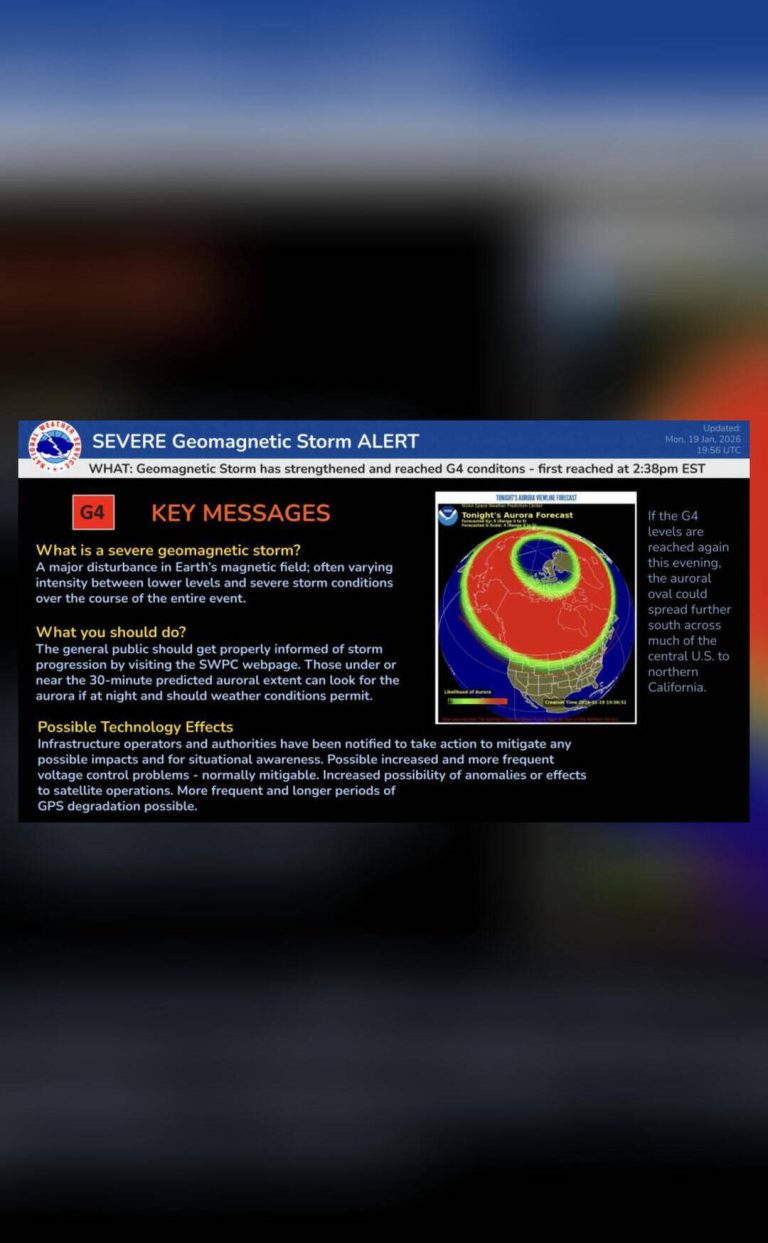
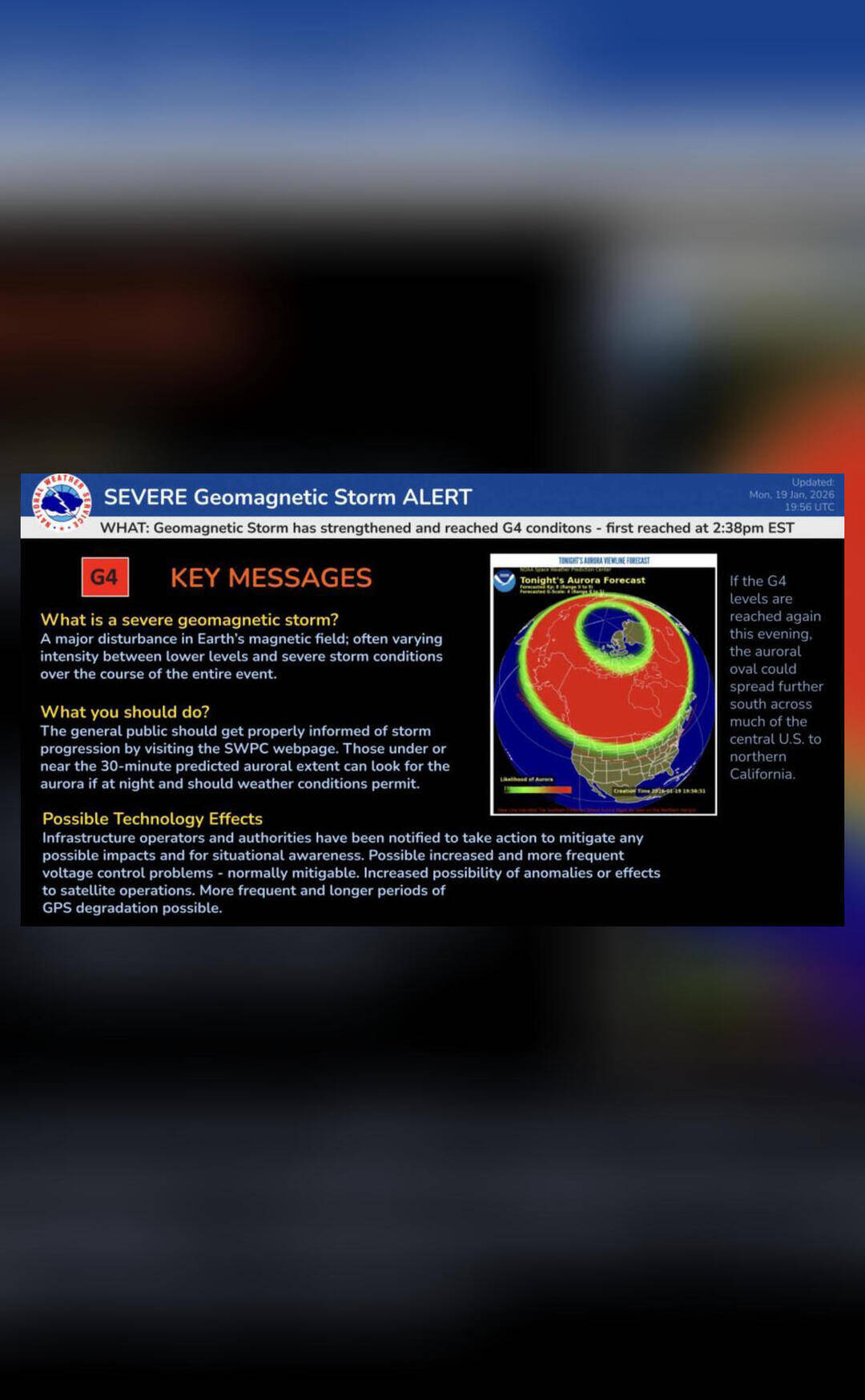
A powerful solar storm hit the Earth and created dazzling auroral displays at several locations across the globe on Monday evening and early Tuesday morning. The largest solar storm in over 20 years could also disrupt satellite-based communications and GPS accuracy. Solar radiation storms can cause increased radiation exposure risks for passengers on flights that are traveling polar routes.
The solar storm, which was categorized as a G5-level geomagnetic storm, was caused by a massive burst of energy released by the sun. This energy traveled through space and collided with the Earth’s magnetic field, causing the spectacular light displays in the sky. The aurora borealis, also known as the northern lights, was visible in several locations, including the northern United States, Canada, and Europe.
The solar storm was so powerful that it was able to penetrate deep into the Earth’s atmosphere, causing the aurora to be visible at lower latitudes than usual. This meant that people in areas that do not normally see the northern lights were able to witness the spectacle. The storm also caused the aurora to be visible in the southern hemisphere, with sightings reported in Australia and New Zealand.
While the solar storm created a beautiful display in the sky, it also had the potential to cause disruptions to satellite-based communications and GPS accuracy. The storm’s energy can interfere with satellite signals, causing errors and disruptions to communication systems. This could have an impact on a wide range of industries, including aviation, maritime, and finance.
In addition to the potential disruptions to satellite-based communications, the solar storm also posed a risk to passengers on flights that were traveling polar routes. Solar radiation storms can cause increased radiation exposure risks for people who are flying at high altitudes. This is because the Earth’s magnetic field is weaker at the poles, allowing more radiation to penetrate the atmosphere.
As a result of the solar storm, several airlines took precautions to minimize the risk of radiation exposure to their passengers. Some flights were rerouted to avoid the polar regions, while others were delayed or canceled. The Federal Aviation Administration (FAA) also issued a warning to airlines, advising them to take steps to minimize the risk of radiation exposure to their passengers.
The solar storm was a reminder of the powerful forces that exist in space and the potential impact that they can have on our daily lives. While the storm was a spectacular sight to behold, it also highlighted the need for continued research and monitoring of space weather events.
Space weather events, such as solar storms, can have a significant impact on our technological systems and our daily lives. They can cause disruptions to communication systems, power grids, and transportation systems, and can also pose a risk to human health. As our reliance on technology continues to grow, it is becoming increasingly important to understand and prepare for space weather events.
In recent years, there has been an increased focus on space weather research and monitoring. Scientists are working to better understand the causes and effects of space weather events, and to develop systems that can predict and mitigate their impact. This includes the development of advanced forecasting systems that can predict when and where space weather events will occur.
The solar storm that hit the Earth on Monday evening and early Tuesday morning was a significant event that highlighted the importance of space weather research and monitoring. It was a reminder of the powerful forces that exist in space and the potential impact that they can have on our daily lives. As we continue to explore and understand the universe, it is becoming increasingly important to be aware of the potential risks and benefits of space weather events.
In conclusion, the largest solar storm in over 20 years hit the Earth on Monday evening and early Tuesday morning, creating dazzling auroral displays at several locations across the globe. The storm had the potential to disrupt satellite-based communications and GPS accuracy, and posed a risk to passengers on flights that were traveling polar routes. As our reliance on technology continues to grow, it is becoming increasingly important to understand and prepare for space weather events. By continuing to research and monitor space weather events, we can better understand the causes and effects of these events, and develop systems that can predict and mitigate their impact.
News source: https://x.com/RT_com/status/2013348883477233817
About the Author