Largest Solar Storm in Over 20 Years Hits Earth
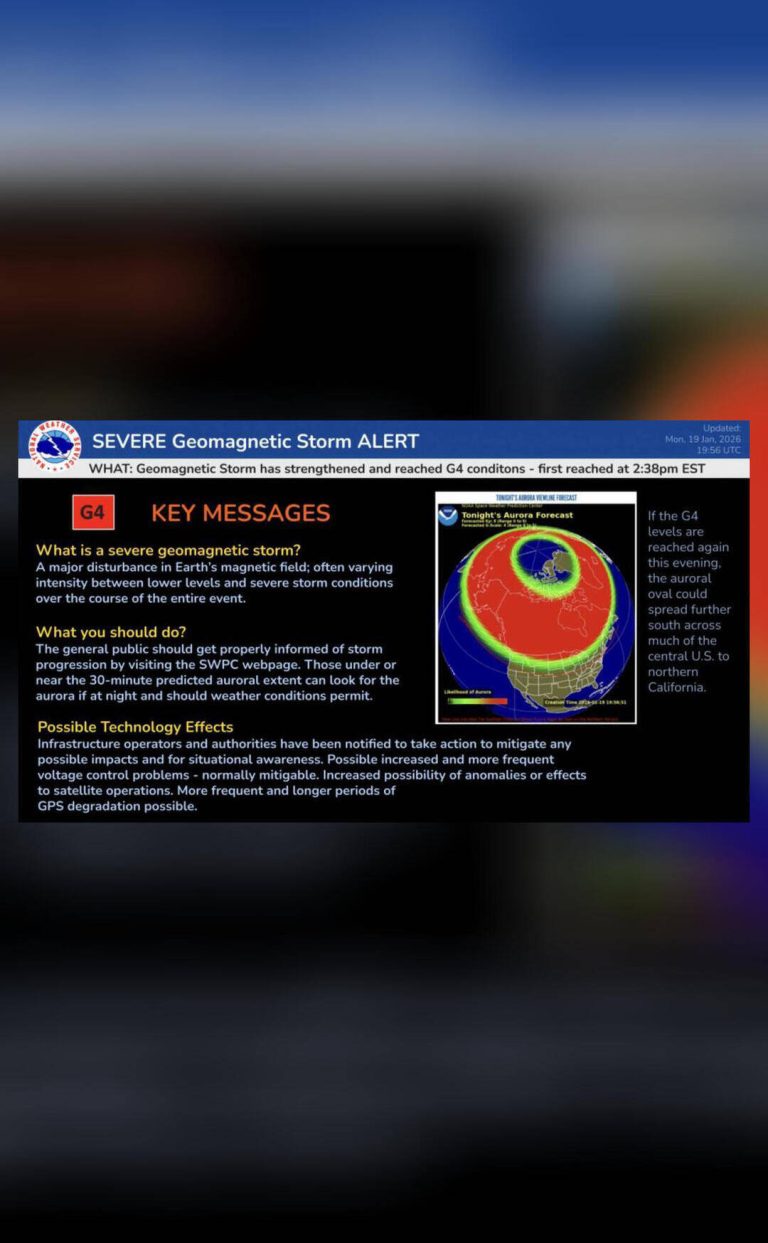
A powerful solar storm hit the Earth on Monday evening and early Tuesday morning, creating dazzling auroral displays at several locations across the globe. This is the largest solar storm to affect our planet in over 20 years, and it has the potential to disrupt satellite-based communications and GPS accuracy. The storm, which was caused by a massive burst of energy from the sun, has also raised concerns about increased radiation exposure risks for passengers on flights that are traveling polar routes.
The solar storm, which was classified as a G5-level geomagnetic storm, was the result of a coronal mass ejection (CME) that was ejected from the sun on Friday. The CME, which is a massive cloud of charged particles, traveled through space and reached the Earth’s magnetic field, causing a significant disturbance. The storm was so powerful that it was visible in the skies of several countries, including the United States, Canada, and the United Kingdom.
The auroral displays, which were caused by the solar storm, were a sight to behold. The skies were filled with vibrant colors, including shades of green, blue, and red, as the charged particles from the sun interacted with the Earth’s magnetic field. The displays were so intense that they were visible in areas that are not typically known for their aurora sightings, such as the southern United States.
However, the solar storm is not just a beautiful spectacle; it also has the potential to cause significant disruptions to our daily lives. The storm can interfere with satellite-based communications, such as GPS and radio communications, which can have a significant impact on industries such as aviation and navigation. The storm can also cause increased radiation exposure risks for passengers on flights that are traveling polar routes, as the Earth’s magnetic field is weaker at the poles.
The effects of the solar storm were felt across the globe, with several countries experiencing disruptions to their communication systems. The storm also caused concerns about the safety of astronauts on the International Space Station, as the increased radiation levels can pose a risk to their health.
The solar storm has also raised concerns about the potential impact on the Earth’s power grid. The storm can cause geomagnetically induced currents (GICs), which can flow through power lines and cause significant damage to the grid. This can lead to power outages and disruptions to critical infrastructure, such as hospitals and emergency services.
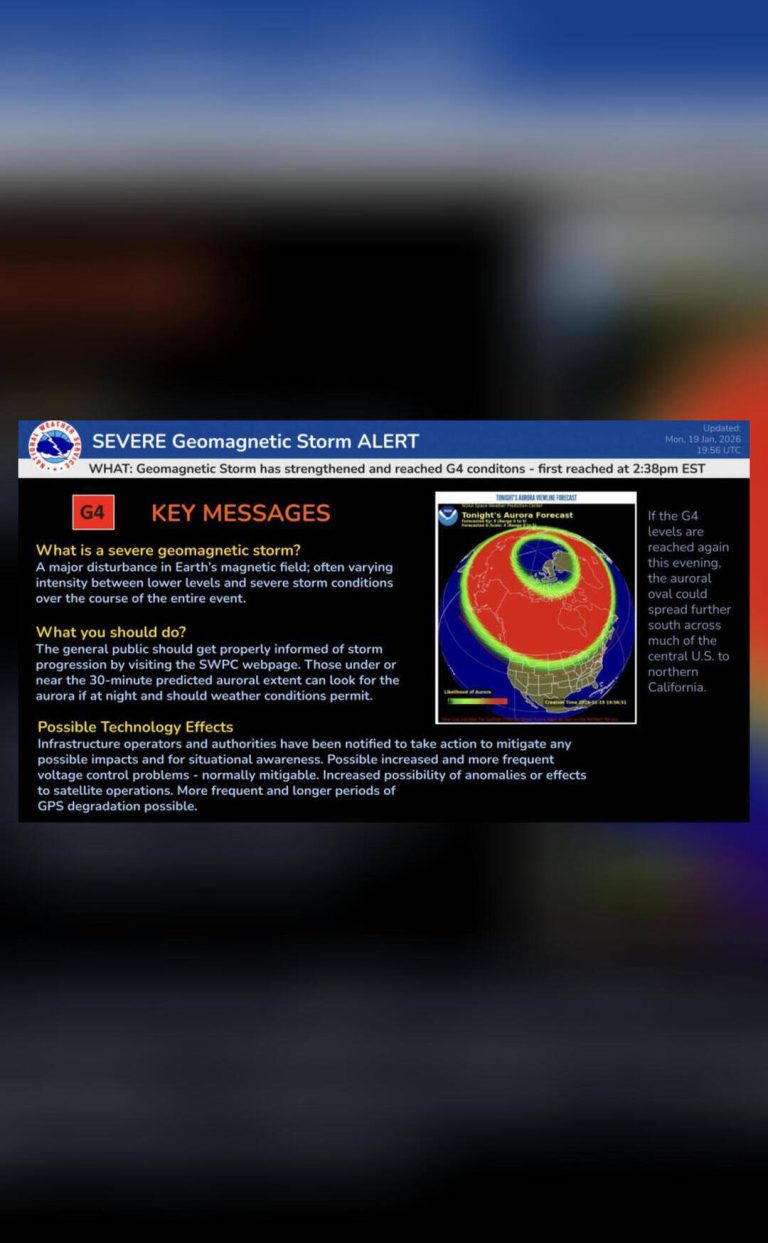
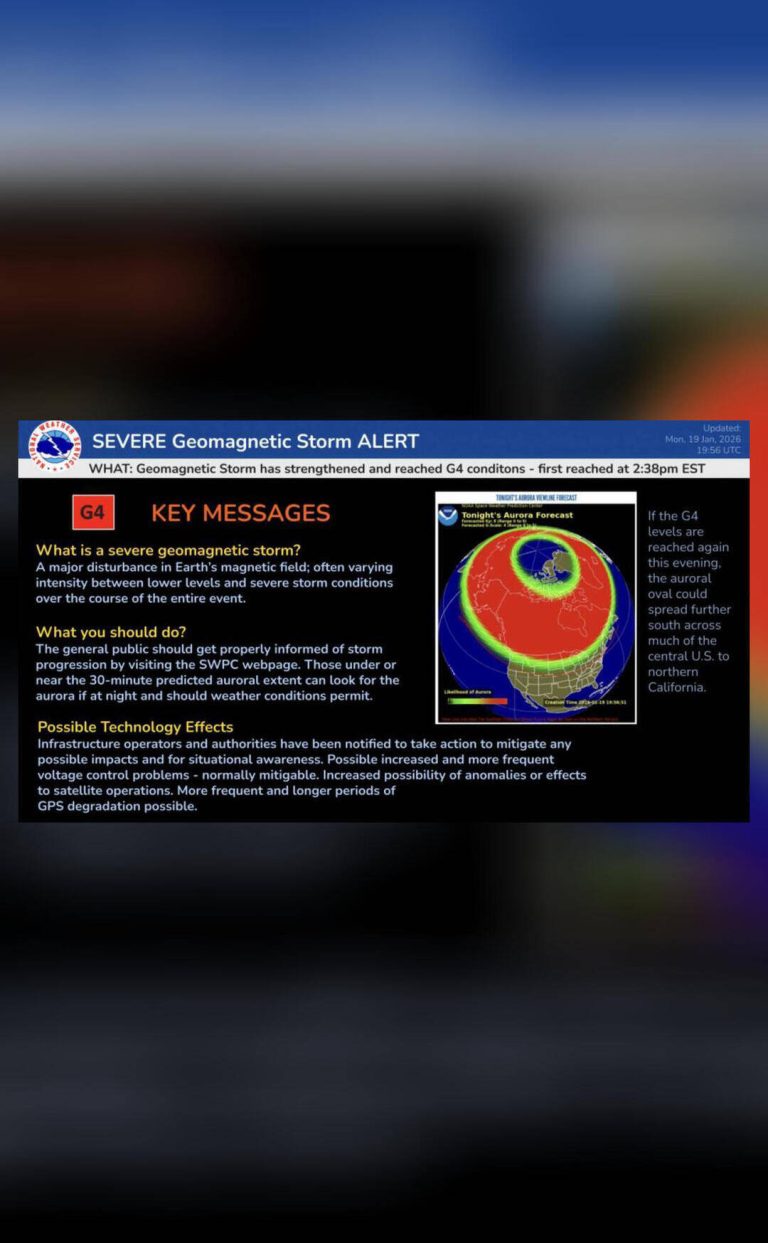
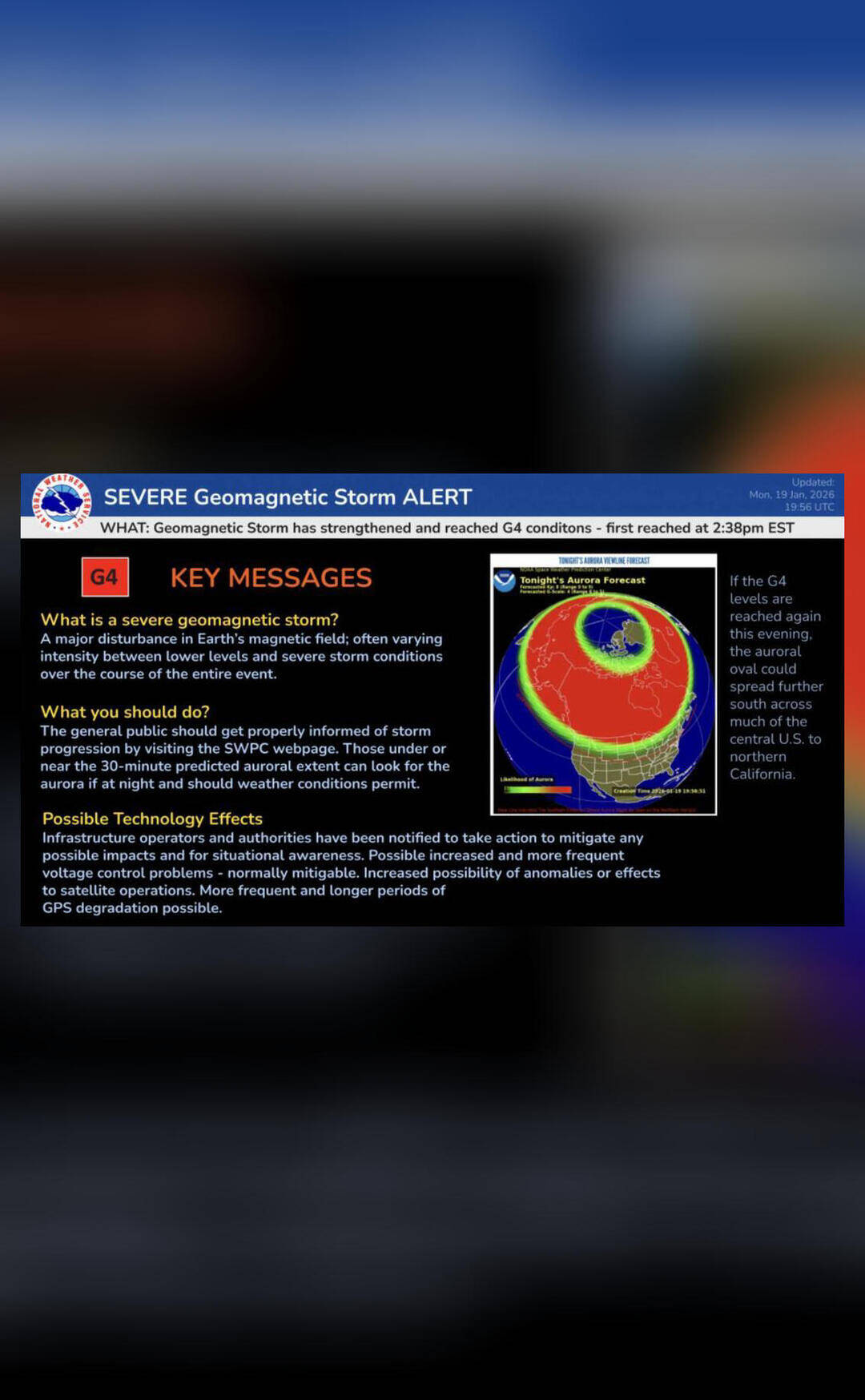
The National Weather Service (NWS) has issued a warning about the potential impact of the solar storm, stating that the storm can cause “widespread” disruptions to communication systems and the power grid. The NWS has also warned about the increased radiation exposure risks for passengers on flights that are traveling polar routes.
The solar storm is a reminder of the awe-inspiring power of the sun and the potential risks that it can pose to our daily lives. While the storm is a beautiful spectacle, it also highlights the importance of being prepared for the potential disruptions that it can cause.
In conclusion, the largest solar storm in over 20 years has hit the Earth, causing dazzling auroral displays and potential disruptions to satellite-based communications and GPS accuracy. The storm has also raised concerns about increased radiation exposure risks for passengers on flights that are traveling polar routes. As we continue to rely on technology and communication systems, it is essential that we are aware of the potential risks that solar storms can pose and take steps to mitigate their impact.
News Source: https://x.com/RT_com/status/2013348883477233817
About the Author