Largest solar storm in over 20 years hits Earth
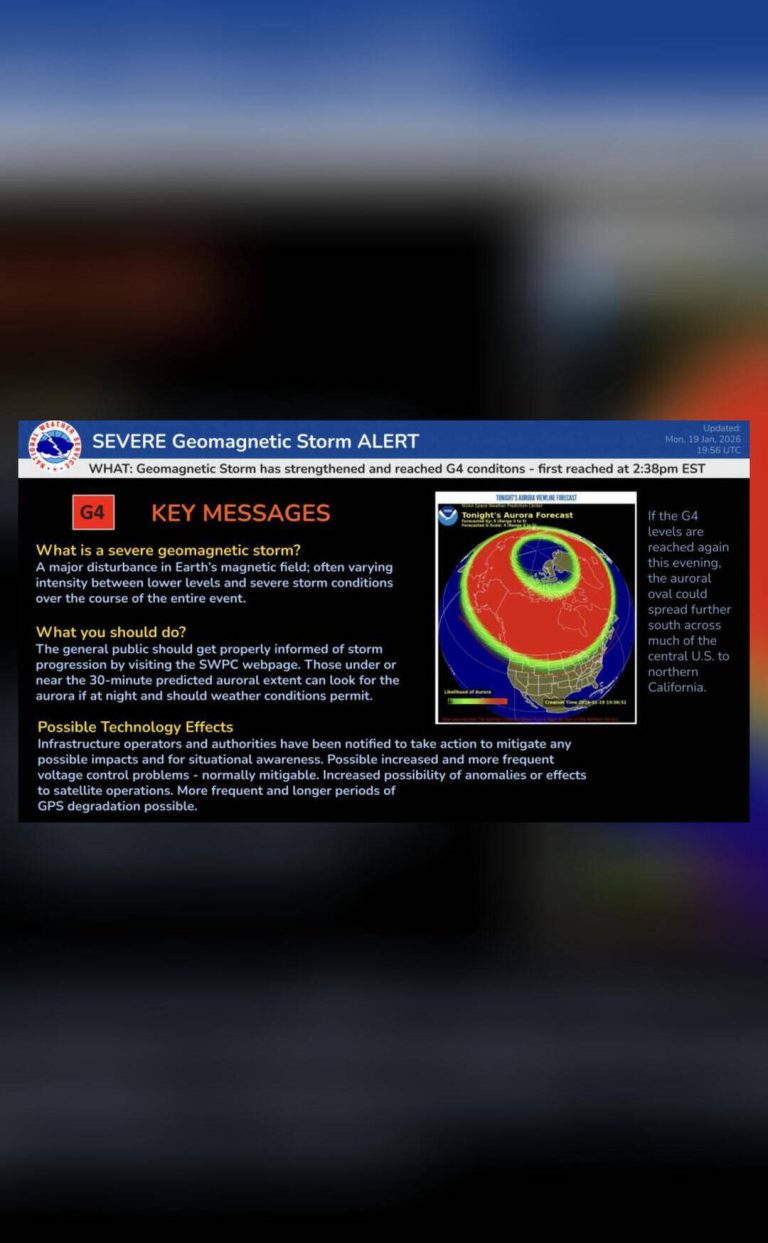
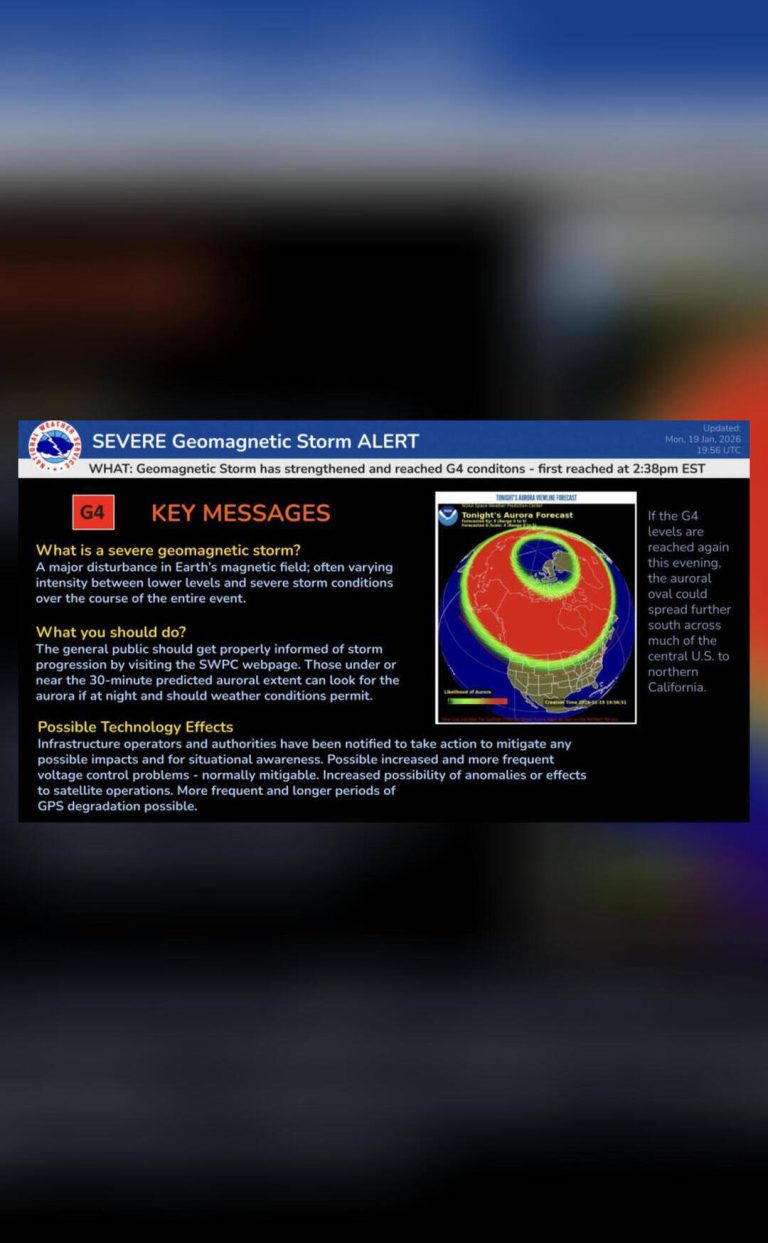
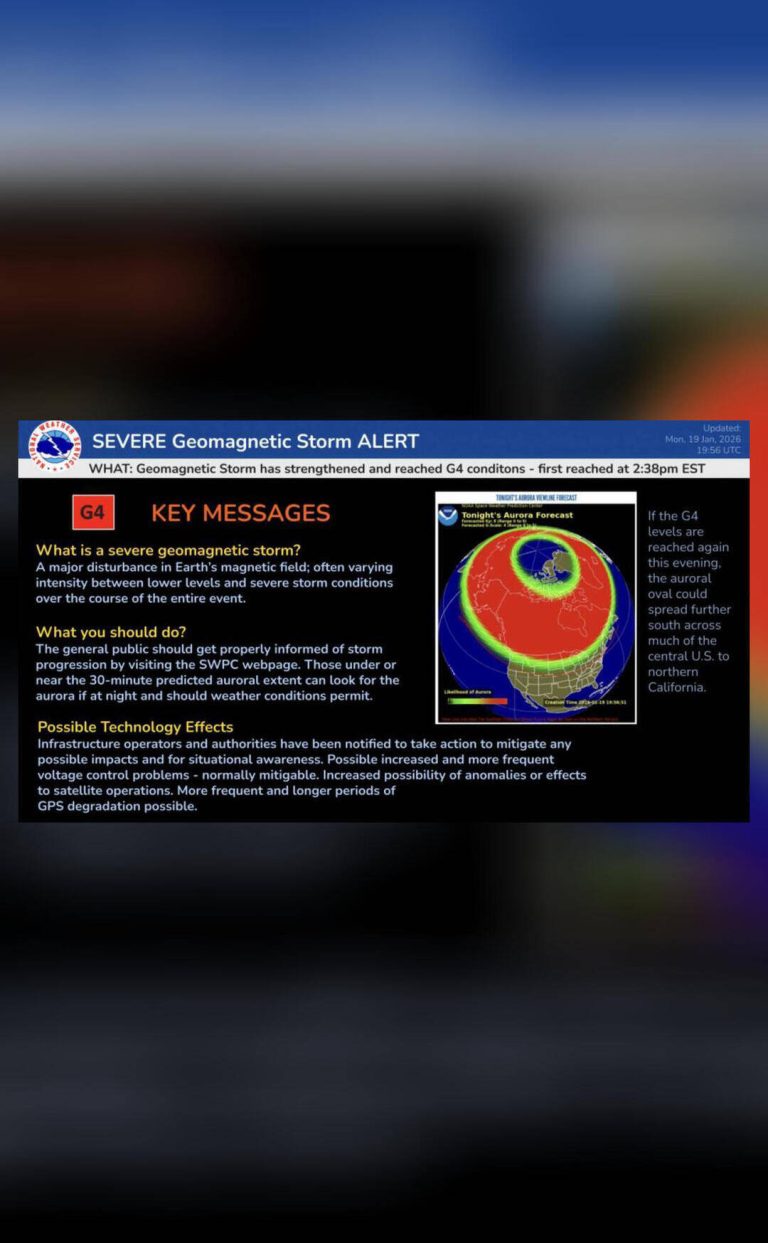
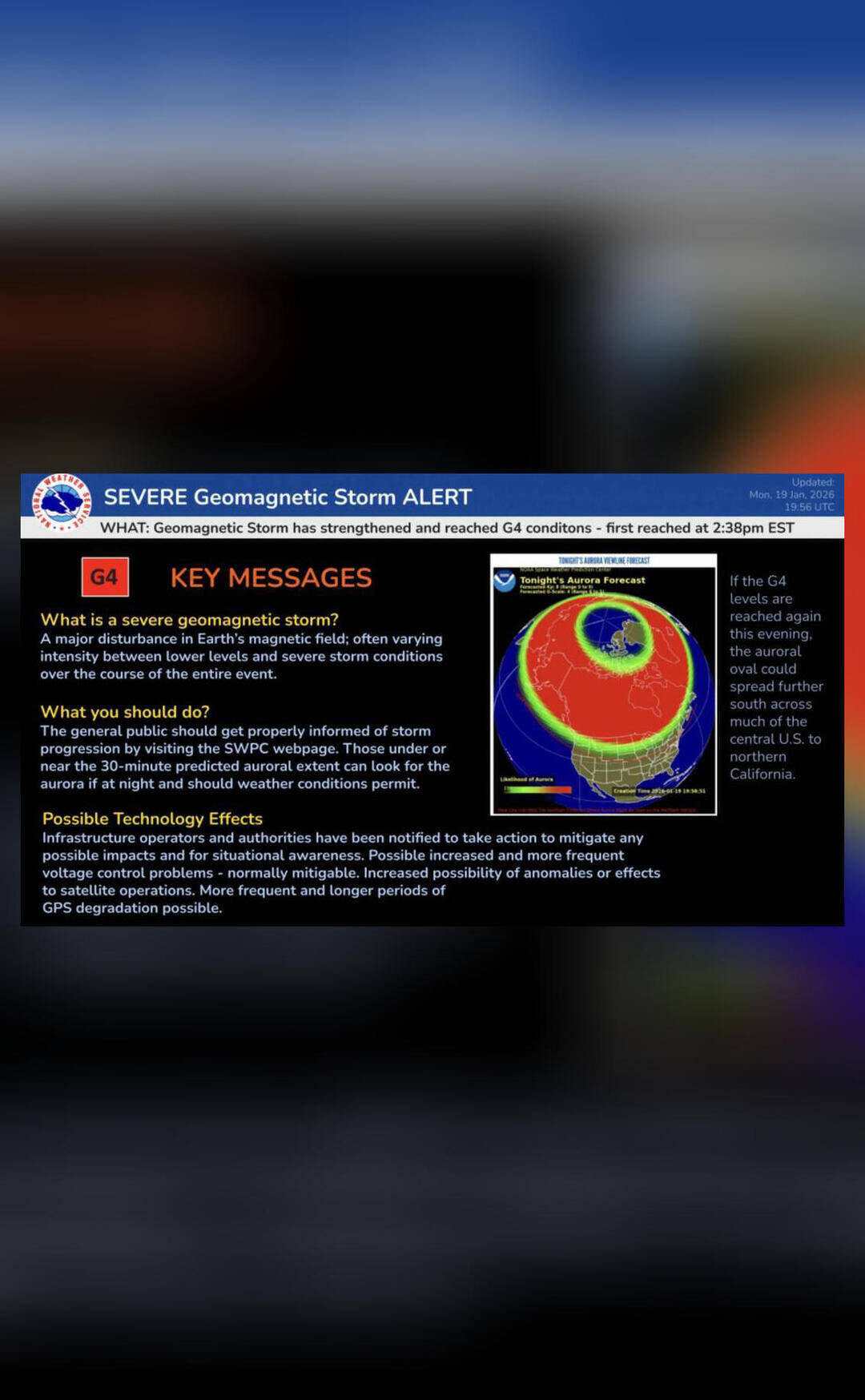
A powerful solar storm hit the Earth and created dazzling auroral displays at several locations across the globe on Monday evening and early Tuesday morning. The largest solar storm in over 20 years could also disrupt satellite-based communications and GPS accuracy. Solar radiation storms can cause increased radiation exposure risks for passengers on flights that are traveling polar routes.
The solar storm, which was classified as a G5-level geomagnetic storm, was the result of a massive solar flare that erupted from the sun on Sunday. The flare, which was accompanied by a coronal mass ejection (CME), sent a huge cloud of charged particles hurtling towards the Earth. The CME, which was traveling at a speed of over 1 million miles per hour, interacted with the Earth’s magnetic field, causing the spectacular auroral displays.
The aurora, also known as the northern lights, was visible in several locations across the globe, including the northern United States, Canada, and parts of Europe. The displays were particularly vivid in areas with low light pollution, such as national parks and remote wilderness areas. Many people took to social media to share their photos and videos of the stunning displays, which were characterized by vibrant colors and swirling patterns.
While the solar storm was a treat for sky gazers, it also posed a potential threat to satellite-based communications and GPS accuracy. The charged particles from the CME can interfere with satellite signals, causing errors and disruptions to communication systems. This could have significant implications for industries such as aviation, maritime, and finance, which rely heavily on satellite-based communications.
In addition to disrupting satellite communications, the solar storm also posed a risk to passengers on flights that were traveling polar routes. Solar radiation storms can cause increased radiation exposure risks for passengers and crew members on flights that fly over the polar regions. This is because the Earth’s magnetic field is weaker at the poles, allowing more radiation to penetrate the atmosphere.
Airline companies and aviation authorities took precautions to minimize the risks associated with the solar storm. Some flights were rerouted to avoid the polar regions, while others were delayed or canceled. Passengers on affected flights were also advised to take precautions, such as staying hydrated and avoiding prolonged exposure to radiation.
The solar storm was also a reminder of the importance of space weather forecasting. Space weather refers to the dynamic and variable conditions in the space environment, including solar flares, coronal mass ejections, and geomagnetic storms. Accurate forecasting of space weather events is critical for mitigating the risks associated with them.
The National Weather Service (NWS) and other space weather forecasting agencies around the world closely monitored the solar storm and issued warnings and alerts to affected industries and stakeholders. The NWS also provided updates and information to the public through social media and other channels.
In conclusion, the largest solar storm in over 20 years hit the Earth on Monday evening and early Tuesday morning, creating dazzling auroral displays and posing a potential threat to satellite-based communications and GPS accuracy. While the storm was a treat for sky gazers, it also highlighted the importance of space weather forecasting and the need for industries and stakeholders to take precautions to minimize the risks associated with space weather events.
As our reliance on satellite-based communications and technologies continues to grow, it is essential that we invest in space weather forecasting and monitoring capabilities. This will enable us to better predict and prepare for space weather events, minimizing the risks and disruptions associated with them.
For more information on the solar storm and its impact, please visit the National Weather Service website or follow reputable space weather forecasting agencies on social media.
News source: https://x.com/RT_com/status/2013348883477233817
About the Author