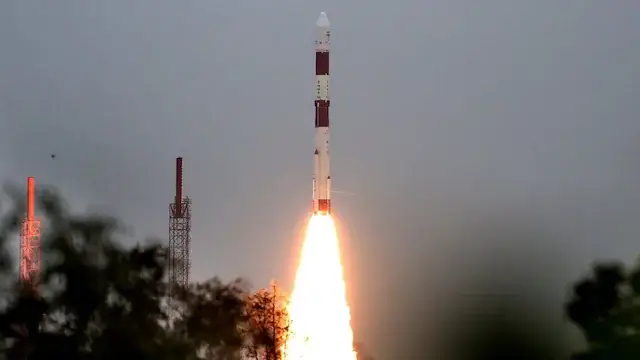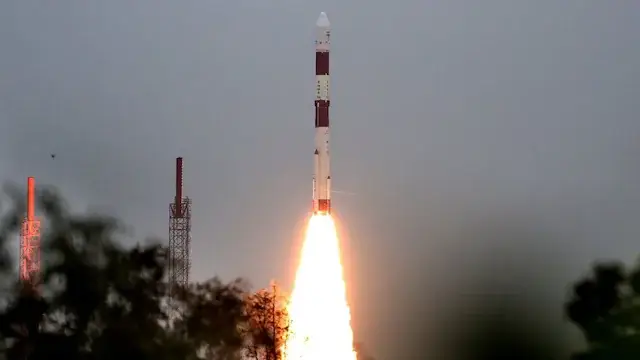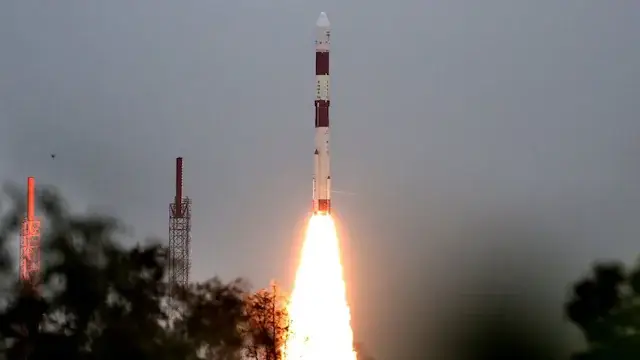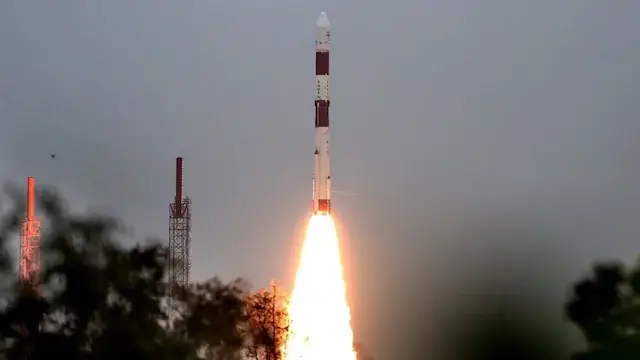
ISRO begins countdown for 1st launch of 2026 with PSLV-C62 mission
The Indian Space Research Organisation (ISRO) has commenced a 22-hour countdown at 12.48 pm for its first launch mission of 2026, ‘PSLV-C62/EOS-N1’. This highly anticipated mission marks the beginning of a new year for ISRO, with the PSLV rocket set to place the EOS-N1 Earth observation satellite and 15 co-passenger satellites into orbit. The PSLV, or Polar Satellite Launch Vehicle, is ISRO’s workhorse launch vehicle, which has completed 63 flights, including notable missions like Chandrayaan-1. It holds the record for launching 104 satellites in a single mission, a testament to its reliability and capabilities.
The PSLV-C62 mission is a significant one, with the primary payload being the EOS-N1 Earth observation satellite. This satellite is designed to provide high-resolution images of the Earth’s surface, which will be used for a variety of applications, including land use mapping, crop monitoring, and disaster management. The satellite will be placed into a sun-synchronous orbit, allowing it to capture images of the Earth’s surface at the same time every day, providing valuable data for researchers and policymakers.
In addition to the EOS-N1 satellite, the PSLV-C62 mission will also carry 15 co-passenger satellites into orbit. These satellites are from various countries, including the United States, France, and Japan, and will be used for a range of purposes, including technology demonstration, Earth observation, and communication. The ability of the PSLV to carry multiple satellites into orbit on a single mission is a major advantage, as it allows ISRO to offer a cost-effective and efficient launch service to its customers.
The PSLV rocket has a long history of success, with its first launch taking place in 1993. Since then, it has completed 63 flights, with a success rate of over 95%. The rocket has been used for a variety of missions, including the launch of India’s first lunar mission, Chandrayaan-1, in 2008. The PSLV has also been used for the launch of several other notable missions, including the Mars Orbiter Mission, which was launched in 2013 and has been orbiting the Red Planet since 2014.
One of the key features of the PSLV rocket is its flexibility. The rocket is available in several different configurations, including the Core Alone (CA) version, which is used for smaller payloads, and the XL version, which is used for larger payloads. The PSLV-C62 mission will use the XL version of the rocket, which has a payload capacity of up to 1,750 kg.
The PSLV-C62 mission is also significant because it marks the beginning of a new year for ISRO. The organisation has a number of major missions planned for 2026, including the launch of the Gaganyaan mission, which will carry Indian astronauts into space for the first time. The Gaganyaan mission is a major milestone for ISRO, and will mark a significant step forward for the country’s space program.
In addition to the Gaganyaan mission, ISRO also plans to launch a number of other significant missions in 2026, including the Aditya-L1 mission, which will study the Sun’s corona, and the XPoSat mission, which will study the X-ray polarisation of celestial sources. These missions will help to further our understanding of the universe and will demonstrate ISRO’s capabilities as a major space-faring nation.
In conclusion, the PSLV-C62 mission is a significant one for ISRO, marking the beginning of a new year for the organisation and the first launch of 2026. The mission will carry the EOS-N1 Earth observation satellite and 15 co-passenger satellites into orbit, and will demonstrate the capabilities of the PSLV rocket. With a number of major missions planned for 2026, including the Gaganyaan mission, ISRO is set to have a busy and exciting year ahead.
Source: https://x.com/PTI_News/status/2010285538843173209
About the Author