ISRO begins countdown for 1st launch of 2026 with PSLV-C62 mission
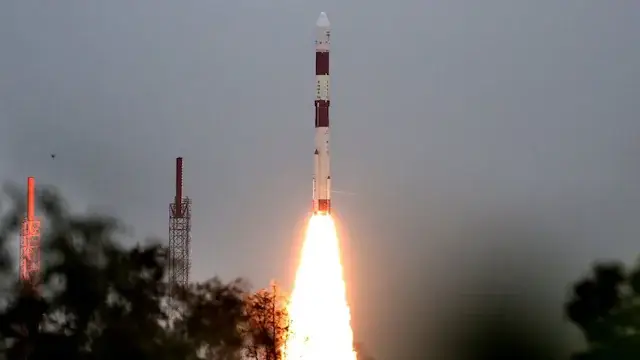
The Indian Space Research Organisation (ISRO) has commenced a 22-hour countdown at 12.48 pm for its first launch mission of 2026, dubbed ‘PSLV-C62/EOS-N1’. This highly anticipated mission marks the beginning of a new year of space exploration for India, and it’s set to be an exciting one. The PSLV rocket, ISRO’s workhorse launch vehicle, will place the EOS-N1 Earth observation satellite and 15 co-passenger satellites into orbit, demonstrating the country’s continued commitment to advancing its space program.
The PSLV rocket, which stands for Polar Satellite Launch Vehicle, has a long history of successful launches, having completed 63 flights to date. One of its most notable missions was the Chandrayaan-1, India’s first lunar mission, which was launched in 2008. The PSLV rocket has also made history by launching a record 104 satellites in a single mission, showcasing its capabilities as a reliable and efficient launch vehicle.
The EOS-N1 Earth observation satellite, which is the primary payload of the PSLV-C62 mission, is designed to provide high-resolution images of the Earth’s surface. These images will be used for a variety of applications, including land use mapping, crop monitoring, and disaster management. The satellite is equipped with advanced sensors and cameras, which will enable it to capture detailed images of the Earth’s surface, even in cloudy or hazy conditions.
In addition to the EOS-N1 satellite, the PSLV-C62 mission will also carry 15 co-passenger satellites into orbit. These satellites, which are from various countries, including the United States, Israel, and the United Kingdom, will be used for a range of purposes, including communications, navigation, and scientific research. The co-passenger satellites will be deployed into orbit along with the EOS-N1 satellite, using the PSLV rocket’s multiple payload deployment capability.
The PSLV-C62 mission is a significant milestone for ISRO, as it marks the beginning of a new year of space exploration for the organization. ISRO has a busy schedule of launches planned for 2026, including several high-profile missions, such as the Gaganyaan mission, which aims to send an Indian astronaut to space for the first time. The success of the PSLV-C62 mission will be an important step towards achieving these goals, and will demonstrate ISRO’s continued capability to launch complex space missions.
The countdown for the PSLV-C62 mission began at 12.48 pm, and the launch is scheduled to take place at 10.48 am on the next day. The launch will be broadcast live on ISRO’s website and social media channels, allowing space enthusiasts around the world to watch the mission in real-time.
As the world waits with bated breath for the launch of the PSLV-C62 mission, ISRO scientists and engineers are busy making the final preparations for the launch. The mission is a complex one, requiring precise calculations and careful planning to ensure the successful deployment of the EOS-N1 satellite and the 15 co-passenger satellites.
The PSLV-C62 mission is not only significant for India’s space program, but also for the global space community. The mission demonstrates the growing capabilities of India’s space program, and highlights the country’s commitment to advancing its space exploration efforts. The success of the mission will also pave the way for future collaborations between ISRO and other space agencies around the world.
In conclusion, the PSLV-C62 mission is an exciting and significant milestone for ISRO, marking the beginning of a new year of space exploration for the organization. The mission will demonstrate the capabilities of the PSLV rocket, and will highlight India’s continued commitment to advancing its space program. As the world waits for the launch of the PSLV-C62 mission, one thing is clear: this is just the beginning of an exciting new year of space exploration for India.
Source: https://x.com/PTI_News/status/2010285538843173209
About the Author