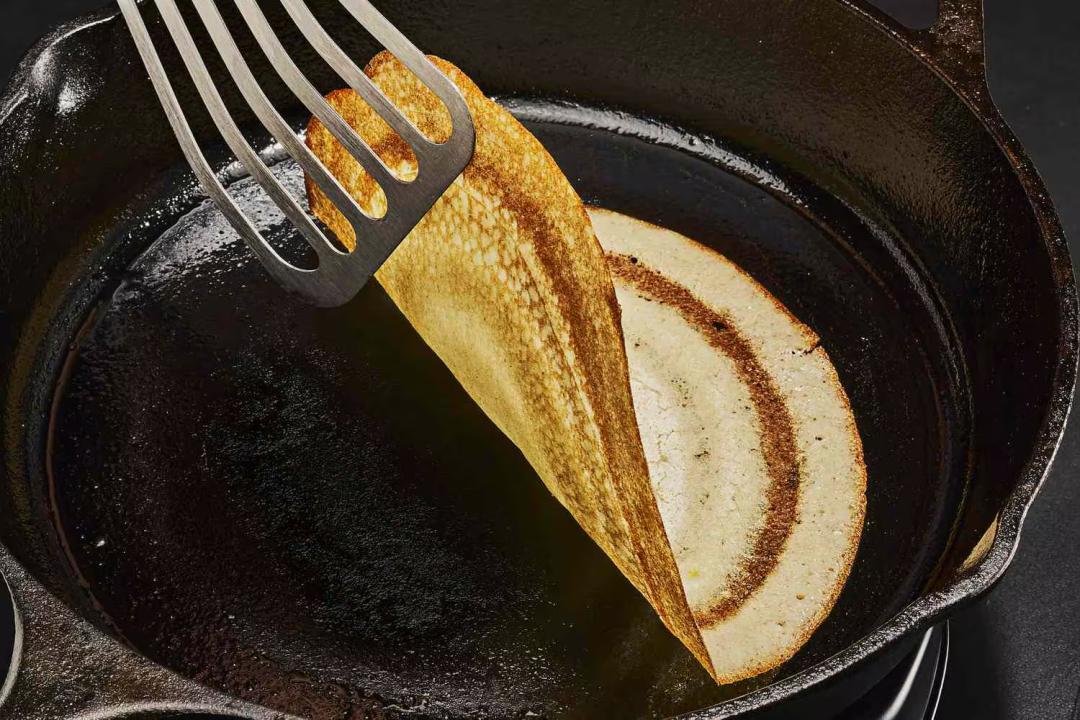
IIT-Madras professor explains why dosas are crispy on outside & soft on inside
Dosa, a traditional Indian dish, is a staple in many South Indian households. The delicate balance of crispy exterior and soft interior has puzzled many for centuries. Recently, Prof Mahesh Panchagnula from IIT-Madras shed some light on this phenomenon, attributing it to a fascinating scientific concept known as the Leidenfrost Effect. In this blog post, we will delve into the science behind the perfect dosa and explore how the Leidenfrost Effect plays a crucial role in achieving that ideal texture.
For those who are unfamiliar, the Leidenfrost Effect is a phenomenon where a liquid, in this case, water, comes into contact with a surface that is significantly hotter than its boiling point. When this happens, the water droplets do not immediately evaporate but instead, form a thin layer of vapor between the liquid and the surface. This vapor layer, also known as a “levitation layer,” allows the water droplets to glide and float on the surface, reducing friction and preventing the liquid from sticking to the surface.
Now, let’s apply this concept to the art of making dosas. When a dosa batter is poured onto a hot tawa, it is essential to sprinkle water on the tawa before pouring the batter. This practice, which may seem like a simple trick, is actually linked to the Leidenfrost Effect. According to Prof Panchagnula, when the tawa is not hot enough, the water evaporates slowly, and the dosa batter sticks to the surface, resulting in a suboptimal texture. However, when the tawa is heated to the right temperature, the water droplets sprinkle on the surface, creating a thin vapor layer that prevents the dosa batter from sticking.
As the dosa batter is poured onto the tawa, it comes into contact with the hot surface, and the starches in the batter start to gelatinize, creating a crispy exterior. Simultaneously, the vapor layer formed by the Leidenfrost Effect allows the dosa to cook evenly, preventing it from sticking to the surface and ensuring that the interior remains soft and fluffy. This delicate balance of temperature, water, and batter is what makes a perfect dosa.
The Leidenfrost Effect was first identified in the 18th century by Johann Leidenfrost, a German doctor and theologian. He observed that when a liquid comes into contact with a surface that is significantly hotter than its boiling point, it forms a vapor layer that reduces friction and prevents the liquid from sticking to the surface. Since then, the Leidenfrost Effect has been studied extensively in various fields, including physics, engineering, and materials science.
In the context of dosa making, the Leidenfrost Effect plays a crucial role in achieving the perfect texture. By sprinkling water on the hot tawa before pouring the dosa batter, the cook creates a thin vapor layer that prevents the batter from sticking to the surface. This allows the dosa to cook evenly, resulting in a crispy exterior and a soft interior.
In addition to the Leidenfrost Effect, other factors such as the type of batter, the temperature of the tawa, and the cooking time also contribute to the perfect dosa. The batter, typically made from a mixture of rice and lentils, must be fermented to the right consistency to produce a crispy exterior and a soft interior. The temperature of the tawa is also critical, as it must be hot enough to create the vapor layer but not so hot that it burns the dosa.
In conclusion, the science behind the perfect dosa is fascinating, and the Leidenfrost Effect plays a significant role in achieving that delicate balance of crispy exterior and soft interior. By understanding the physics behind dosa making, we can appreciate the art and craftsmanship that goes into creating this beloved Indian dish. Whether you are a seasoned cook or a novice, the next time you make dosas, remember the Leidenfrost Effect and the important role it plays in creating the perfect texture.
News Source: https://x.com/iitmadras/status/1993901259925909929
About the Author