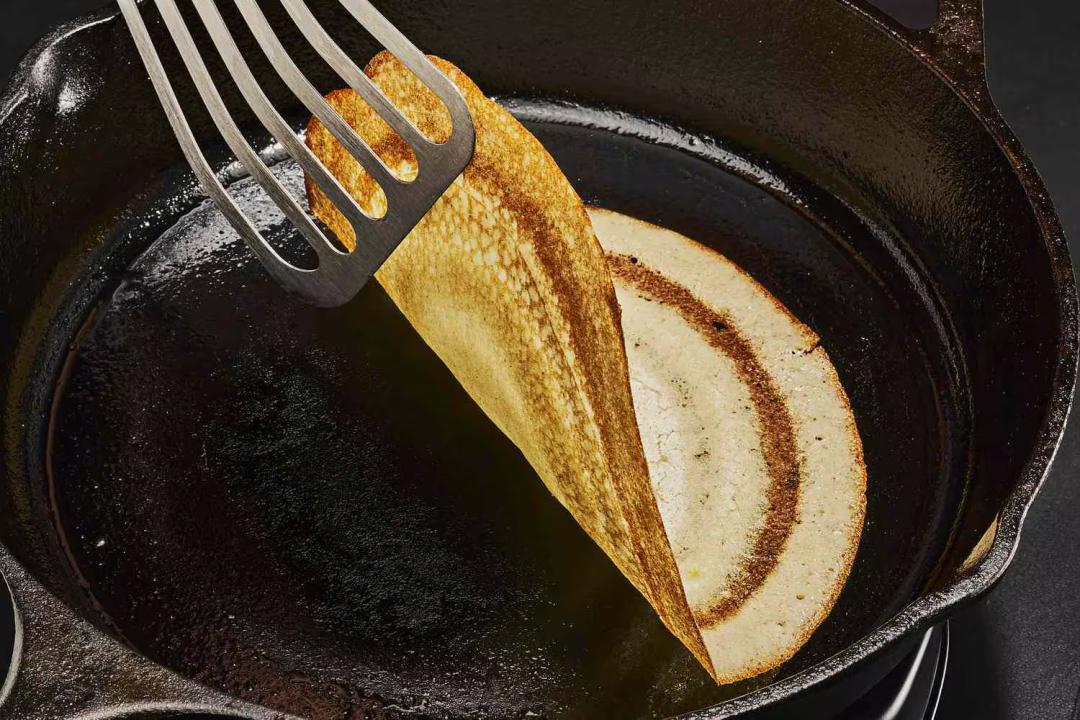
IIT-Madras professor explains why dosas are crispy on outside & soft on inside
Dosa, a traditional South Indian dish, has been a staple in many Indian households for centuries. The delicate balance of crispy exterior and soft interior is what makes dosas a delight to eat. However, have you ever wondered what makes dosas crispy on the outside and soft on the inside? According to Prof Mahesh Panchagnula from IIT-Madras, the secret lies in the way the dosa batter interacts with the hot tawa, and it’s all linked to a phenomenon called the Leidenfrost Effect.
For those who are unfamiliar, the Leidenfrost Effect is a phenomenon where a liquid, in this case, water, comes into contact with a surface that is significantly hotter than its boiling point. When this happens, the water droplets do not immediately evaporate, but instead, create a thin layer of vapor between the droplet and the hot surface. This vapor layer reduces the heat transfer between the surface and the droplet, allowing the droplet to glide and float on the surface.
In the context of making dosas, the Leidenfrost Effect plays a crucial role. When a dosa batter is poured onto a hot tawa, the water droplets in the batter come into contact with the hot surface. If the tawa is not hot enough, the water droplets will evaporate slowly, causing the dosa to stick to the surface. However, if the tawa is at the right temperature, the water droplets will create a thin vapor layer, allowing the dosa to glide and float on the surface. This prevents the dosa from sticking and makes it crispy on the outside.
But how does this relate to the practice of sprinkling water on the hot tawa before pouring the dosa batter? According to Prof Panchagnula, this practice is directly linked to the Leidenfrost Effect. By sprinkling water on the hot tawa, the water droplets create a thin vapor layer that reduces the heat transfer between the tawa and the dosa batter. This allows the dosa to cook evenly and prevents it from sticking to the surface.
The Leidenfrost Effect was first identified in Germany in the 18th century by Johann Leidenfrost. Since then, it has been studied extensively in various fields, including physics, engineering, and materials science. However, its application in cooking, particularly in making dosas, is a relatively new area of research.
To understand the Leidenfrost Effect in more detail, let’s consider the physics behind it. When a liquid comes into contact with a hot surface, it initially undergoes a process called nucleate boiling. During this process, the liquid creates vapor bubbles that rise to the surface and evaporate. However, if the surface is hot enough, the liquid will undergo a transition to a state called film boiling. In this state, the liquid creates a thin vapor layer between the droplet and the surface, which reduces the heat transfer between the two.
In the case of making dosas, the Leidenfrost Effect occurs when the water droplets in the batter come into contact with the hot tawa. The water droplets create a thin vapor layer that reduces the heat transfer between the tawa and the dosa batter, allowing the dosa to cook evenly and preventing it from sticking to the surface.
So, what’s the ideal temperature for making dosas? According to Prof Panchagnula, the ideal temperature for making dosas is around 200-250°C. At this temperature, the water droplets in the batter will create a thin vapor layer, allowing the dosa to glide and float on the surface. If the temperature is too low, the dosa will stick to the surface, and if it’s too high, the dosa will burn.
In addition to the Leidenfrost Effect, there are several other factors that contribute to the crispy exterior and soft interior of dosas. The type of rice and lentils used, the ratio of rice to lentils, and the fermentation process all play a crucial role in determining the texture and flavor of dosas.
In conclusion, the secret to making crispy dosas lies in the way the dosa batter interacts with the hot tawa, and it’s all linked to the Leidenfrost Effect. By understanding the physics behind the Leidenfrost Effect, we can better appreciate the art of making dosas and the importance of temperature control in cooking. So, the next time you make dosas, remember to sprinkle some water on the hot tawa before pouring the batter, and make sure the tawa is at the right temperature. Your dosas will thank you!
News source: https://x.com/iitmadras/status/1993901259925909929
About the Author