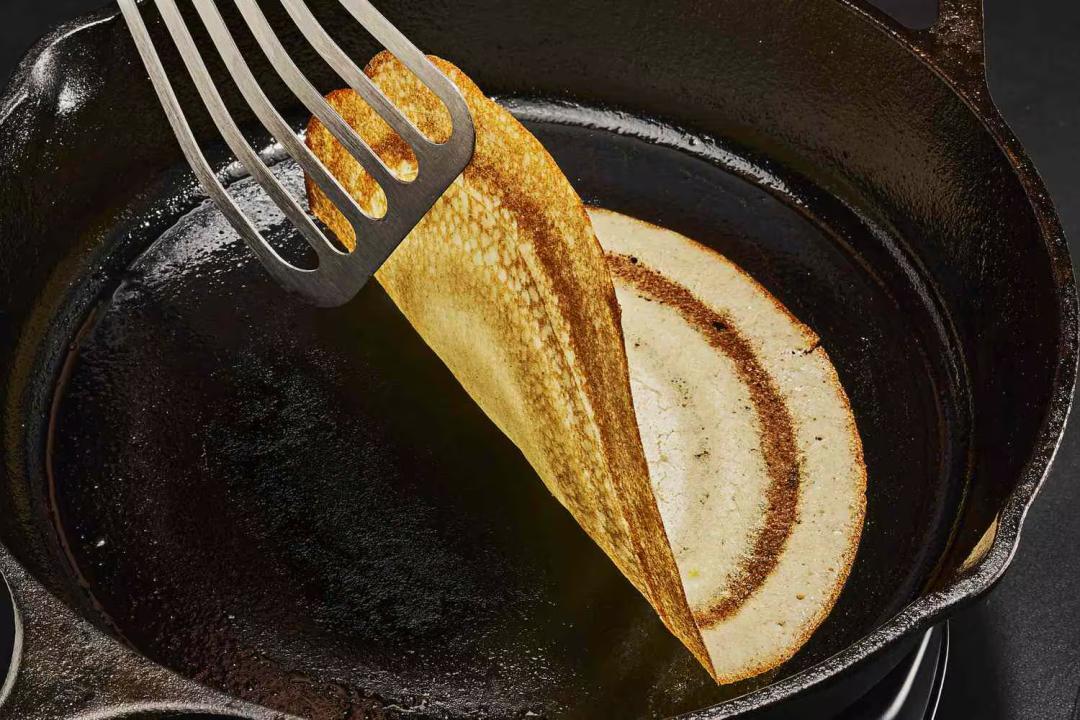
IIT-Madras professor explains why dosas are crispy on outside & soft on inside
Dosa, a staple food in South Indian cuisine, is a delicacy that has been perfected over centuries. The crispy exterior and soft interior of a well-made dosa are a result of a combination of factors, including the type of batter used, the temperature of the tawa, and the technique of cooking. Recently, Prof Mahesh Panchagnula from IIT-Madras shed light on the science behind the crispy exterior and soft interior of dosas, and it’s fascinating.
According to Prof Panchagnula, the practice of sprinkling water on a hot tawa before pouring the dosa batter is linked to the Leidenfrost Effect, a phenomenon identified in Germany in the 18th century. The Leidenfrost Effect is a phenomenon where a liquid, in this case, water, comes into contact with a surface that is significantly hotter than its boiling point. When this happens, the water evaporates rapidly, creating a thin layer of vapor between the water and the hot surface. This vapor layer reduces the heat transfer between the water and the surface, allowing the water to skate across the surface without actually touching it.
When a tawa is not hot enough, the water sprinkled on it evaporates slowly, and the dosa batter sticks to the surface. However, when the tawa is heated to the right temperature, the water glides and floats on the thin vapor layer, preventing the dosa batter from sticking to the surface. This is what gives dosas their characteristic crispy exterior. The vapor layer created by the Leidenfrost Effect also helps to cook the dosa evenly, resulting in a soft and fluffy interior.
The Leidenfrost Effect is not unique to dosa making and can be observed in other everyday situations. For example, when you sprinkle water on a hot skillet or grill, you may notice that the water droplets seem to dance across the surface before evaporating. This is also an example of the Leidenfrost Effect in action.
To achieve the perfect crispy exterior and soft interior, it’s essential to heat the tawa to the right temperature. If the tawa is too hot, the dosa batter will burn before it has a chance to cook properly, resulting in a charred and crispy exterior. On the other hand, if the tawa is not hot enough, the dosa batter will stick to the surface, and the dosa will be soft and soggy.
In addition to the temperature of the tawa, the type of batter used also plays a crucial role in determining the texture of the dosa. A good dosa batter should have the right balance of rice and lentils, as well as the right amount of fermentation. The fermentation process helps to break down the starches in the rice and lentils, resulting in a batter that is light and airy. When cooked, this batter will produce a dosa that is crispy on the outside and soft on the inside.
The technique of cooking the dosa is also important. The dosa batter should be poured onto the hot tawa in a circular motion, starting from the outside and working your way in. This helps to distribute the batter evenly and prevents the dosa from becoming too thick in the center. The dosa should then be cooked for a few seconds on the first side, until the edges start to curl and the surface is dry. It should then be flipped over and cooked for another few seconds, until the other side is lightly browned.
In conclusion, the combination of the right temperature, the right batter, and the right technique are what give dosas their characteristic crispy exterior and soft interior. The Leidenfrost Effect, which is responsible for the crispy exterior, is a fascinating phenomenon that has been observed and studied for centuries. By understanding the science behind dosa making, we can appreciate the skill and craftsmanship that goes into creating these delicious and iconic South Indian dishes.
News source: https://x.com/iitmadras/status/1993901259925909929
About the Author