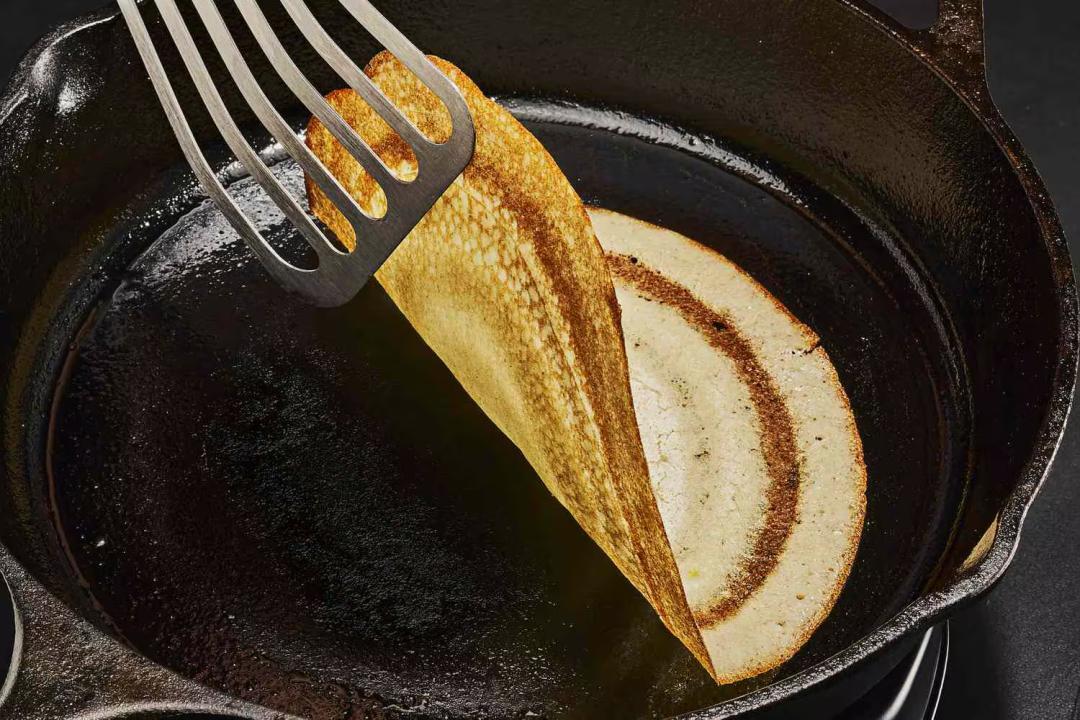
IIT-Madras professor explains why dosas are crispy on outside & soft on inside
Dosa, a traditional Indian dish, is a staple in many South Indian households. It is a type of fermented crepe made from rice and lentil batter, and is often served with sambar, chutney, and other accompaniments. One of the unique characteristics of dosas is their texture – they are crispy on the outside and soft on the inside. But have you ever wondered why dosas exhibit this unique texture? A professor from IIT-Madras, Prof Mahesh Panchagnula, has explained the science behind this phenomenon.
According to Prof Panchagnula, the practice of sprinkling water on a hot tawa before pouring the dosa batter is linked to the Leidenfrost Effect. This effect, identified in Germany in the 18th century, states that when a liquid comes into contact with a surface that is significantly hotter than its boiling point, it will evaporate rapidly and create a thin layer of vapor. This vapor layer reduces the contact between the liquid and the surface, allowing the liquid to glide and float on top of the vapor.
In the case of dosas, when water is sprinkled on a hot tawa, it creates a thin layer of vapor that prevents the dosa batter from sticking to the surface. This is crucial in creating the crispy exterior and soft interior of the dosa. When the tawa is not hot enough, the water evaporates slowly, and the dosa batter sticks to the surface, resulting in a soft and soggy dosa. However, when the tawa is at the right temperature, the water glides and floats on the thin vapor layer, creating a non-stick surface for the dosa batter.
As the dosa batter is poured onto the tawa, it comes into contact with the hot surface, causing the starches in the batter to gelatinize and the water to evaporate rapidly. This rapid evaporation creates a crispy exterior, while the interior remains soft and moist. The Leidenfrost Effect plays a crucial role in this process, as it allows the dosa batter to cook evenly and prevents it from sticking to the surface.
Prof Panchagnula’s explanation highlights the importance of temperature control in creating the perfect dosa. The ideal temperature for cooking dosas is between 200-250°C, which is hot enough to create the Leidenfrost Effect, but not so hot that it burns the dosa. When the tawa is at the right temperature, the dosa batter will spread evenly, and the water will evaporate rapidly, creating a crispy exterior and a soft interior.
In addition to temperature control, the type of tawa used also plays a crucial role in creating the perfect dosa. Traditional dosa tawas are made of cast iron or non-stick materials, which allow for even heat distribution and prevent the dosa from sticking to the surface. The shape and size of the tawa also affect the texture of the dosa, with larger tawas producing thinner and crisper dosas.
The science behind dosas is fascinating, and Prof Panchagnula’s explanation highlights the importance of understanding the underlying principles of cooking. By controlling the temperature and using the right type of tawa, cooks can create dosas that are crispy on the outside and soft on the inside, with a texture that is both delicate and robust.
In conclusion, the unique texture of dosas is a result of the Leidenfrost Effect, which is created by sprinkling water on a hot tawa before pouring the dosa batter. The right temperature, type of tawa, and cooking technique all play a crucial role in creating the perfect dosa. By understanding the science behind dosas, cooks can create delicious and authentic dishes that are sure to impress.
Source: https://x.com/iitmadras/status/1993901259925909929
About the Author