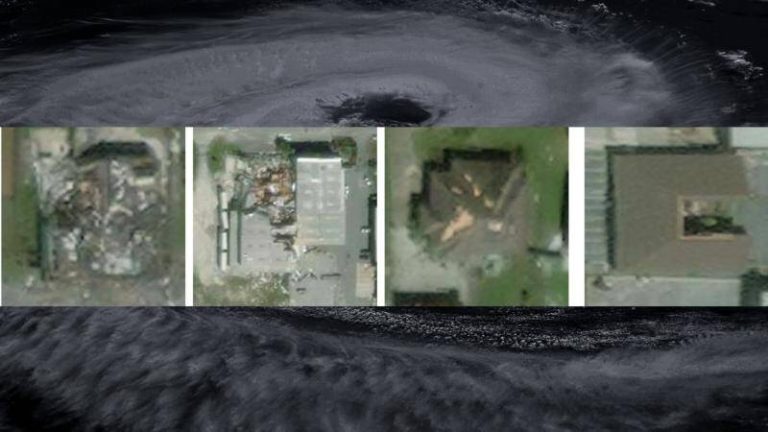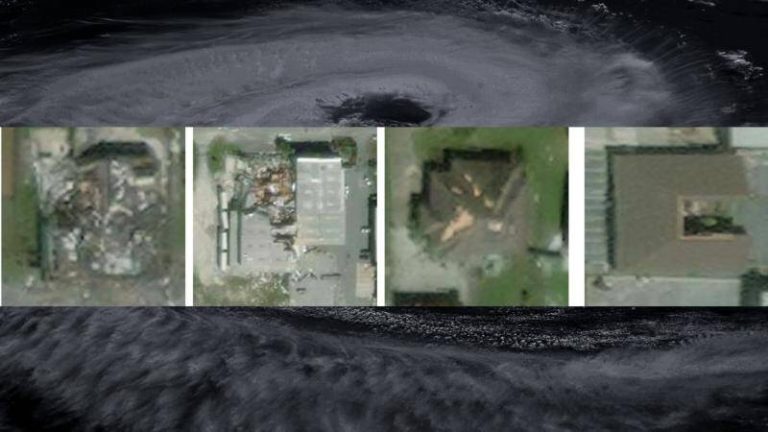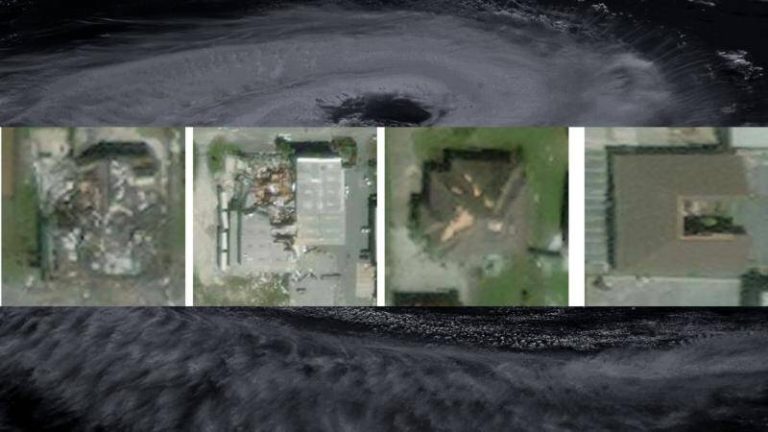
IIT Bombay’s AI speeds up hurricane damage assessment
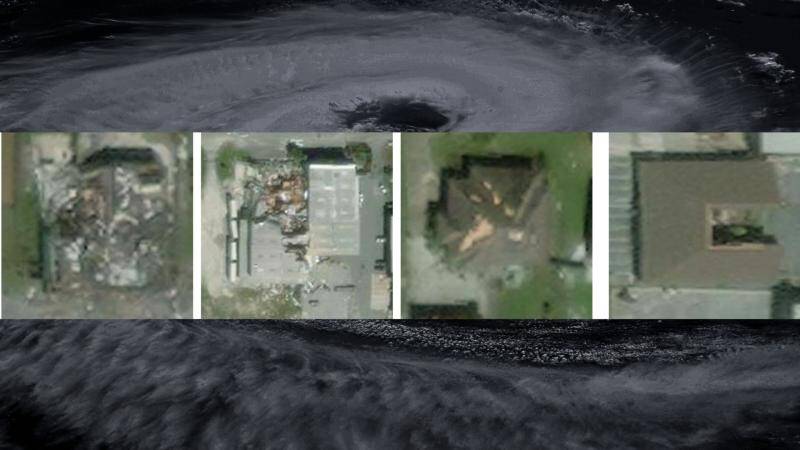
Hurricanes are one of the most destructive natural disasters, causing widespread damage to infrastructure, property, and human life. Assessing the damage caused by hurricanes is a crucial step in providing relief and support to affected communities. However, traditional methods of damage assessment can be time-consuming, labor-intensive, and often inaccurate. To address this challenge, researchers at the Indian Institute of Technology (IIT) Bombay have developed an artificial intelligence (AI) model that can quickly and accurately identify building damage from aerial images.
The AI model, called SpADANet, uses spatial context to identify damaged buildings and has been optimized for use on mobile devices. This makes it an ideal tool for disaster response and relief efforts, where speed and accuracy are critical. SpADANet overcomes the “domain gap” that exists between different storms, allowing it to adapt to new storms with minimal data. This is a significant improvement over existing methods, which often require large amounts of data to train and may not perform well in new environments.
The development of SpADANet is a significant breakthrough in the field of disaster response and relief. Traditional methods of damage assessment often involve sending teams of surveyors to affected areas, which can be time-consuming and expensive. These methods also rely on manual interpretation of data, which can be prone to errors. SpADANet, on the other hand, uses machine learning algorithms to analyze aerial images and identify damaged buildings quickly and accurately.
The use of spatial context is a key feature of SpADANet. By analyzing the spatial relationships between buildings and other features in an image, the model can identify patterns and anomalies that may indicate damage. This approach allows SpADANet to outperform existing methods, which often rely on simple image classification techniques. The model’s ability to adapt to new storms with minimal data is also a significant advantage, as it allows it to be used in a variety of contexts and environments.
The potential applications of SpADANet are numerous. In the aftermath of a hurricane, SpADANet could be used to quickly assess damage and identify areas that require immediate attention. This could help emergency responders to prioritize their efforts and allocate resources more effectively. SpADANet could also be used to monitor the progress of relief efforts and identify areas where additional support is needed.
The development of SpADANet is also a testament to the power of collaboration and innovation in the field of AI research. The researchers at IIT Bombay who developed SpADANet are part of a growing community of scientists and engineers who are working to apply AI and machine learning to real-world problems. Their work is an example of the impact that AI can have on society, and it highlights the potential for AI to drive positive change in a variety of fields.
In addition to its potential applications in disaster response and relief, SpADANet also has implications for the field of urban planning and development. By analyzing aerial images and identifying patterns and anomalies, SpADANet could be used to monitor urban development and identify areas where infrastructure may be at risk. This could help city planners and policymakers to make more informed decisions about urban development and infrastructure investment.
The use of AI and machine learning in disaster response and relief is a growing field, and SpADANet is just one example of the many innovative solutions that are being developed. As the frequency and severity of natural disasters continue to increase, the need for effective and efficient disaster response and relief efforts will only continue to grow. SpADANet and other AI-powered tools like it will play an increasingly important role in helping to meet this need, and their development is a significant step forward in the field of disaster response and relief.
In conclusion, the development of SpADANet by researchers at IIT Bombay is a significant breakthrough in the field of disaster response and relief. The model’s ability to quickly and accurately identify building damage from aerial images makes it an ideal tool for disaster response and relief efforts, and its potential applications are numerous. As the field of AI research continues to evolve, it is likely that we will see even more innovative solutions like SpADANet that can help to drive positive change in a variety of fields.
About the Author