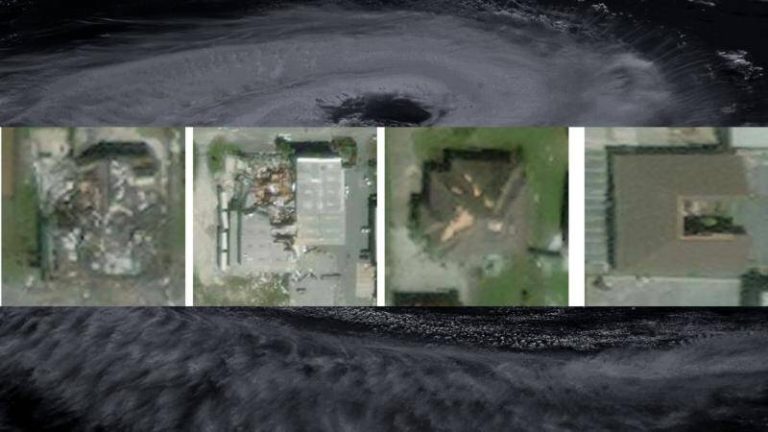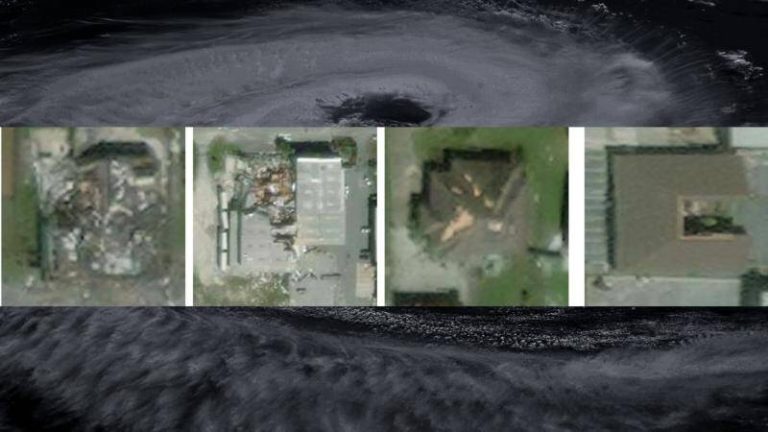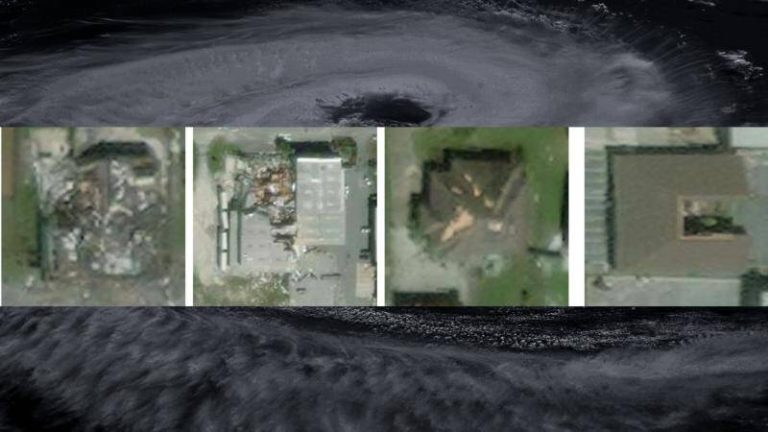
IIT Bombay’s AI speeds up hurricane damage assessment
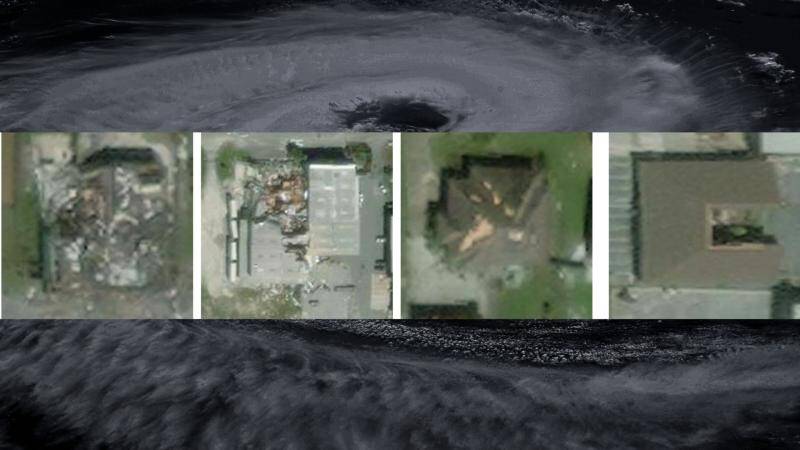
Hurricanes are one of the most destructive natural disasters, causing widespread damage to infrastructure, homes, and the environment. In the aftermath of a hurricane, it is crucial to quickly assess the extent of the damage to provide relief and support to those affected. However, traditional methods of damage assessment can be time-consuming, labor-intensive, and often inaccurate. To address this challenge, researchers at the Indian Institute of Technology (IIT) Bombay have developed an innovative AI model called SpADANet, which can identify building damage from aerial images with high accuracy.
SpADANet is a spatially aware AI model that uses deep learning techniques to analyze aerial images and detect damaged buildings. What sets SpADANet apart from existing models is its ability to overcome the “domain gap,” which refers to the difference in image characteristics between various storms. This means that SpADANet can adapt to different storms with minimal data, making it a versatile and effective tool for damage assessment. Additionally, the model is optimized for mobile devices, allowing it to be used in the field for real-time damage assessment.
One of the key features of SpADANet is its use of spatial context to improve damage detection. The model takes into account the spatial relationships between buildings, roads, and other infrastructure to identify damaged areas. This approach enables SpADANet to outperform existing methods, which often rely on individual image features rather than spatial context. By considering the broader spatial context, SpADANet can provide a more accurate and comprehensive assessment of damage.
The development of SpADANet has significant implications for disaster response and relief efforts. Traditional methods of damage assessment often rely on manual surveys, which can be time-consuming and labor-intensive. SpADANet, on the other hand, can quickly analyze aerial images and provide accurate damage assessments, allowing relief teams to respond more effectively. This can help to save lives, reduce suffering, and minimize the economic impact of hurricanes.
The potential applications of SpADANet extend beyond hurricane damage assessment. The model can be used for a wide range of disaster response and relief efforts, including earthquake damage assessment, flood damage assessment, and wildfire damage assessment. Additionally, SpADANet can be used for infrastructure monitoring, urban planning, and environmental monitoring, making it a versatile tool with a wide range of applications.
The development of SpADANet is a testament to the power of AI and deep learning in solving real-world problems. By leveraging the capabilities of AI, researchers at IIT Bombay have created a tool that can significantly improve disaster response and relief efforts. As the use of AI and deep learning continues to grow, we can expect to see more innovative solutions to complex problems.
In conclusion, SpADANet is a groundbreaking AI model that has the potential to revolutionize hurricane damage assessment. By using spatial context and deep learning techniques, SpADANet can provide accurate and comprehensive damage assessments, allowing relief teams to respond more effectively. The development of SpADANet is a significant achievement, and its potential applications extend far beyond hurricane damage assessment. As we continue to develop and refine AI models like SpADANet, we can expect to see significant improvements in disaster response and relief efforts around the world.
News Source: https://researchmatters.in/news/novel-spatially-aware-ai-model-makes-hurricane-damage-assessment-more-accurate
About the Author