How Moon altered the orbit of Chandrayaan-3’s propulsion module?
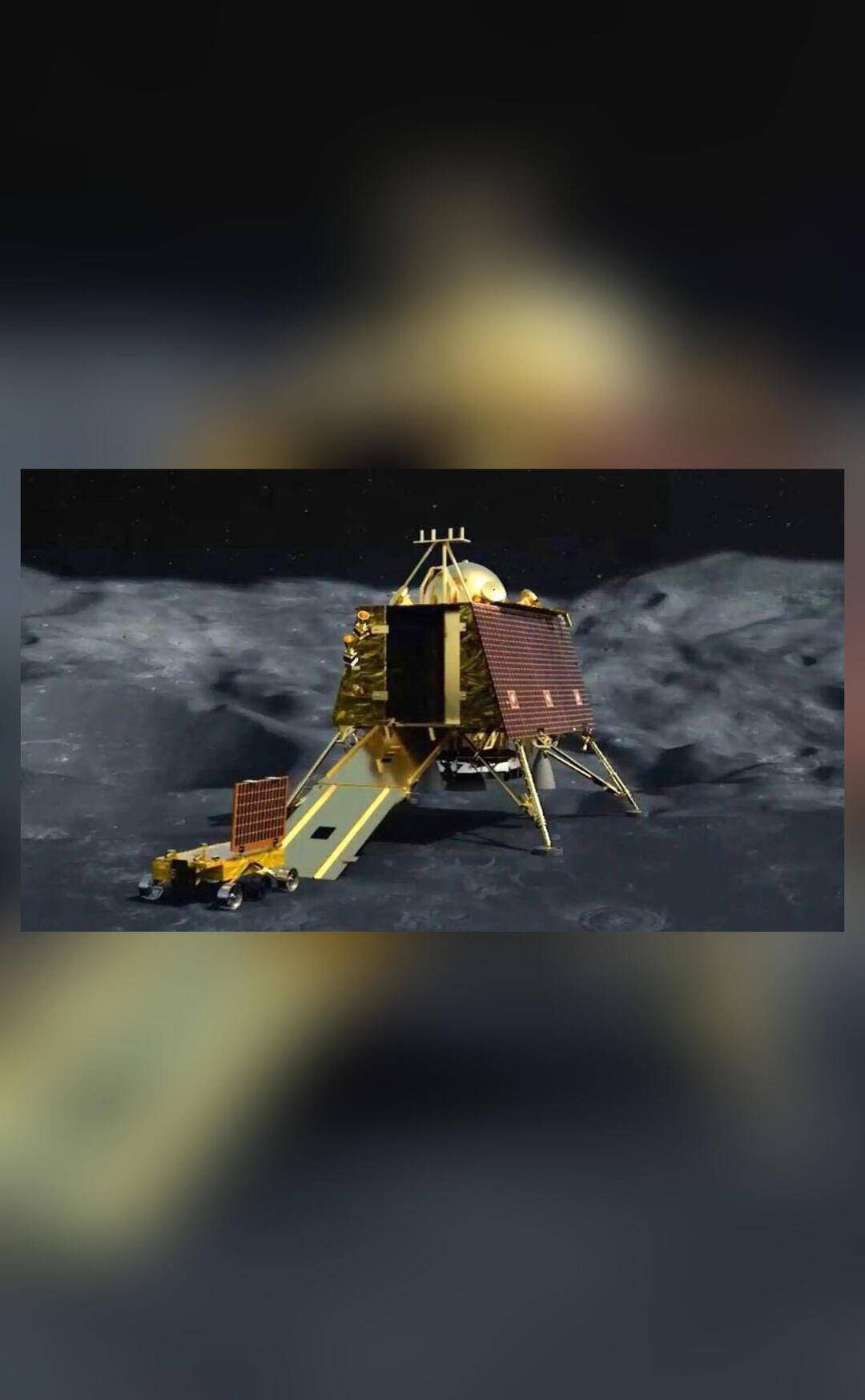
In a remarkable demonstration of celestial mechanics, the Indian Space Research Organisation’s (ISRO) Chandrayaan-3’s propulsion module underwent a significant change in its Earth orbit in November 2025, thanks to the gravitational influence of the Moon. This alteration in the module’s orbit was achieved without using any fuel, leveraging the natural gravitational pull of the Moon during two close flybys. The event not only showcases the ingenuity of space mission planning but also highlights the complex interactions between celestial bodies and spacecraft.
The story began on November 6, 2025, when the Chandrayaan-3 propulsion module flew by the Moon at an altitude of 3,740 km. This close encounter was the first of two flybys designed to utilize the Moon’s gravity to alter the module’s orbit. The Moon’s gravitational influence on the spacecraft was significant, given its proximity to the lunar surface. As the module passed close to the Moon, the lunar gravity started to pull it, exerting a force that would gradually change its trajectory.
The first flyby on November 6 marked the beginning of this gravitational dance between the Moon and the Chandrayaan-3 propulsion module. The module’s velocity and direction were affected by the Moon’s gravity, setting it on a new path. However, this was not a one-time event; the spacecraft was scheduled for another flyby, which would further modify its orbit.
Just five days later, on November 11, the Chandrayaan-3 propulsion module flew by the Moon once again, this time at an altitude of 4,537 km. This second encounter reinforced the orbital changes initiated by the first flyby, further altering the module’s path around Earth. The cumulative effect of these two gravitational interactions was a significant change in the module’s orbit size and direction, achieved without expending any fuel.
ISRO’s successful utilization of the Moon’s gravity to alter the Chandrayaan-3 propulsion module’s orbit demonstrates a profound understanding of celestial mechanics and space mission planning. By carefully calculating the module’s trajectory and timing the flybys to maximize the gravitational effect, ISRO scientists were able to achieve the desired orbital changes without relying on the spacecraft’s propulsion systems.
This approach not only conserves fuel, which is a precious resource in space missions, but also highlights the potential for gravitational assists in space travel. Gravitational assists, where a spacecraft flies by a celestial body to alter its trajectory, have been used in various interplanetary missions to gain speed, change direction, or achieve orbital adjustments. The Chandrayaan-3 propulsion module’s experience with the Moon’s gravity is a testament to the effectiveness of this technique in Earth orbit as well.
The success of this maneuver also underscores the importance of precision and planning in space missions. The accurate calculation of the spacecraft’s trajectory, the timing of the flybys, and the prediction of the gravitational effects all contributed to the successful alteration of the module’s orbit. This achievement is a reflection of the advanced capabilities and expertise of ISRO in space exploration and mission management.
In conclusion, the alteration of the Chandrayaan-3 propulsion module’s orbit by the Moon’s gravity is a fascinating example of how celestial mechanics can be harnessed to achieve specific mission objectives. By leveraging the natural gravitational influence of the Moon, ISRO has demonstrated a fuel-efficient and innovative approach to orbital adjustments, showcasing the organization’s prowess in space mission planning and execution.
For more details on this story and other science news, visit: https://www.newsbytesapp.com/news/science/how-chandrayaan-3-propulsion-module-s-orbit-was-altered-by-moon-s-gravity/story
About the Author