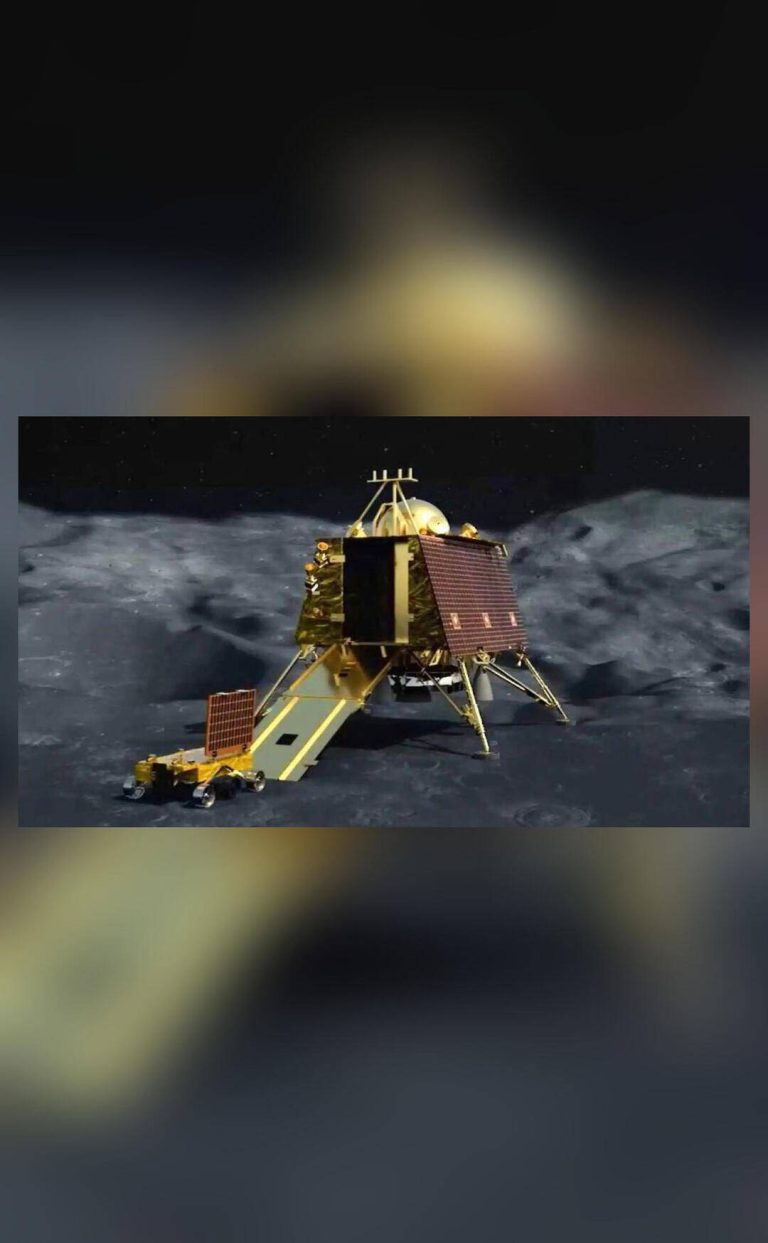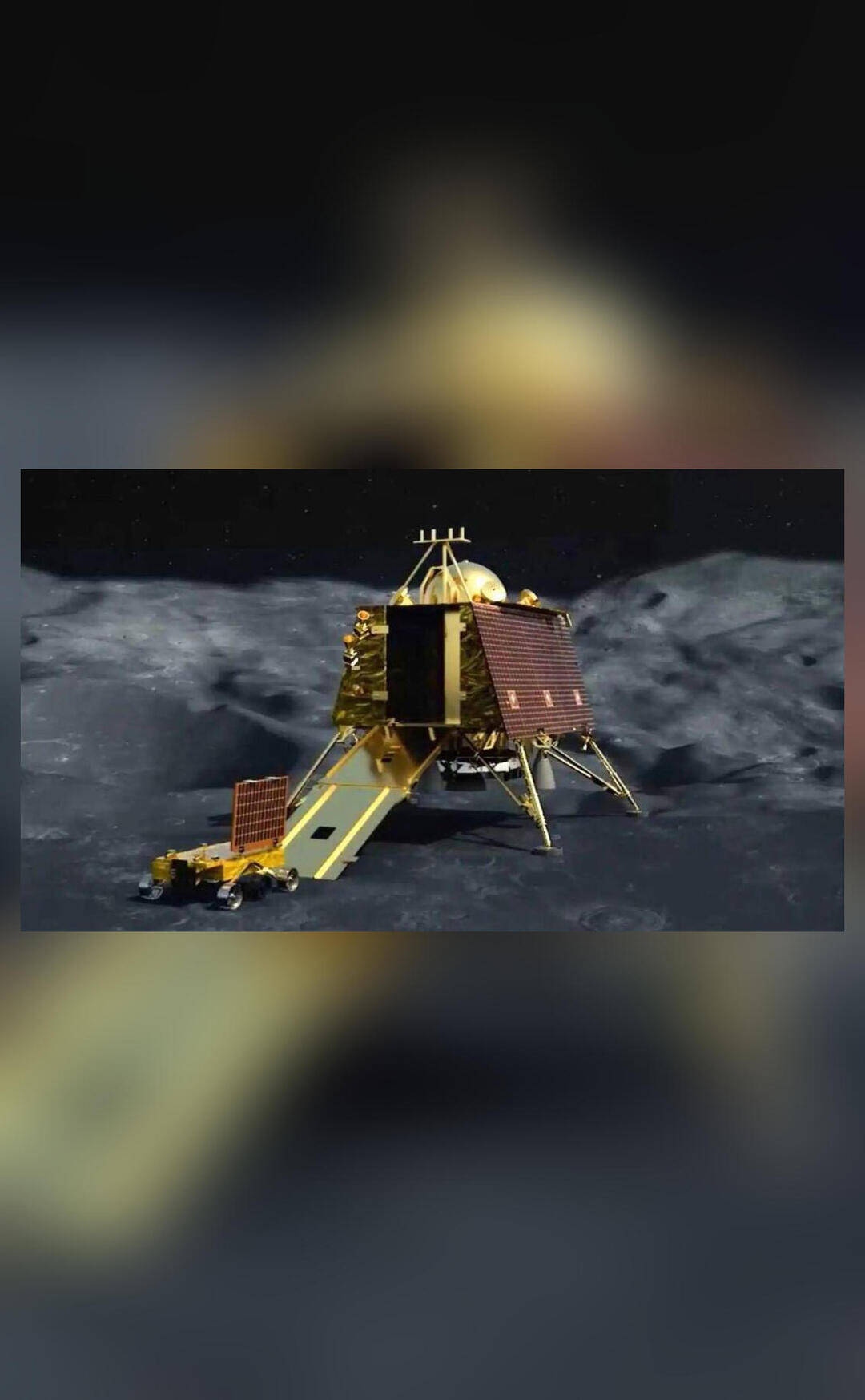
How Moon altered the orbit of Chandrayaan-3’s propulsion module?
The Indian Space Research Organisation (ISRO) has achieved a remarkable feat with its Chandrayaan-3 mission, which was launched earlier this year. The mission’s propulsion module has had its Earth orbit significantly altered, thanks to the gravitational pull of the Moon. This extraordinary event occurred in November 2025, when the module passed close to the Moon not once, but twice, resulting in a substantial change in its orbit without the need for any fuel.
The first close flyby took place on November 6, 2025, when the propulsion module sailed past the Moon at a distance of approximately 3,740 kilometers. This was followed by another flyby on November 11, 2025, at a distance of around 4,537 kilometers. During these two flybys, the lunar gravity exerted a significant force on the spacecraft, naturally altering its path and changing the size and direction of its orbit.
ISRO has confirmed that the Moon’s gravity played a crucial role in altering the orbit of the propulsion module. The space agency stated that the lunar gravity pulled the spacecraft during the two flybys, resulting in a change in its orbit without the need for any fuel. This is a significant achievement, as it demonstrates the ability of space agencies to utilize the gravitational forces of celestial bodies to alter the trajectories of spacecraft, thereby reducing the need for fuel and increasing the efficiency of space missions.
The Chandrayaan-3 mission is a significant milestone in India’s space program, and the successful alteration of the propulsion module’s orbit is a testament to the ingenuity and expertise of ISRO’s scientists and engineers. The mission is designed to study the Moon’s surface and composition, and the propulsion module is a critical component of the spacecraft, responsible for providing the necessary thrust to navigate the lunar orbit and conduct scientific experiments.
The use of gravitational forces to alter the trajectory of a spacecraft is not a new concept, but it is a complex and challenging task that requires precise calculations and planning. The Moon’s gravity is relatively weak compared to the Earth’s, but it is still strong enough to have a significant impact on the trajectory of a spacecraft. By carefully planning the flybys and utilizing the lunar gravity, ISRO has been able to alter the orbit of the propulsion module without using any fuel, which is a significant achievement.
The alteration of the propulsion module’s orbit has significant implications for the Chandrayaan-3 mission. The new orbit will allow the spacecraft to conduct more efficient and effective scientific experiments, and will also provide new opportunities for the space agency to study the Moon’s surface and composition. The success of this maneuver also demonstrates the capabilities of ISRO and its ability to conduct complex space missions.
In conclusion, the alteration of the Chandrayaan-3 propulsion module’s orbit by the Moon’s gravity is a significant achievement that demonstrates the ingenuity and expertise of ISRO’s scientists and engineers. The use of gravitational forces to alter the trajectory of a spacecraft is a complex and challenging task, but it is also a highly efficient and effective way to navigate space. As the Chandrayaan-3 mission continues to explore the Moon and conduct scientific experiments, the success of this maneuver will play a critical role in ensuring the mission’s success.
The Chandrayaan-3 mission is a significant milestone in India’s space program, and the successful alteration of the propulsion module’s orbit is a testament to the country’s growing capabilities in space exploration. As the space agency continues to push the boundaries of space technology and conduct more complex missions, the use of gravitational forces to alter the trajectories of spacecraft will play an increasingly important role.
In the coming years, we can expect to see more complex and challenging space missions, and the use of gravitational forces will be a critical component of these missions. The success of the Chandrayaan-3 mission and the alteration of the propulsion module’s orbit by the Moon’s gravity is a significant step forward in this direction, and it demonstrates the capabilities of ISRO and its ability to conduct complex space missions.
For more information on this topic, you can visit the news source: https://www.newsbytesapp.com/news/science/how-chandrayaan-3-propulsion-module-s-orbit-was-altered-by-moon-s-gravity/story
About the Author