High waist-to-hip ratio in couples tied to hypertension: Study
The relationship between body fat distribution and cardiovascular health has been a topic of interest for researchers and healthcare professionals for decades. Recently, a study published in the American Journal of Preventive Cardiology shed light on the link between waist-to-hip ratio (WHR) and hypertension in couples. The findings, based on a large sample of Indian couples, revealed that a high WHR is strongly associated with an increased risk of hypertension, particularly when both spouses have central obesity.
The study, which analyzed data from 51,797 Indian couples, found that the risk of hypertension rose sharply when both partners had a high WHR. This suggests that shared central adiposity, or fat accumulation around the abdominal area, plays a significant role in the development of hypertension. The researchers defined central obesity as a WHR of 0.90 or higher for men and 0.80 or higher for women.
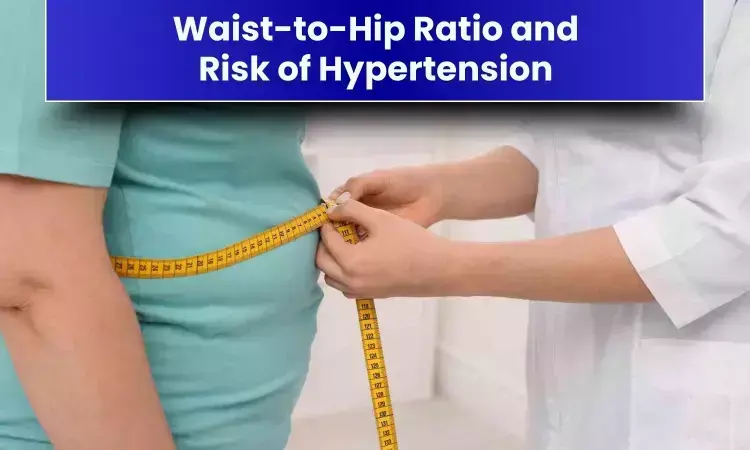
The waist-to-hip ratio is a widely used measure of body fat distribution, calculated by dividing the circumference of the waist by the circumference of the hips. A higher WHR indicates a greater proportion of visceral fat, which is fat that accumulates around the organs in the abdominal cavity. Visceral fat is known to be a major risk factor for cardiovascular disease, including hypertension, type 2 diabetes, and dyslipidemia.
The study’s findings have important implications for the prevention and management of hypertension, particularly in couples. The researchers suggest that couple-focused lifestyle interventions, which target both partners simultaneously, may be an effective way to reduce the risk of hypertension and other cardiometabolic diseases. Such interventions could include joint participation in physical activity, healthy eating, and stress management programs.
The study’s lead author noted that the findings highlight the importance of considering the social and environmental factors that contribute to an individual’s risk of developing hypertension. “Our study shows that the risk of hypertension is not just determined by individual factors, but also by the shared lifestyle and environmental factors that couples experience together,” the author said.
The study’s results are consistent with previous research, which has shown that central obesity is a key marker for cardiometabolic risk. The American Heart Association recommends that adults maintain a healthy WHR, with a goal of less than 0.90 for men and less than 0.80 for women. However, achieving and maintaining a healthy WHR can be challenging, particularly in populations with high rates of obesity and physical inactivity.
The study’s findings also underscore the importance of addressing the social and cultural factors that contribute to the development of central obesity and hypertension. In India, for example, the traditional diet is often high in saturated fats and refined carbohydrates, which can contribute to weight gain and central obesity. Additionally, many Indian couples lead sedentary lifestyles, which can further increase the risk of developing hypertension and other cardiometabolic diseases.
To address these challenges, the researchers recommend that healthcare providers and public health professionals develop and implement couple-focused interventions that target both partners simultaneously. Such interventions could include counseling on healthy eating and physical activity, as well as stress management and sleep hygiene programs.
In conclusion, the study’s findings highlight the importance of considering the social and environmental factors that contribute to an individual’s risk of developing hypertension. The strong link between WHR and hypertension, particularly in couples with shared central adiposity, suggests that couple-focused lifestyle interventions may be an effective way to reduce the risk of cardiometabolic disease. As the global prevalence of obesity and hypertension continues to rise, it is essential that healthcare providers and public health professionals develop and implement effective strategies to prevent and manage these conditions.
About the Author