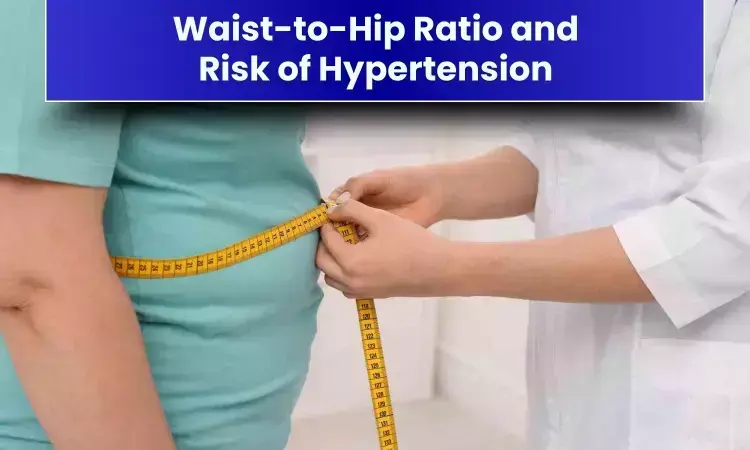
High waist-to-hip ratio in couples tied to hypertension: Study
As the world grapples with the growing burden of cardiovascular diseases, researchers have been working tirelessly to identify key risk factors that contribute to the development of these conditions. One such factor that has gained significant attention in recent years is the waist-to-hip ratio (WHR), a simple yet effective measure of central obesity. A recent study published in the American Journal of Preventive Cardiology has shed new light on the link between WHR and hypertension, particularly in the context of couples. The findings of this study have significant implications for our understanding of cardiometabolic risk and highlight the need for couple-focused lifestyle interventions.
The study, which analyzed data from 51,797 Indian couples, found that a high waist-to-hip ratio is strongly linked to hypertension, with the risk rising sharply when both spouses have central obesity. The researchers used a novel approach to examine the relationship between WHR and hypertension, taking into account the shared lifestyle and environmental factors that couples often experience. The results showed that couples with high WHR values were more likely to develop hypertension, with the risk increasing substantially when both partners had central obesity.
The waist-to-hip ratio is a widely used measure of body fat distribution, which is calculated by dividing the circumference of the waist by the circumference of the hips. A high WHR value indicates a greater accumulation of fat around the abdominal area, which is a known risk factor for cardiovascular diseases, including hypertension. The study’s findings suggest that WHR is a key marker for cardiometabolic risk, and that couples with high WHR values should be targeted for lifestyle interventions aimed at reducing their risk of developing hypertension and other cardiovascular conditions.
The study’s results have significant implications for public health policy and practice. The researchers suggest that couple-focused lifestyle interventions, which take into account the shared lifestyle and environmental factors that couples experience, may be an effective way to reduce the risk of hypertension and other cardiovascular diseases. Such interventions could include dietary counseling, physical activity programs, and stress management techniques, all of which have been shown to be effective in reducing cardiometabolic risk.
The study’s findings also highlight the importance of considering the social and environmental factors that contribute to cardiometabolic risk. Couples who share a similar lifestyle and environment are more likely to develop similar health habits and risk factors, which can increase their risk of developing cardiovascular diseases. By targeting couple-focused lifestyle interventions, healthcare providers may be able to reduce the risk of hypertension and other cardiovascular conditions in a more effective and efficient way.
The study’s results are also consistent with previous research on the link between WHR and cardiovascular disease. Numerous studies have shown that a high WHR value is associated with an increased risk of cardiovascular disease, including hypertension, coronary heart disease, and stroke. The study’s findings add to this body of evidence, highlighting the importance of considering WHR as a key marker for cardiometabolic risk.
In conclusion, the study’s findings highlight the importance of considering waist-to-hip ratio as a key marker for cardiometabolic risk, particularly in the context of couples. The results suggest that couple-focused lifestyle interventions may be an effective way to reduce the risk of hypertension and other cardiovascular diseases, and highlight the need for healthcare providers to consider the social and environmental factors that contribute to cardiometabolic risk. As the world continues to grapple with the growing burden of cardiovascular diseases, this study’s findings provide a valuable contribution to our understanding of the link between WHR and hypertension, and highlight the need for innovative and effective interventions to reduce cardiometabolic risk.
Read the full study at: https://medicaldialogues.in/cardiology-ctvs/news/shared-central-adiposity-in-indian-couples-substantially-increases-hypertension-risk-ajpc-study-december-2025-159890
About the Author